Lobster Fishermen by Marsden Hartley
View the artwork: Lobster Fishermen →
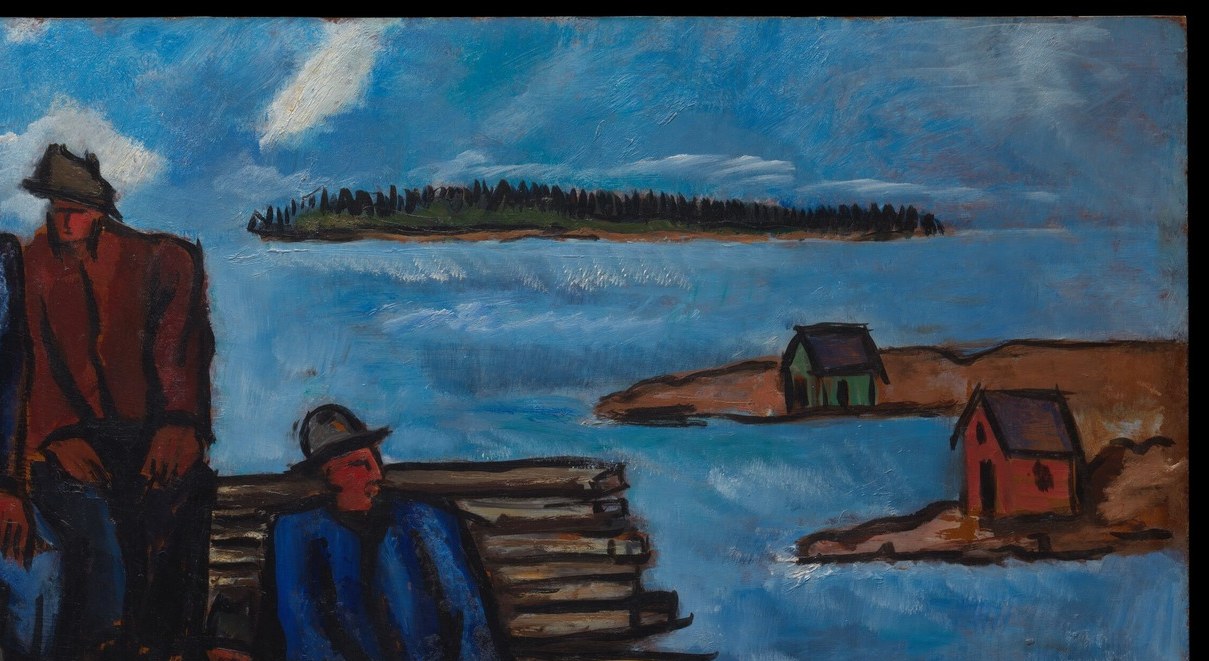
The tiny red structure at the horizon is the most important thing in Marsden Hartley's "Lobster Fishermen" (1940, Metropolitan Museum of Art). Most people scroll past it in half a second. But that little smudge of paint is the heartbeat of the whole painting.
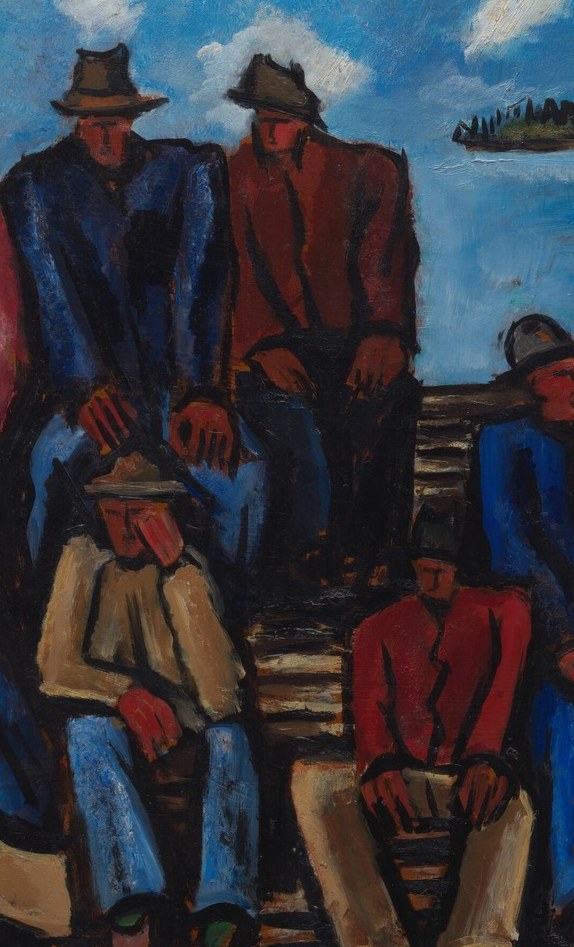
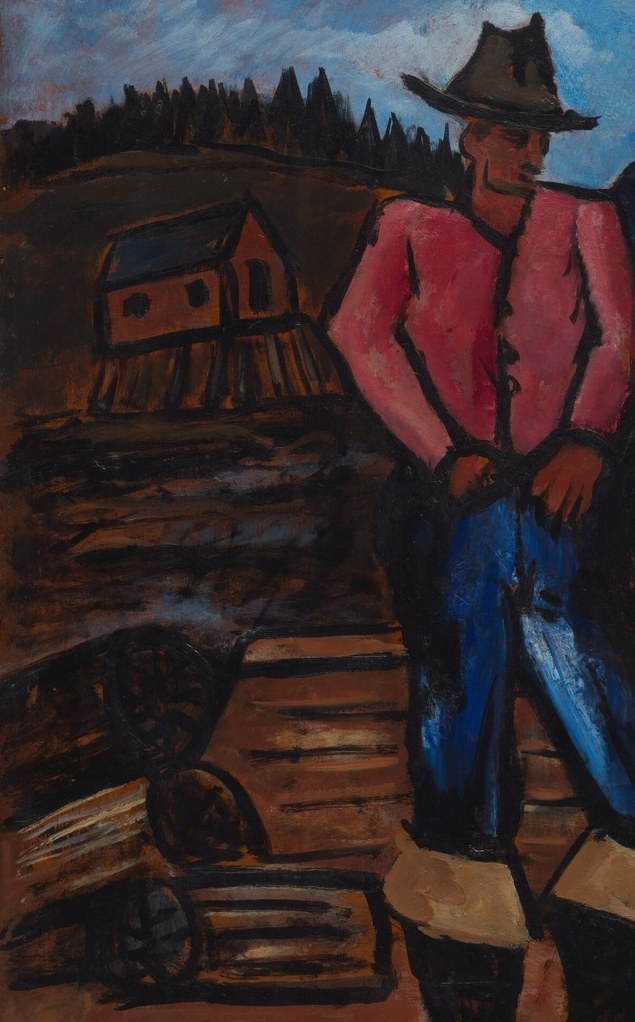
Look at the faces of the fishermen. They aren't really faces at all. Hartley was a modernist who absorbed Cubism in Paris and Berlin, and by 1940, back home in Maine, he wasn't interested in portraiture. He painted posture: the set of a shoulder, the weight of a hat brim against a cold sky. These men are universal because he refuses to give them individual features.
Now look at that horizon. Barely two inches wide, a slash of red. It's a boat shed, a lobster shack, the physical proof that this is a real working harbor. Hartley placed it there not as a focal point but as a fact. The fishermen aren't posing in symbolic isolation; they are anchored to a specific place and a local economy.
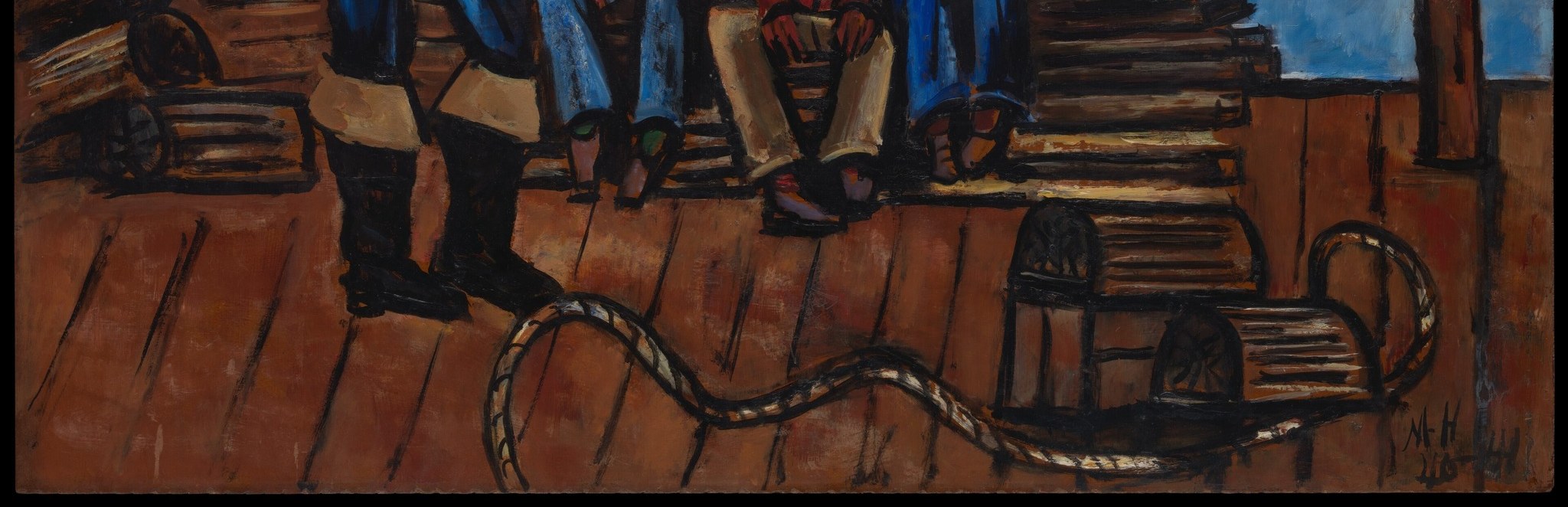
This painting belongs to his final "Maine Series," made in the years just before his death in 1943. After decades wandering Europe, he came back to the coast he grew up on and painted working people with a gravity usually reserved for kings. That little red structure is his quiet signature of truth. What small detail have you discovered in a painting that changed the whole thing for you?
#arthistory #marsdenhartley #americanmodernism
Details
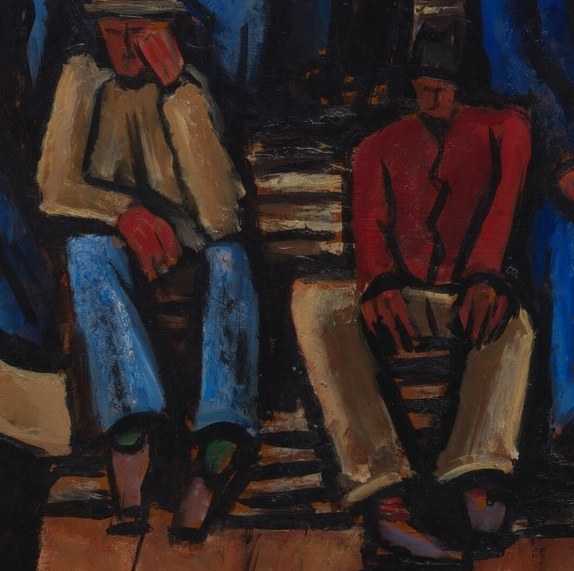
Transcript
Maine, 1940. The last years of a great painter's life. He came home to paint what he knew: work that wears on a body. Red shirt, broad brim against the sky: he is nobody in particular. Hartley painted dignity, not faces. Now slide your eye to the far right edge. A tiny red structure sits on the harbor's lip. It is barely a brushstroke. But it proves this is a real working port. A whole economy reduced to two inches of paint.