Banks of the Seine by http://www.wikidata.org/.well-known/genid/4ac99f5c3086c00a8a576e5a1a9a209b
View the artwork: Banks of the Seine →
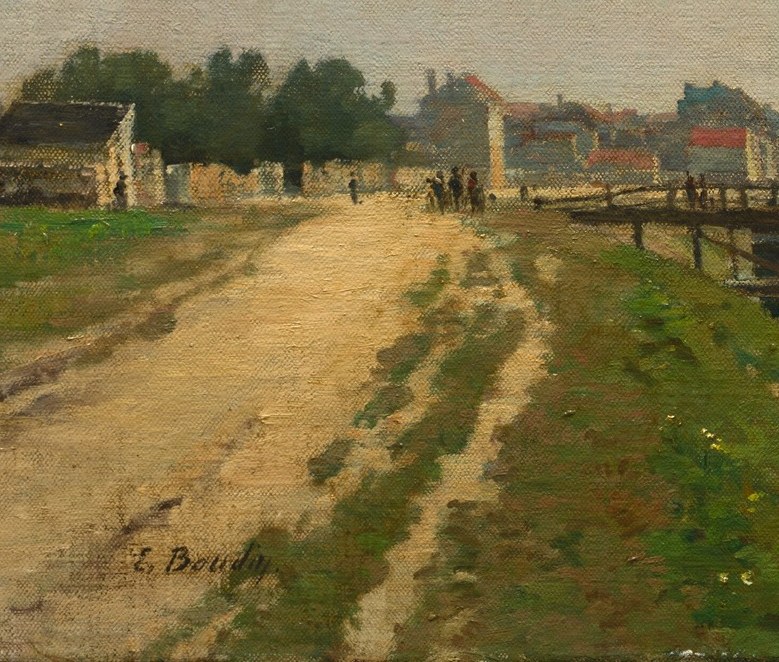
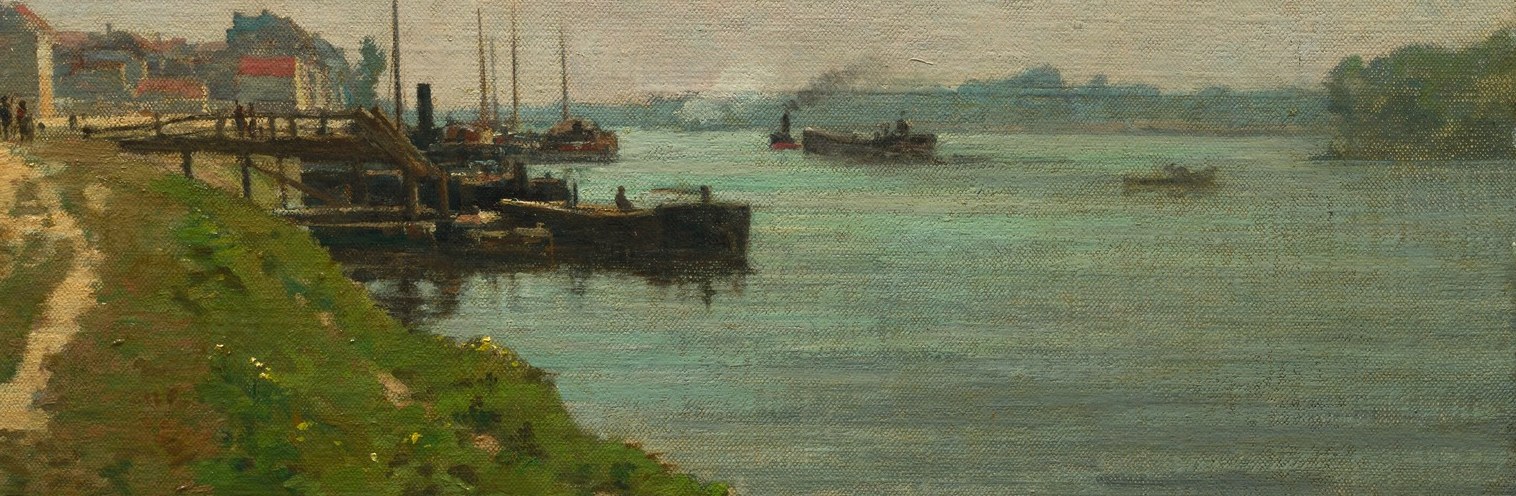
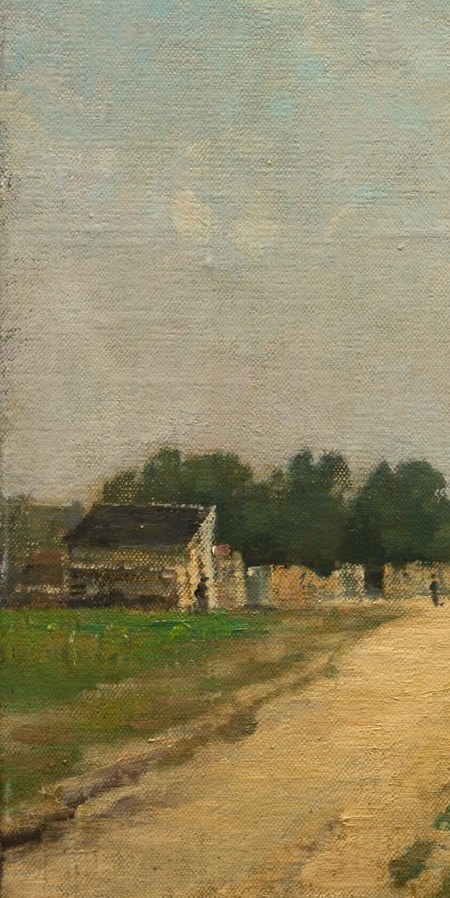
This is Banks of the Seine, painted by Charles-François Daubigny around 1860. It shows a working stretch of the river, with a dirt path tracing the water's edge and commercial boats moored near a wooden pier. The scene is quiet, but its technique is quietly revolutionary. Daubigny was one of the earliest French painters to work directly from nature, and his handling of light on water would directly influence the Impressionists who followed.
The most legible trick happens in the water near the dock. Find the vertical masts of the steamboat, then look down at their reflections. The solid verticals dissolve into flat, horizontal smears of paint. Daubigny understood that reflection on moving water breaks a form apart, and he painted that optical truth rather than the object itself.
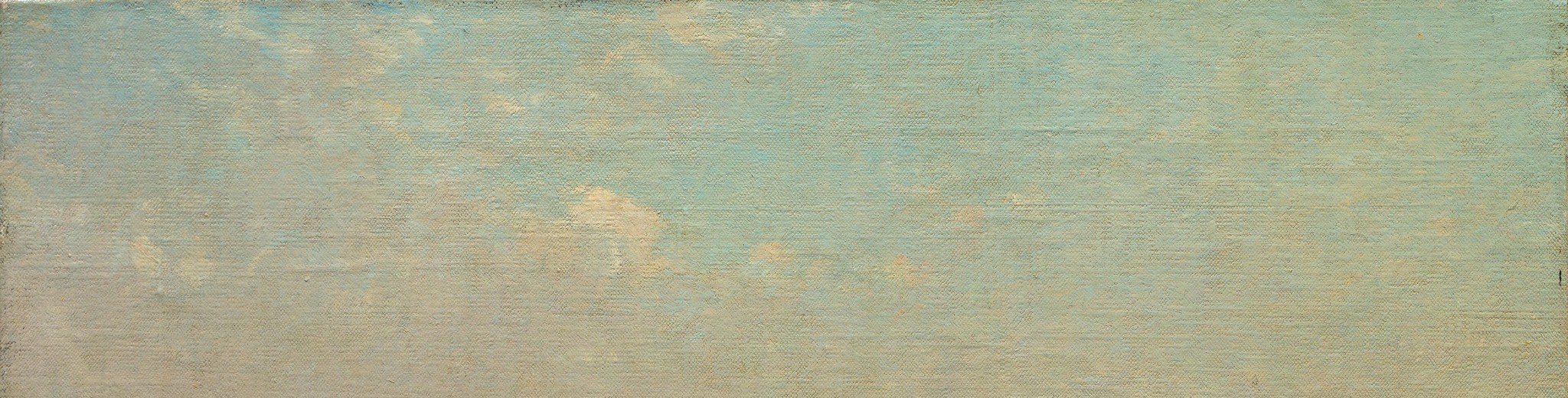
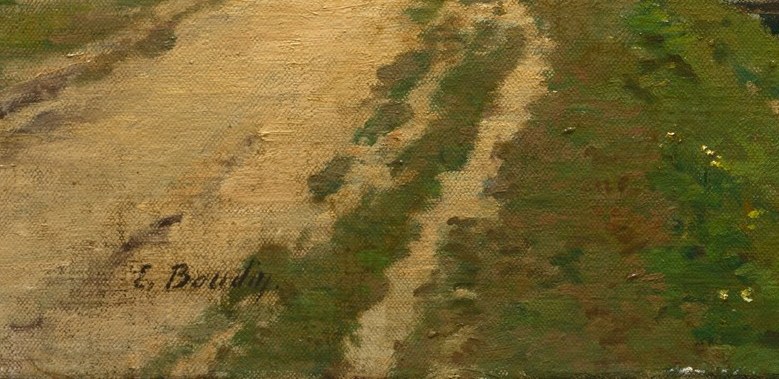
The sandy path in the lower-left corner is where his brushwork is thickest. The paint sits up off the canvas in a technique called impasto, capturing the texture of sun-warmed earth. The pale, nearly colorless sky sets the tonal key for everything beneath it, proving that atmosphere, not detail, was his real subject.
Daubigny would later install a studio on a boat to paint the Seine from the water itself. This view, from the embankment, shows him already thinking like someone who knew the river intimately.
#arthistory #daubigny #impressionism
Details
Transcript
A quiet stretch of the Seine, around 1860. The river was still a working artery, not a leisure spot. Look at the reflections near the dock. The vertical masts dissolve into flat, horizontal strokes. That is the trick. Solid form becomes flickering light on water. He painted with quick, visible strokes to catch the moment.