Portrait of a Boy by Miss Leland
View the artwork: Portrait of a Boy →
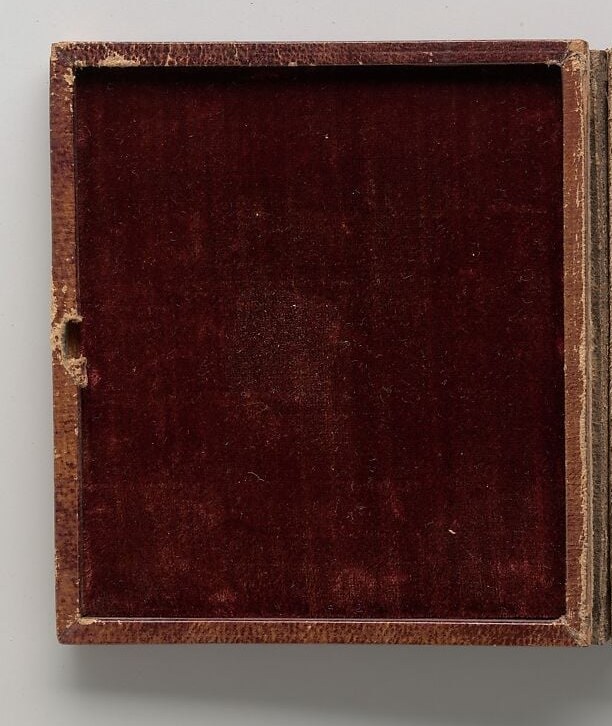
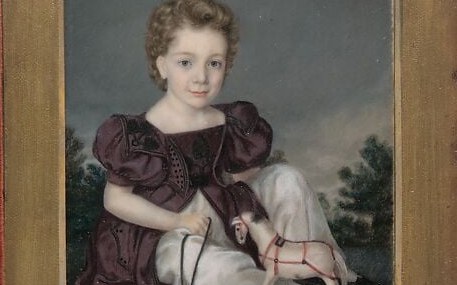
This is Miss Leland's "Portrait of a Boy," a watercolor miniature on ivory painted around 1840. It belongs to a tradition of pocket-sized portraiture so intimate that the painting itself was often worn inside a locket or a hinged case, meant to be held rather than hung on a wall.
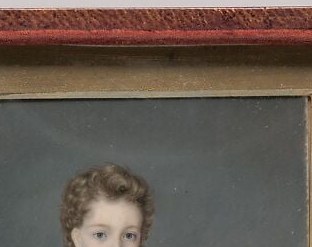
Look closely at the child's face. There is no paper and no ground layer underneath the paint. Watercolor was applied directly onto a thin slice of ivory, which is slightly translucent and faintly warm in hue. The ivory shows through every wash, it is the skin tone. The painter built translucent layers of color over its natural glow, and the softness of the boy's cheeks and eyelids comes from those washes pooling and feathering at their edges.
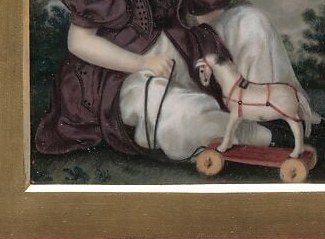
Miss Leland was one of many professional women miniaturists working in mid-19th-century America, a period when the demand for hand-held portraiture opened the field to female artists in a way that large-scale oil painting often did not. Miniatures like this were commissioned as keepsakes, a child remembered before growth changed his face, a token carried by a traveling relative. The toy horse tucked under his arm is the single childhood object the family chose to include.
You are looking at something painted at locket scale, on a material that cannot be corrected once the wash is down. The warm light in his eyes is the ivory itself.
#arthistory #miniatureportrait #womenartists
Details
Transcript
This is a watercolor on ivory. It was meant to sit in your hand. The painter was a woman, around 1840. She painted the face directly onto the ivory. No primer. The ivory glows through the paint. The blush is a single translucent red wash. Let wet into wet. It set in seconds.