A Wooded Landscape by Hobbema, Meindert
View the artwork: A Wooded Landscape →
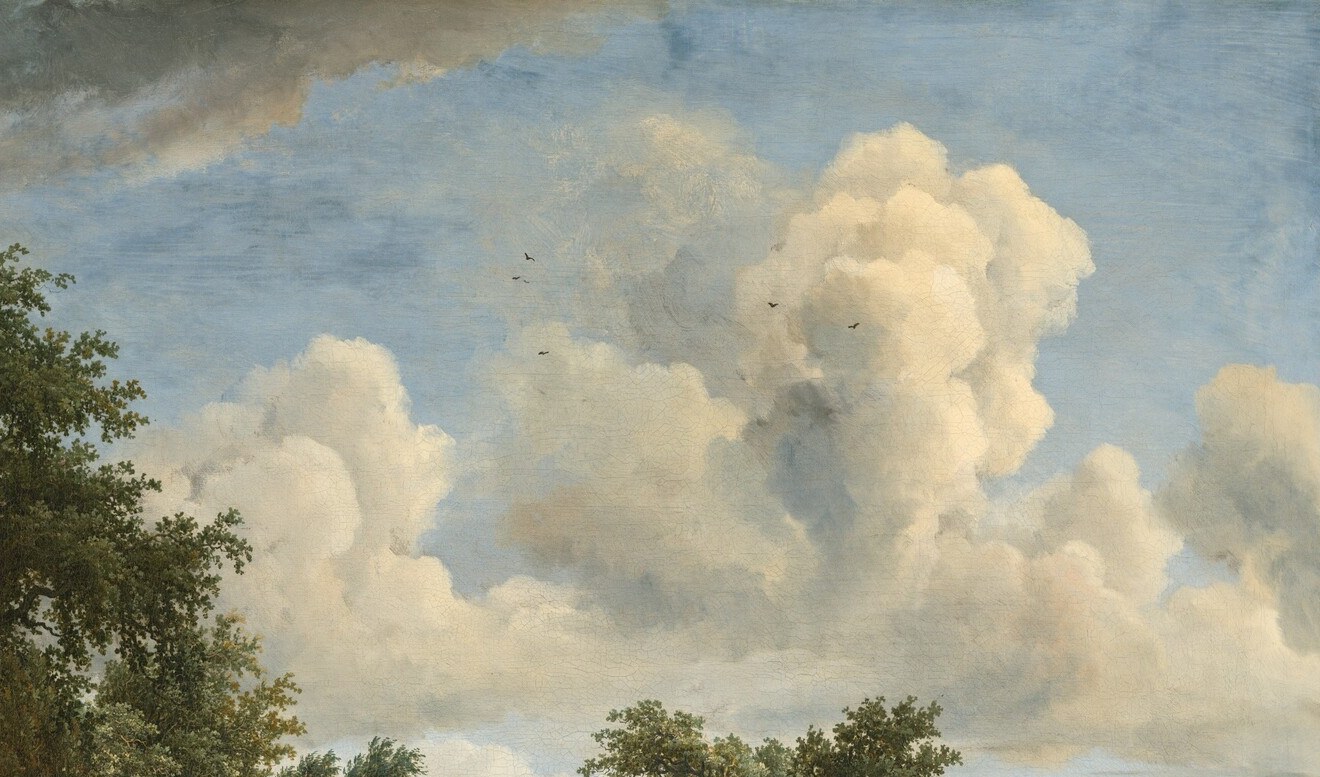
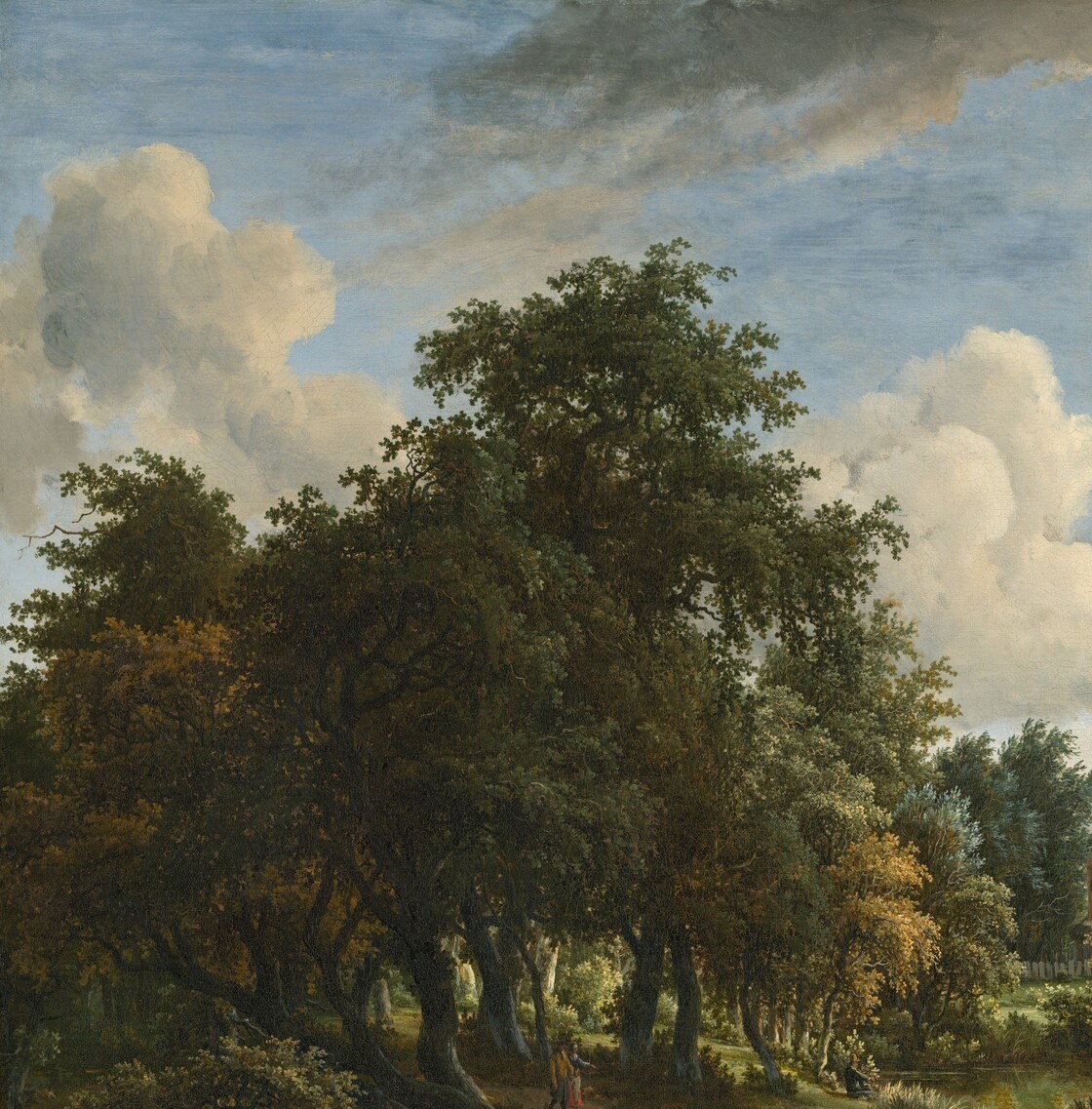
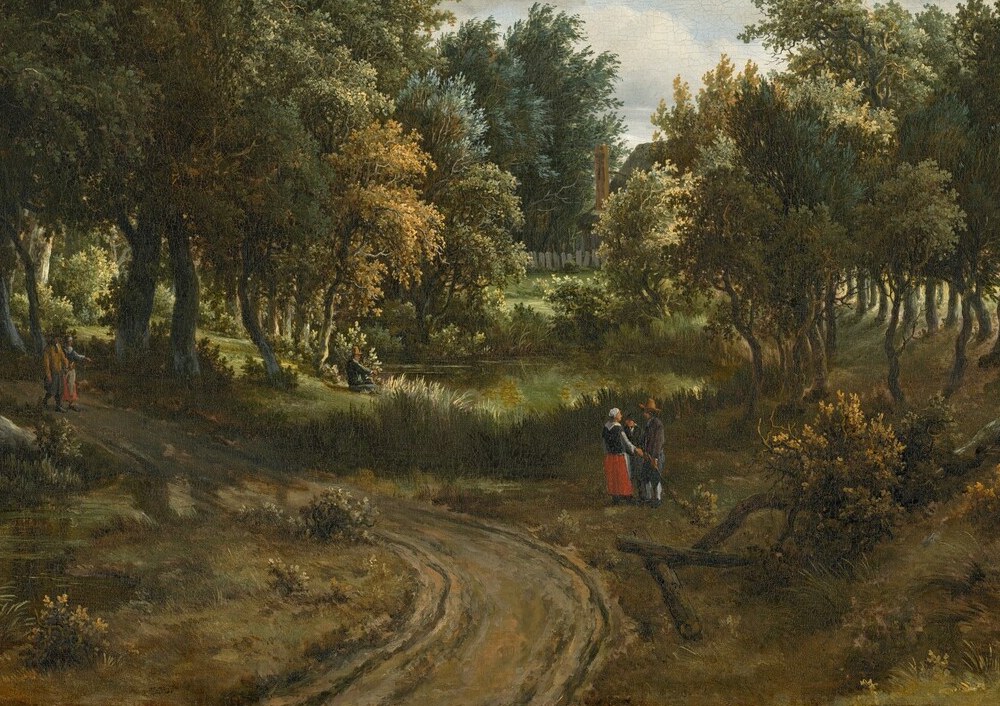
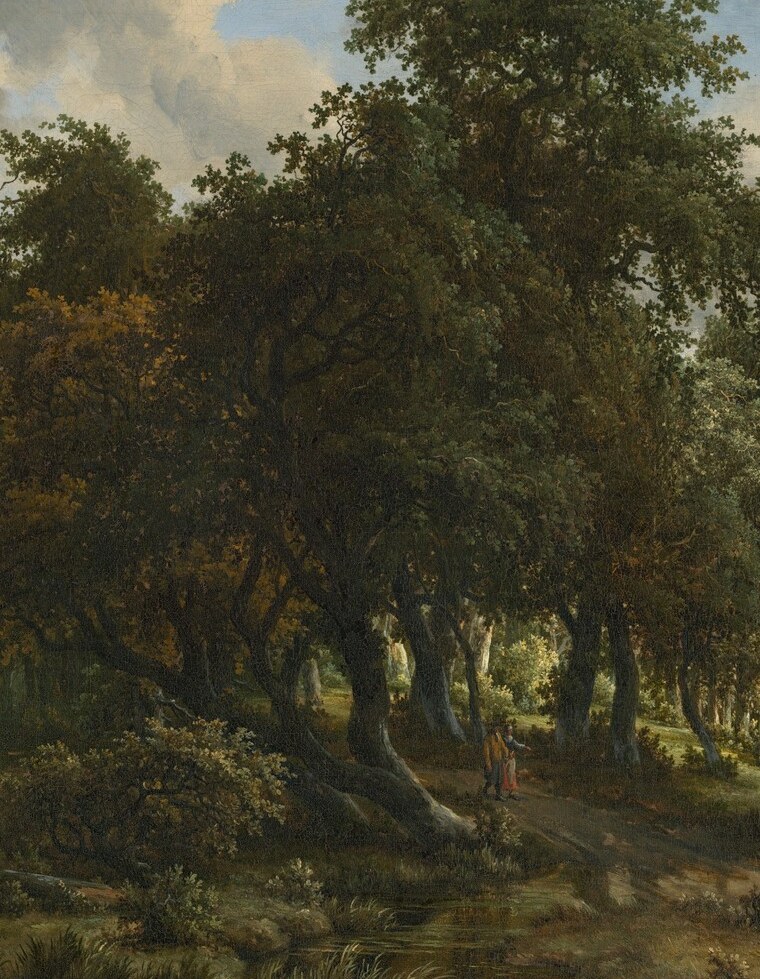
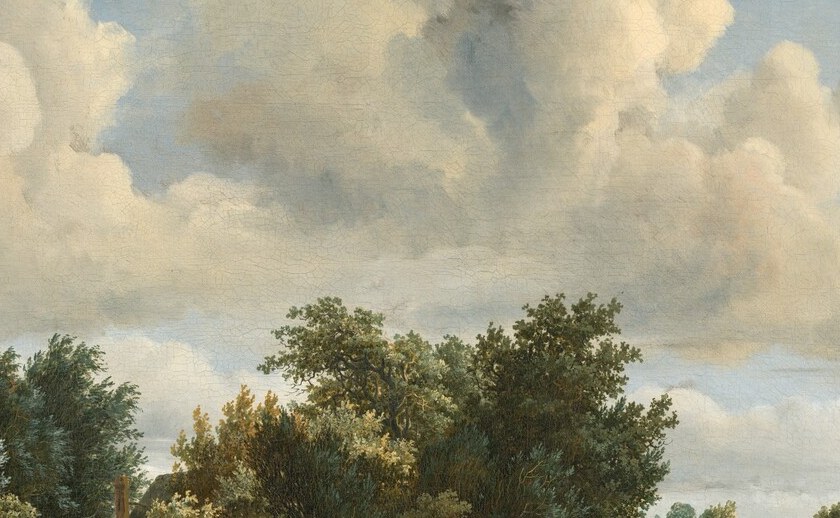
Meindert Hobbema's "A Wooded Landscape" (1663, National Gallery of Art) is a masterclass in leading the eye through a painting using nothing but a dirt path and a patch of sunlit grass.
The towering oak on the left dominates the composition, throwing nearly half the canvas into deep shadow. Hobbema counters this weight with a winding sandy path that acts as a light relay, bouncing the eye from the dark foreground straight to a luminous clearing in the distance. Tiny walkers, barely a centimeter tall on the original canvas, make the trees feel genuinely colossal.
This painting marks a pivotal moment in Hobbema's career, when he began to break away from the heavier style of his teacher, Jacob van Ruisdael. Art historian Gustav Friedrich Waagen praised its "astonishing power, transparency and freshness" in capturing afternoon light. The work later passed through the hands of J. Pierpont Morgan before Andrew Mellon donated it to the nation in 1937.
The real sleight of hand is that bright clearing at the path's end. It is not a grand vista; it is just a small sunlit gap. But Hobbema made it the most important square inch on the canvas. Is there a detail in the dappled foliage that catches your eye first?
#arthistory #dutchgoldenage #hobbema
Details
Transcript
Look at that towering oak canopy, a wall of shadow. This much darkness should feel like a dead end. A pale sandy path cuts straight through it. It bends and carries the light into the deep woods. And here, at the path's end, the real trick. A bright clearing painted with astonishing transparency. The entire painting is an escape route built from light. Hobbema guides you out of the dark the same way he guides those walkers home.