The Birth and Naming of Saint John the Baptist; (reverse) Trompe-l'oeil with Painting of The Man of Sorrows by Bernard Van Orley
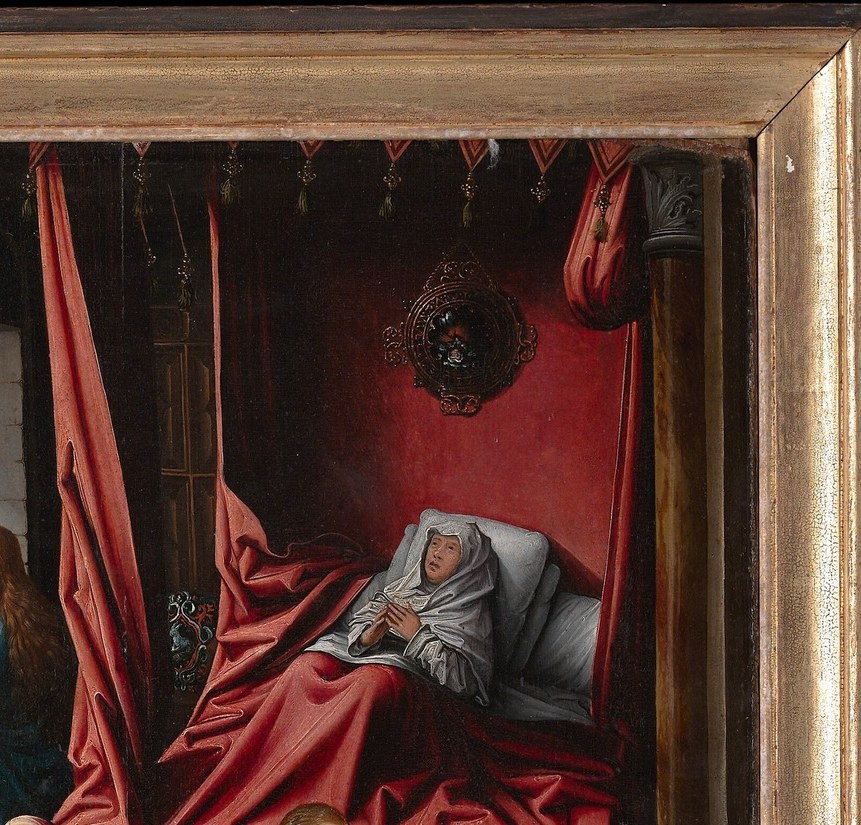
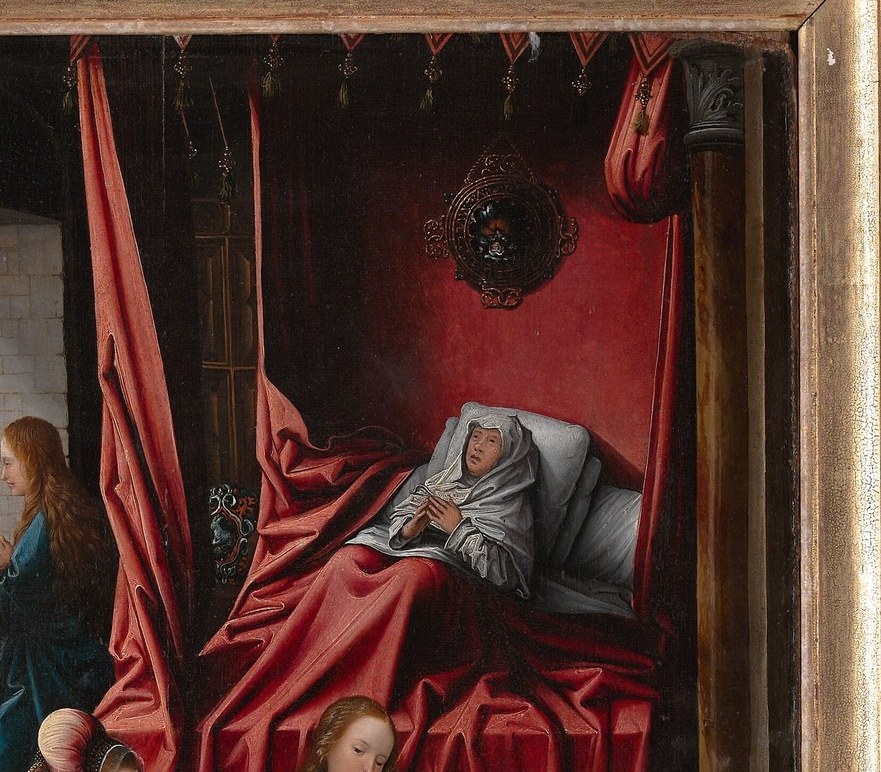
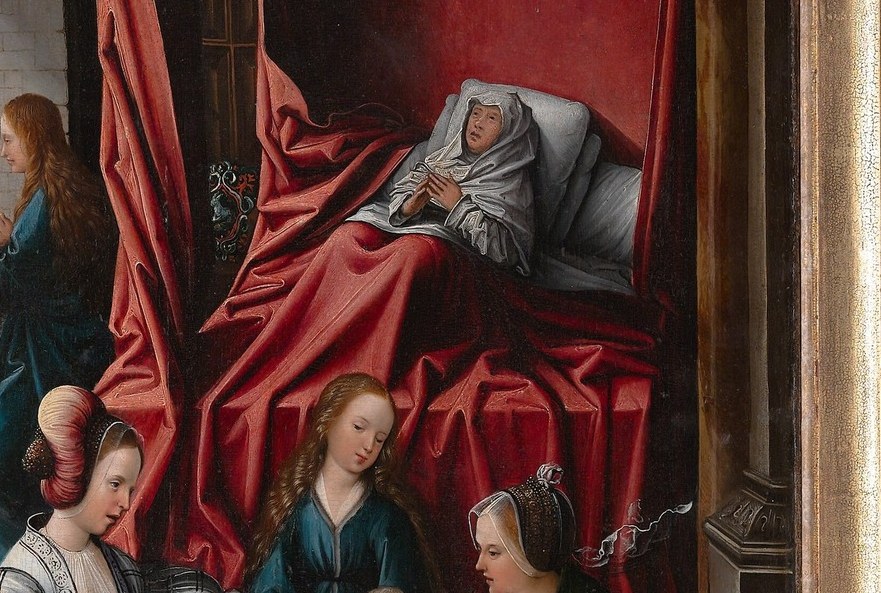
Bernard van Orley painted The Birth and Naming of Saint John the Baptist around 1514 as the left wing of an altarpiece for a Benedictine abbey. On the front, an exhausted Saint Elizabeth reclines in a crimson-draped bed while her husband, the mute Zacharias, holds up a tablet confirming their son's name. It is a scene of domestic ritual and biblical miracle, painted with the luminous detail that defines the Flemish tradition.
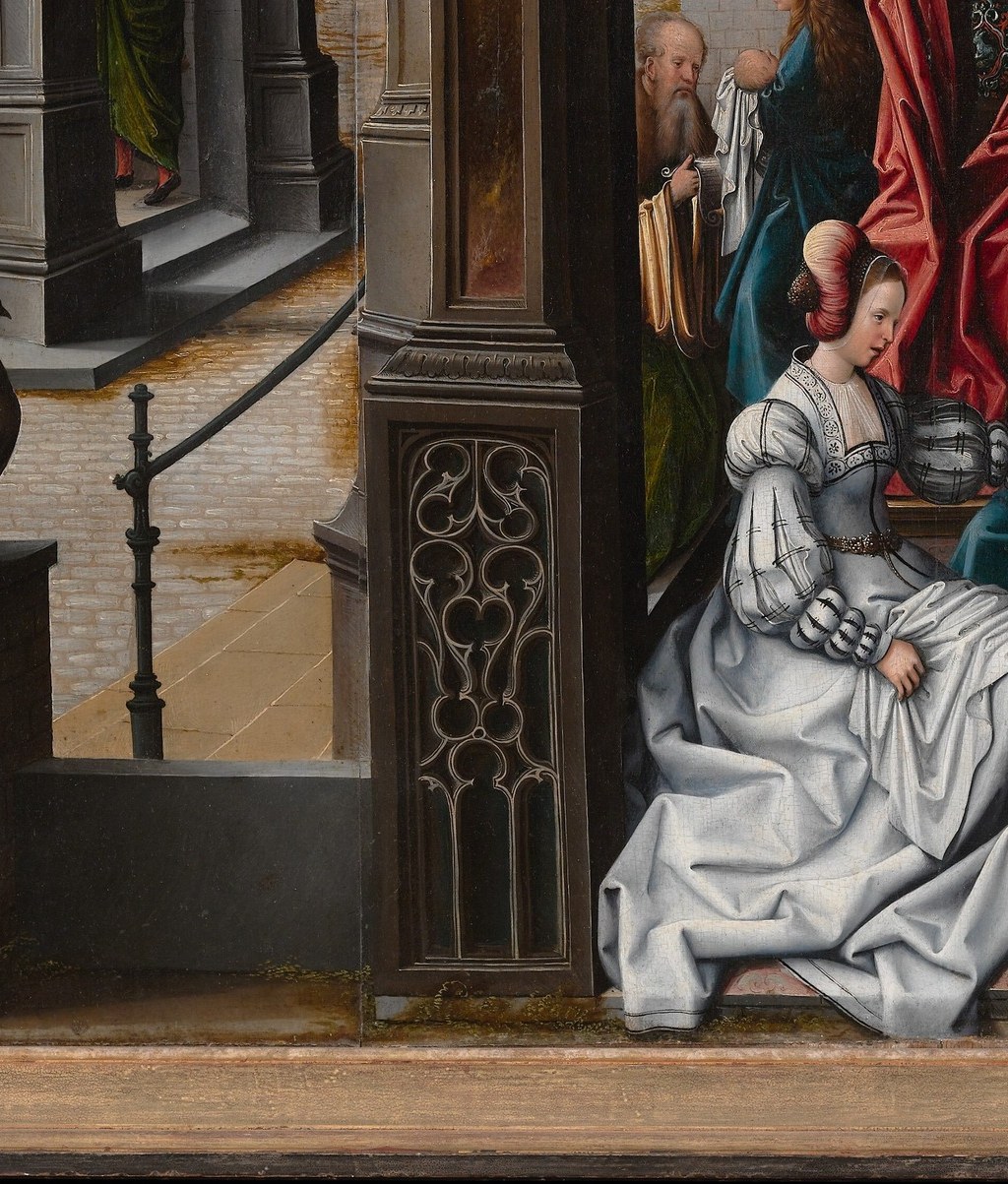
The camera lingers on the small naming tablet in Zacharias's hands. That tablet is the pivot of the story: according to the Gospel of Luke, Zacharias lost his voice for doubting the angel Gabriel and only recovered it after writing the child's name. Van Orley makes that moment of returned speech the quiet center of a crowded room. Trace his gaze to the white-robed attendant kneeling in the foreground, whose upturned face carries the emotional weight of witness.
But the painting holds a second story on its reverse side, which is not shown in the film. Against a veined marble ground painted in trompe-l'oeil, an abbot's crozier hangs above a framed image of Christ as the Man of Sorrows. It was a personal projection of power for the patron, Abbot Jacques Coëne, merging his ecclesiastical identity with the illusionism Van Orley had absorbed from Italian models via Brussels.
Van Orley was court artist to the Habsburgs, a designer of tapestries and stained glass as well as panels. Late in life, his Protestant sympathies surfaced, and he was imprisoned for heresy. That biographical fact casts a shadow over this early, pious work. Does the heresy charge change how you see the abbot's devotional altarpiece?
#arthistory #flemishart #renaissance
Details
Transcript
In 1514, a Benedictine abbot ordered an altarpiece. This panel was built to tell two stories at once. The father, Zacharias, stands apart, holding a tablet. He had been mute for nine months. He writes 'His name is John' and his voice returns. But the real shock was on the back. The abbot's personal crozier looms over a dying Christ. The artist was later imprisoned for heresy.