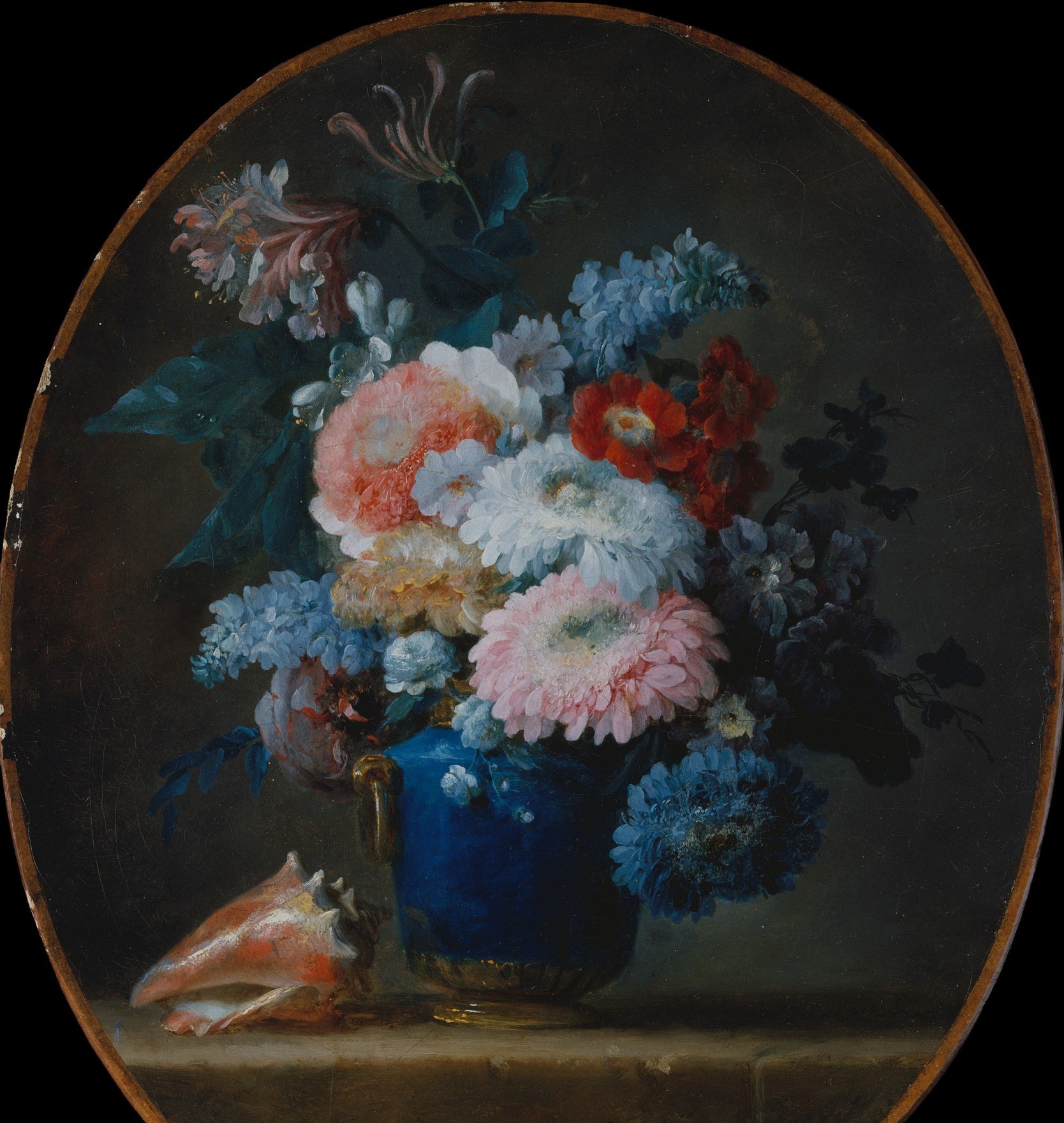
Vase of Flowers and Conch Shell by Anne Vallayer-Coster

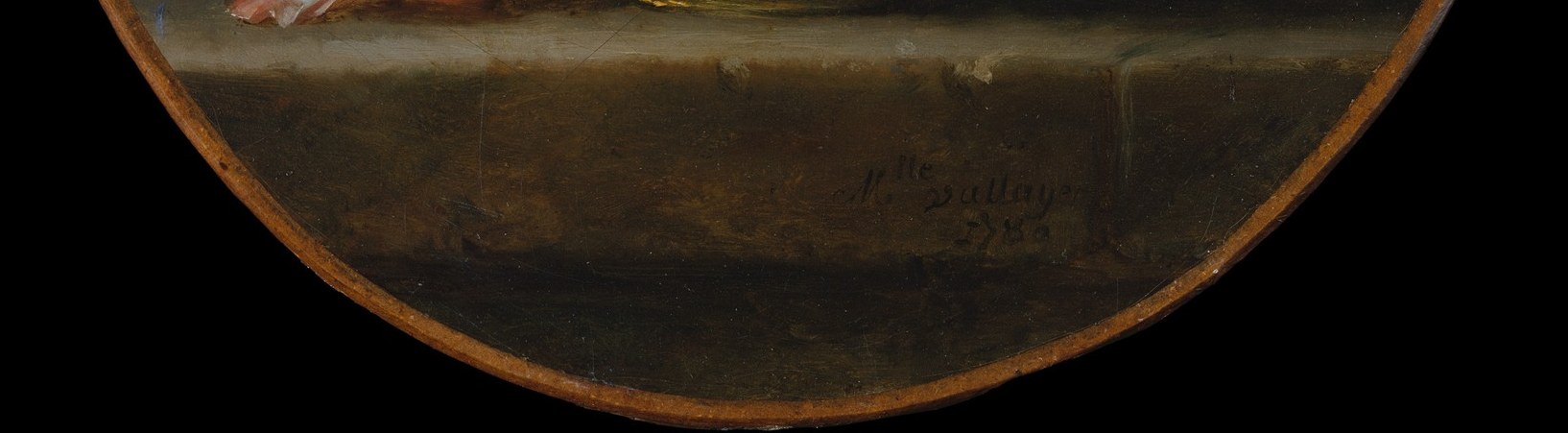
Anne Vallayer-Coster painted 'Vase of Flowers and Conch Shell' in 1780, nine years before the French Revolution toppled the world it depicts. The painting hangs in the Metropolitan Museum of Art.

What you are looking at is a document of aristocratic privilege preserved in oil. The conch shell was an expensive curiosity imported from distant colonies, prized by collectors who filled entire rooms with such objects. The deep blue glaze on the vase was a technical triumph only recently achieved in Europe, a ceramic secret that cost a small fortune.

Vallayer-Coster was a favorite of Marie Antoinette and one of only four women admitted to the Académie Royale. She built a career on still lifes because women were barred from the figure-painting studios where male artists trained. Her precision with petals and shell ridges earned her a reputation that outlasted the court that patronized her, though the Revolution did dim her commissions.

The fallen petals at the edges are the moral of the story. Dutch-French still-life tradition always tucked a reminder of transience into the abundance. All this wealth, carefully arranged on a dark table, was already coming apart.

#arthistory #stilllife #frenchrevolution

Details
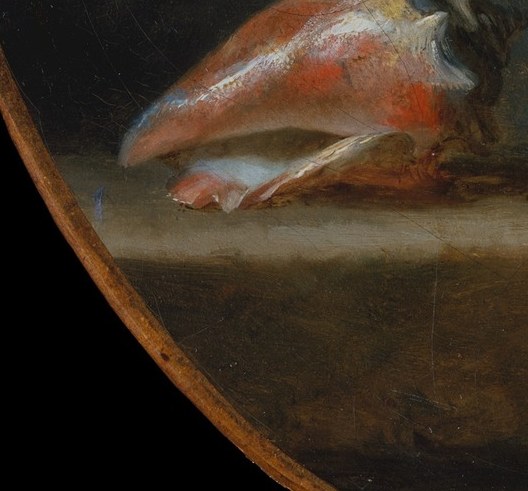
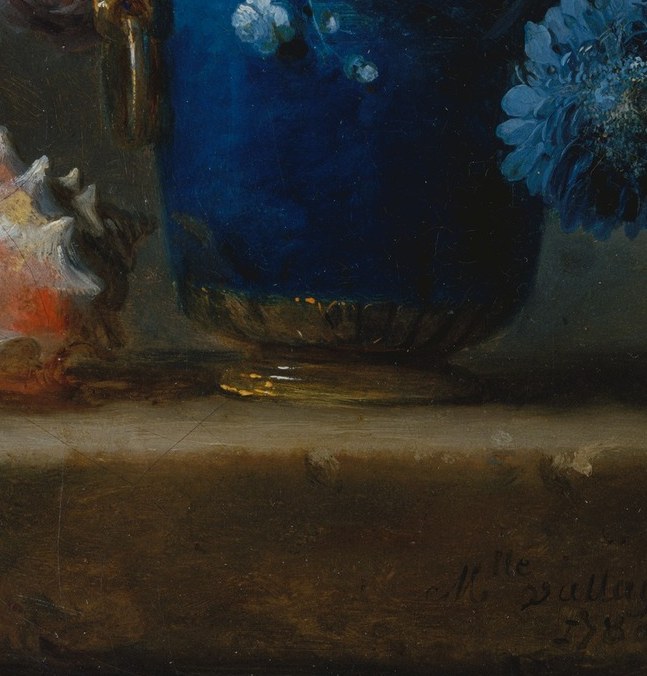
A prized cabinet curiosity of 18th-century France, the shell introduces a spiraling organic geometry that contrasts with the rounded flowers; its nacre surface is a separate textural challenge from the ceramics
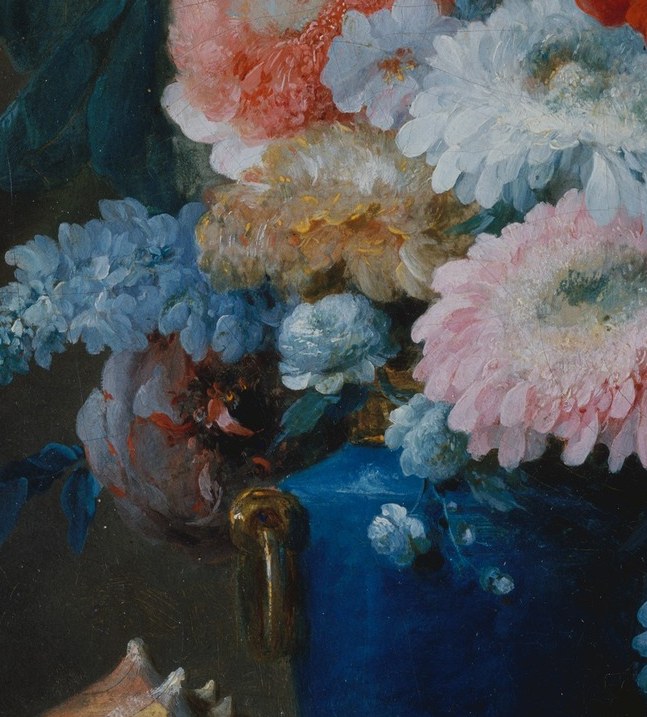
The cobalt-blue glaze contrasts sharply with warm floral tones; its smooth cylindrical form anchors the entire composition and demonstrates Vallayer-Coster's skill at rendering ceramic surfaces
The near-black void forces all color and light onto the objects; a detail sweep here might reveal soft tonal gradations or glazing layers that are lost in reproduction , a hidden painting within the darkness
The dominant focal bloom with tightly layered petals catching the light; its scale commands the eye and shows the painter's command of soft gradation from blush to cream
The horizontal plane grounds the composition and its warm ochre tones balance the cool blue vase; subtle reflections or cast shadows on this surface are a hallmark of French still-life illusionism
Transcript

Paris, 1780. The monarchy is at its height. On a salon table, a blue ceramic vase holds a riot of blooms. Beside it: a conch shell from a distant ocean. Collecting exotic shells was an aristocratic mania. Cabinets of curiosity filled Parisian salons. The blue glaze was a technology Europe had only just mastered. But look at the scattered petals, already falling. A vanitas gesture. The blooms will wilt. The shell will break. Nine years after this was painted, the Bastille fell.