Finish—First International Race for America's Cup, August 8, 1870 by Samuel Colman (American, 1832–1920)
View the artwork: Finish—First International Race for America's Cup, August 8, 1870 →
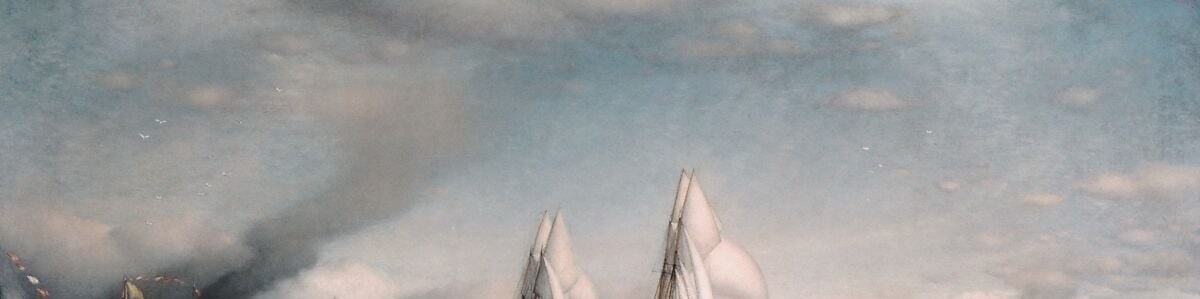
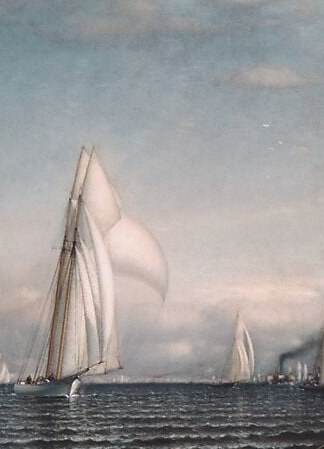
This is Samuel Colman's 'Finish, First International Race for America's Cup, August 8, 1870,' painted the same year as the race and now held by the Mariners' Museum in Newport News, Virginia. On its face it captures a pivotal moment: the American schooner *Magic* edging out the British *Cambria* to win the very first America's Cup. But the painting itself has a stranger, quieter second life that began the year the artist died in 1920, when it disappeared from a yacht and was thought lost for good.
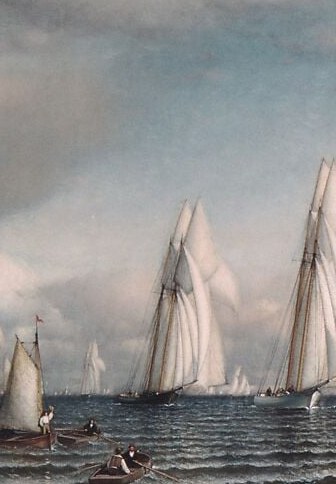
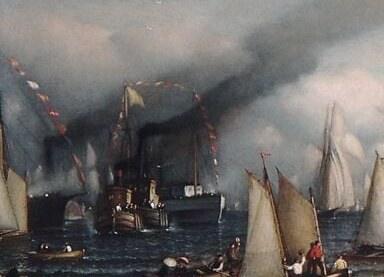
Look at how Colman builds the scene. The towering cumulus cloud behind the fleet acts like theatre lighting, punching a pool of silver-white sun directly onto the water at center-left, a Luminist touch that anchors your eye right where the two lead yachts duel. The dark steamship in the middle distance is a small but perfect detail: steam power sitting alongside sail, the future watching the race. And if you zoom into the horizon line on the right, the sea is crowded with a dense fleet of spectator craft, showing just how much civic weight this first international Cup carried.
Colman painted this as a contemporary record, a journalistic snapshot in oil at a time when the public was fascinated by the transition from sail to steam. The 1870 race drew enormous attention, and *Magic*'s victory became a point of national pride. The painting itself was reportedly aboard the yacht *Wenonah* when it was stolen. The circumstances were hushed, and the work only resurfaced a year later when the widow of the man who had taken it contacted authorities and arranged its discreet return.
It's rare that a painting about a historic victory carries its own separate history of loss and recovery. Next time you see a crowded regatta scene, think about what might be happening in the spectator boats.
#arthistory #AmericasCup #maritimeart
Details

Transcript
August 8, 1870. The first America's Cup race. The American yacht Magic crosses the line first. Samuel Colman painted the finish almost like a news photograph. Steamships share the water with sail. The painting vanished off a yacht in 1920. A year later, a widow returned it. Her late husband had taken it. She gave it back.