A Waitress at Duval's Restaurant by Pierre-Auguste Renoir
View the artwork: A Waitress at Duval's Restaurant →
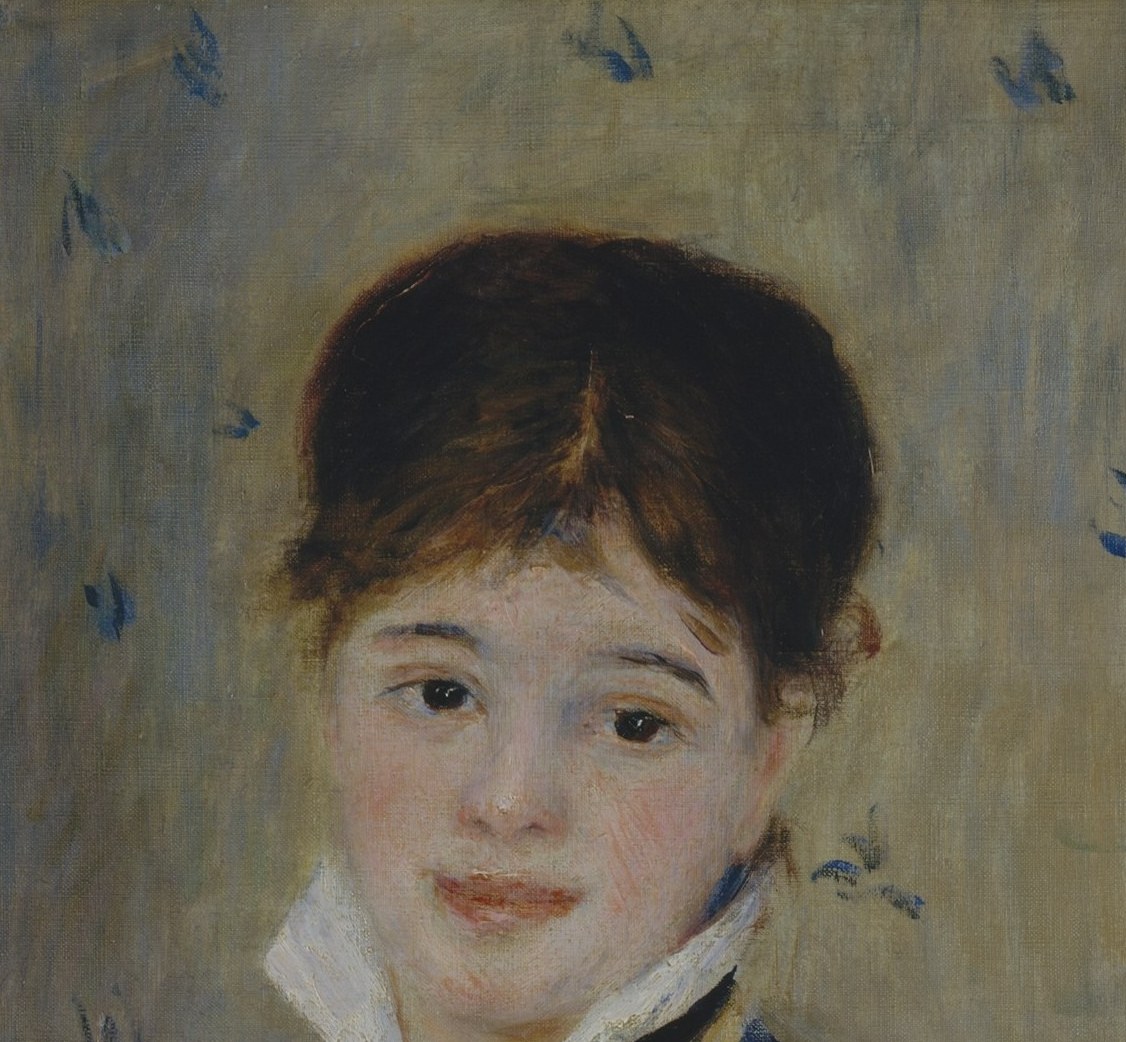
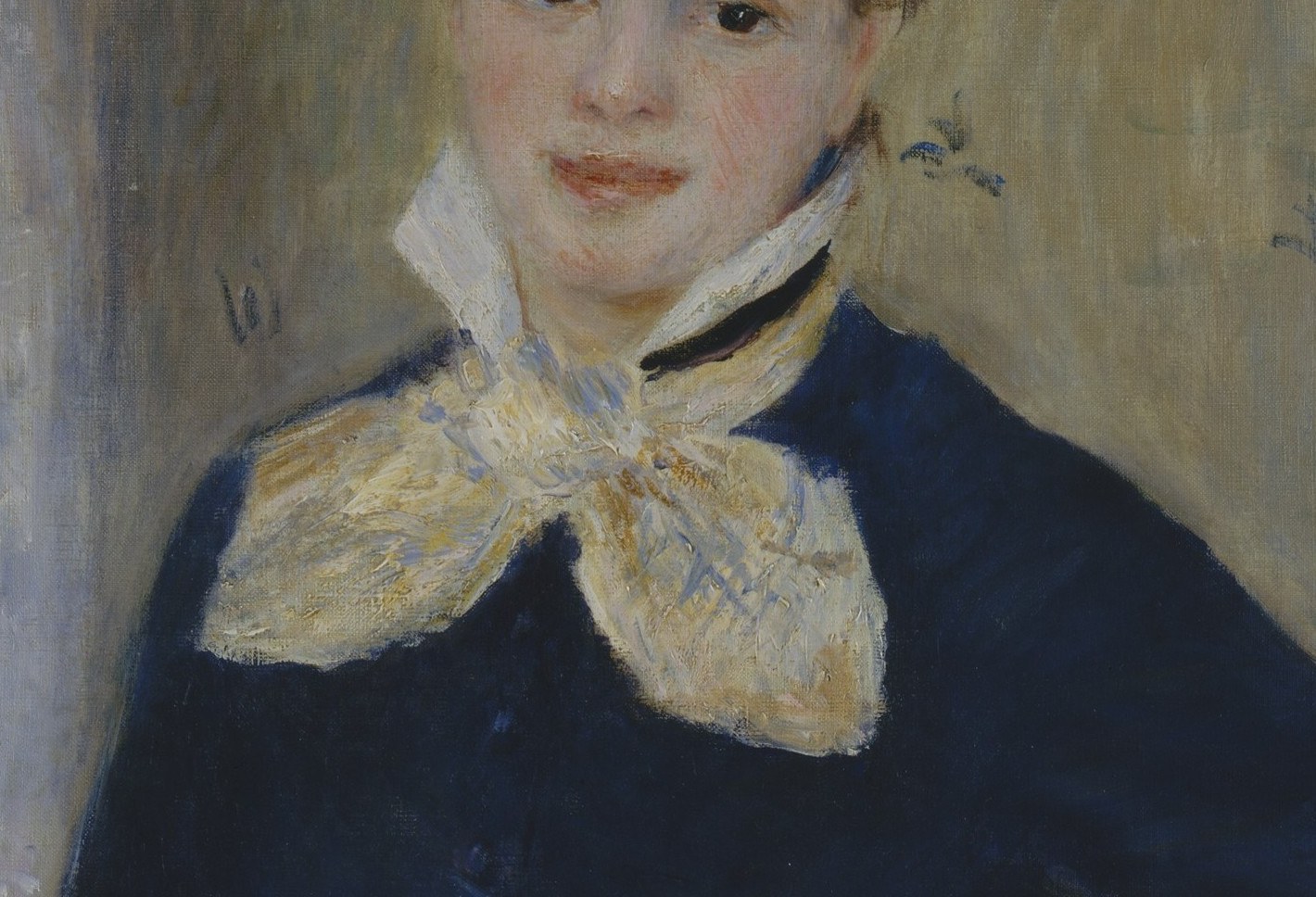
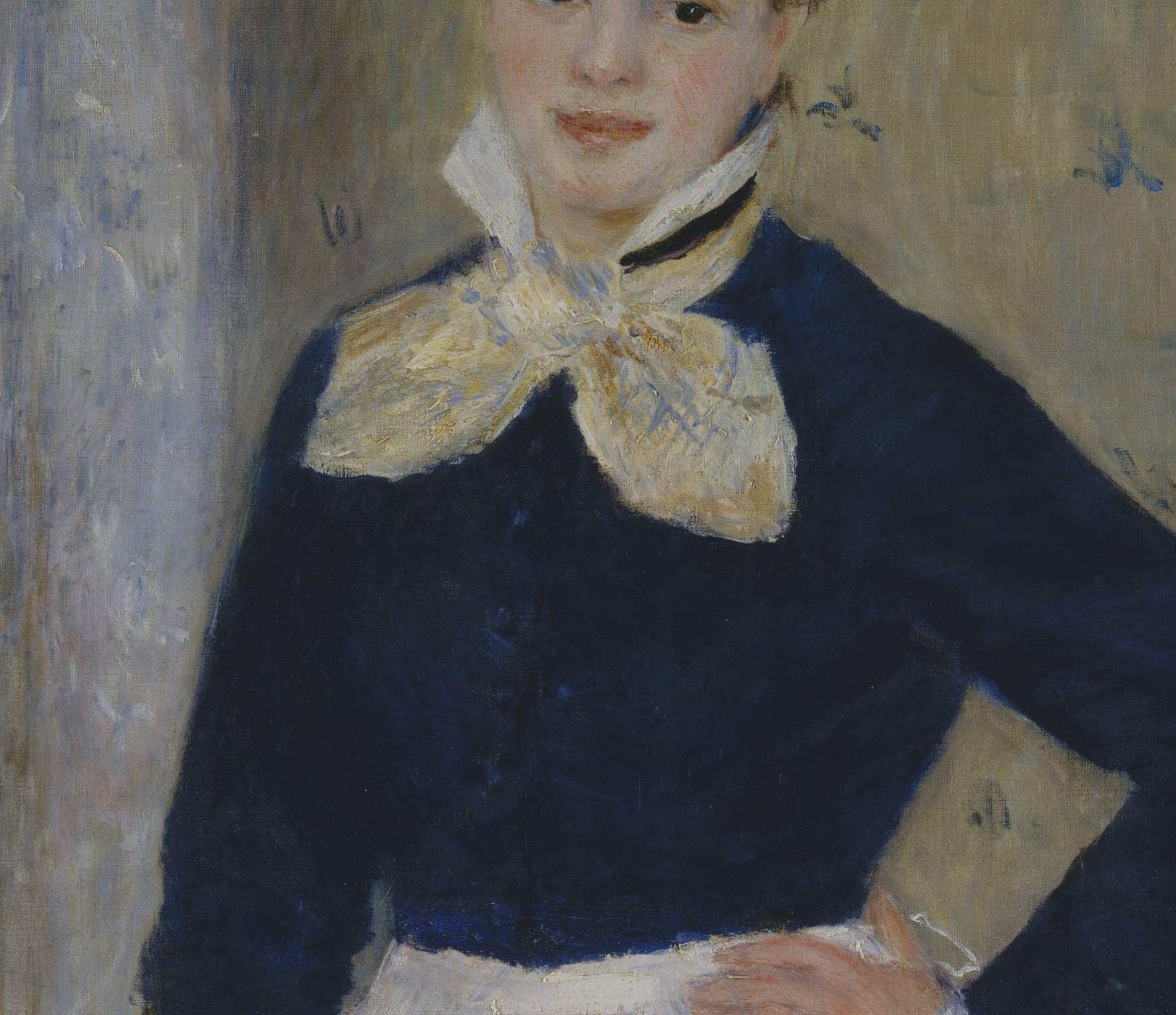
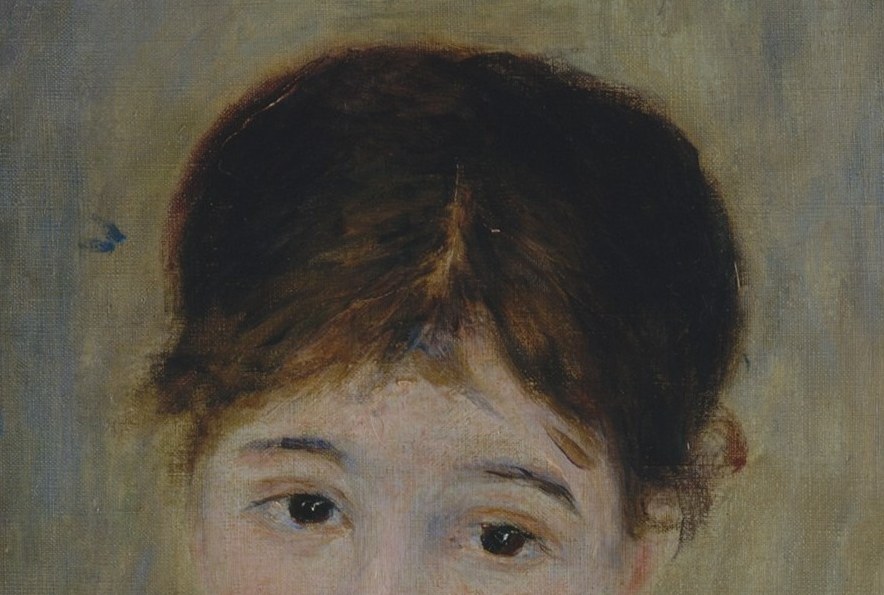
This is Pierre-Auguste Renoir's 'A Waitress at Duval's Restaurant,' painted around 1875 and now at the Metropolitan Museum of Art. For over a century, its title was a false lead.
By 1885 it entered the art market as 'La Servante', the servant. For decades, catalogues identified her as a waitress at one of Duval's bouillon restaurants, inexpensive Parisian eateries whose staff wore sober uniforms likened to nuns' habits. But the Met's scholarship now shows that Renoir's own title for this work has never been traced. The label was likely invented after the fact.
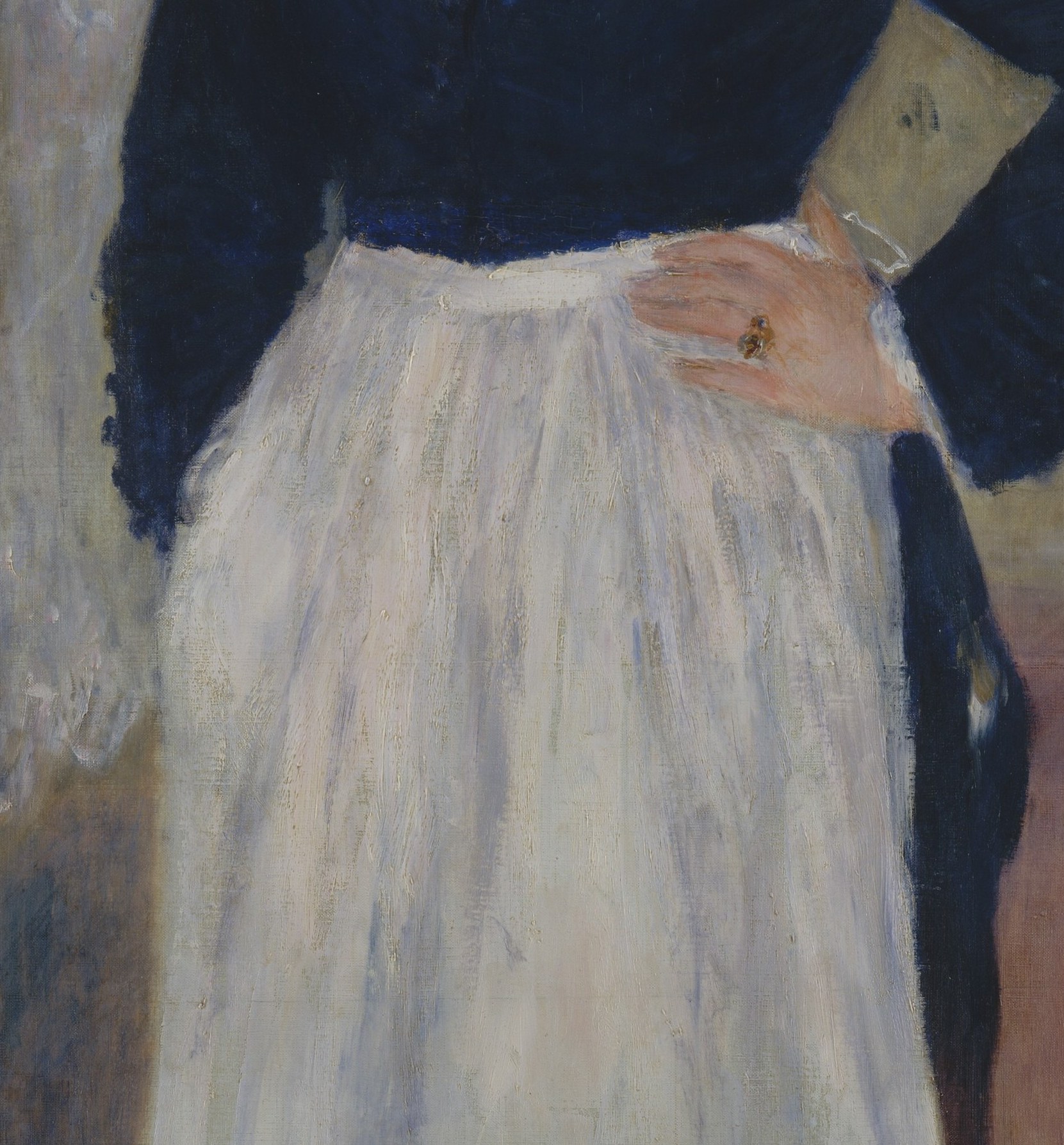
Look past the costume. Her posture is confident, her gaze direct. Renoir gives her a gold ring and soft light across her face, the same handling he gave his society portraits. She stands in three-quarter view against a muted floral wallpaper that stays deliberately quiet, letting the figure hold the room.
Renoir once said he wanted to capture an everyday eternity, to find Olympian dignity in a servant girl pausing at her work. A hundred and fifty years later, we still don't know who she was. Maybe that's the point.
#arthistory #impressionism #renoir
Details
Transcript
By 1885, this painting had a name: La Servante. For decades, everyone called her a waitress at Duval's. But Renoir never titled it. Not once. Her name, her job, all of it was added later. Look at how he painted her. Upright. Self-possessed. A gold ring on her hand. A person, not a type. Renoir said he wanted to find an everyday eternity. Olympian dignity in a servant girl pausing at her work.