Landscape at Les Pâtis, Pontoise by Pissarro, Camille
View the artwork: Landscape at Les Pâtis, Pontoise →
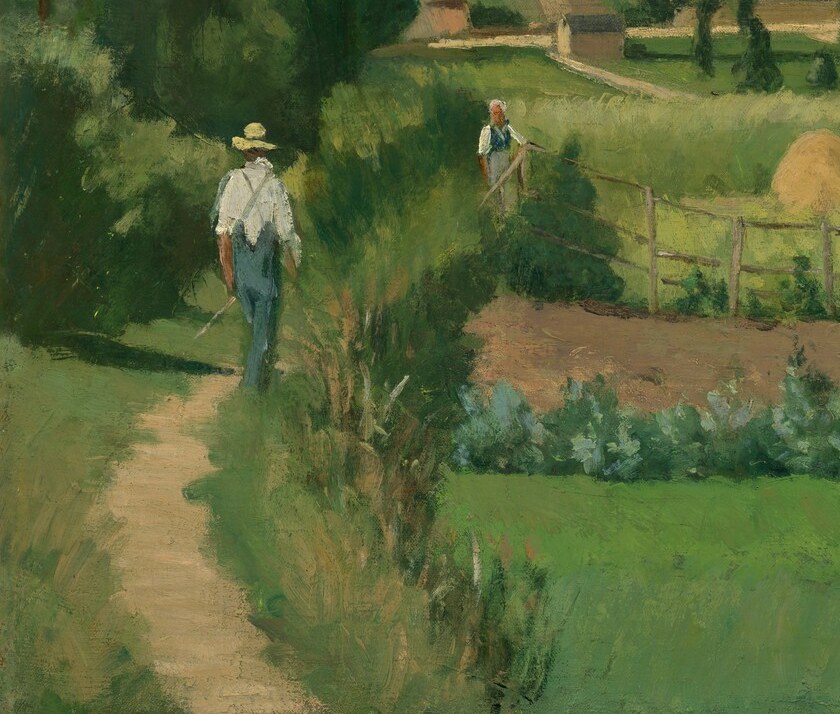
Camille Pissarro painted "Landscape at Les Pâtis, Pontoise" in 1868, and the painting is a witness to a quiet revolution. It now hangs in the National Gallery of Art in Washington, D.C. What you are seeing is not just a farm near Paris. It is a laboratory in oil paint, where the artist is working out the very technique that would soon be called Impressionism.
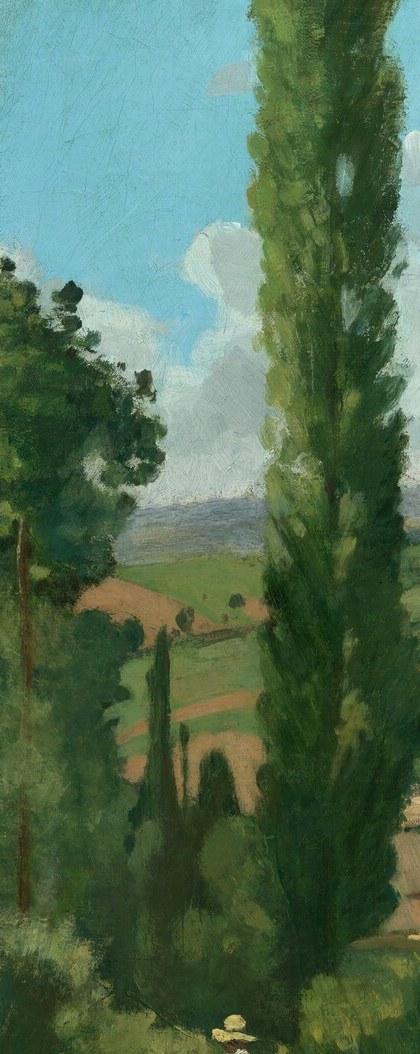
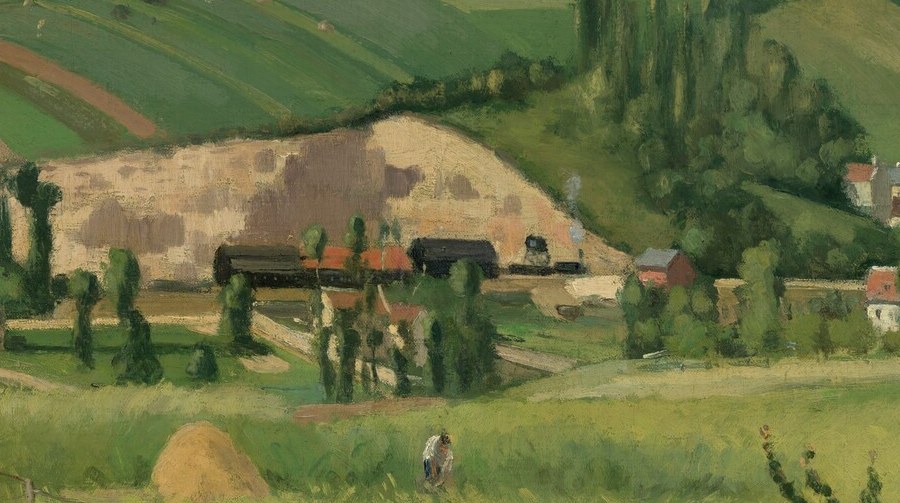
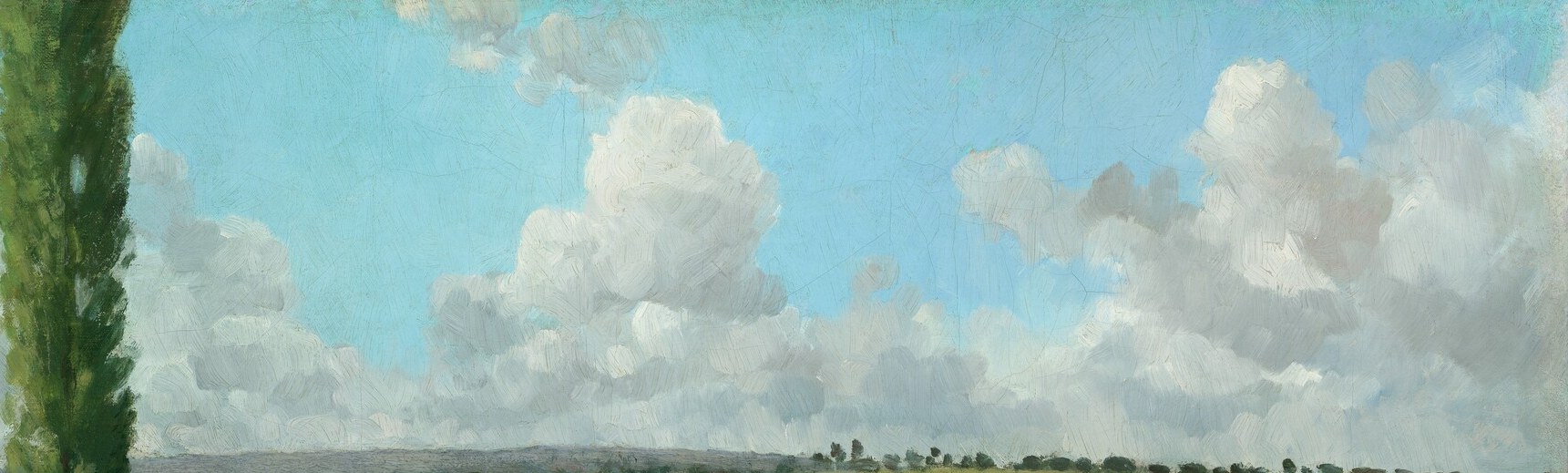
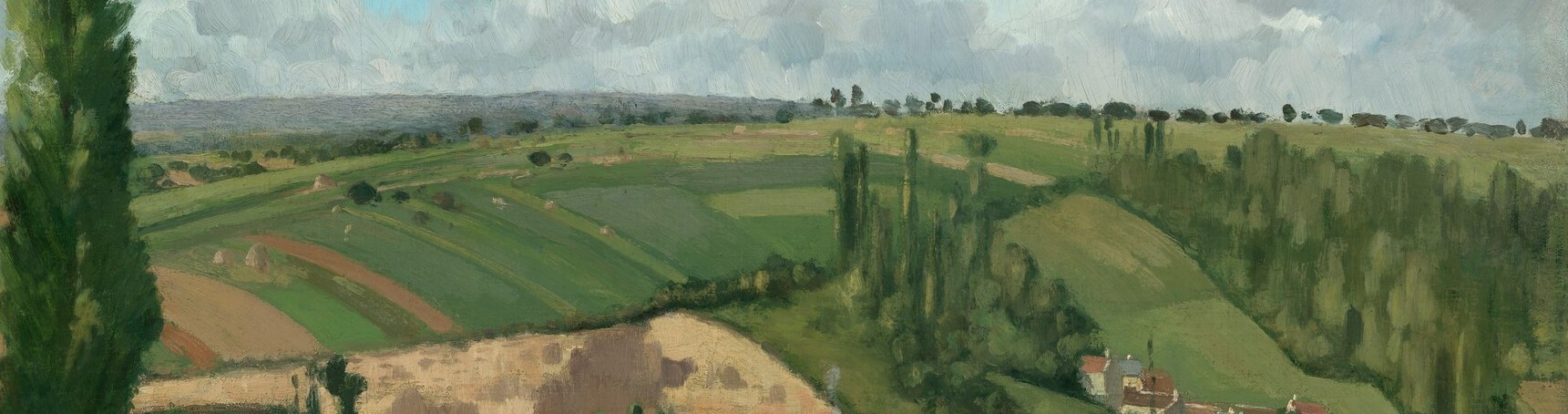
Look first at the hillside. What reads as a patchwork of fields is, up close, a mosaic of separate brushstrokes, green beside ochre beside brown, laid down without blending. Your eye does the mixing. This broken-color approach would become famous with Monet, but Pissarro was doing it right here, in 1868. The cumulus clouds in the sky are painted with the same loose, luminous freedom, a deliberate break from the dark skies of the earlier Barbizon School.
Pissarro had recently settled in Pontoise, a medieval town northwest of Paris. That year, he submitted this brighter, high-keyed work to the official Salon, and the novelist-critic Émile Zola singled him out for praise, noting his technical assurance. The painting stayed in the family, passing to his daughter Jeanne, before a long journey through Paris galleries and Argentine collectors. David and Peggy Rockefeller bought it in 1955 and gave it to the nation in 1991.
The artist signed it confidently in the lower right corner. He was staking a claim. Light could be built stroke by stroke, and a patch of dirt and farm buildings could hold the future of painting.
#arthistory #impressionism #pissarro
Details
Transcript
1868. A farm road in Pontoise, France. The eye follows the dirt path toward the white buildings. Now look higher. The fields are a mosaic of green and ochre. Move in. The color does not mix on the palette. It mixes in your eye. This is broken color, years before Monet's haystacks. The clouds are the same: freely brushed, luminous, not somber. Zola praised this new high-key palette at the 1868 Salon. The signature is a timestamp. Pissarro knew exactly what he had started.