Interior of a Catholic Church by Gerard Houckgeest
View the artwork: Interior of a Catholic Church →
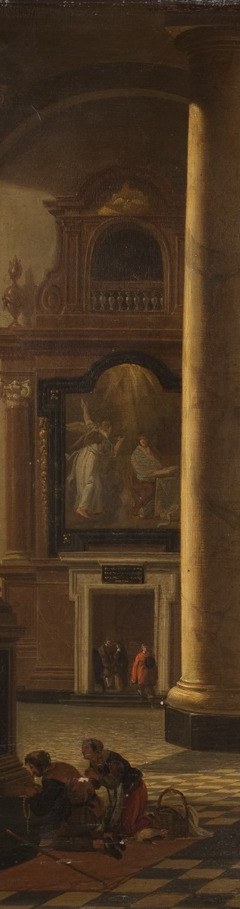
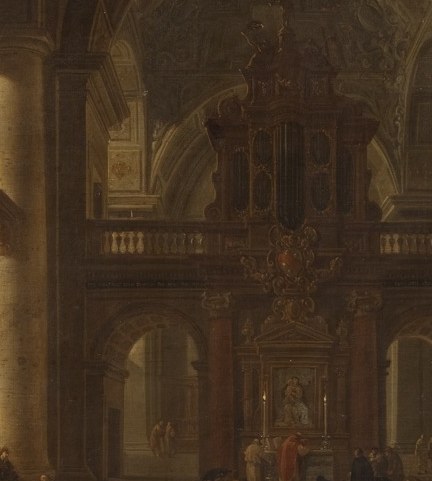
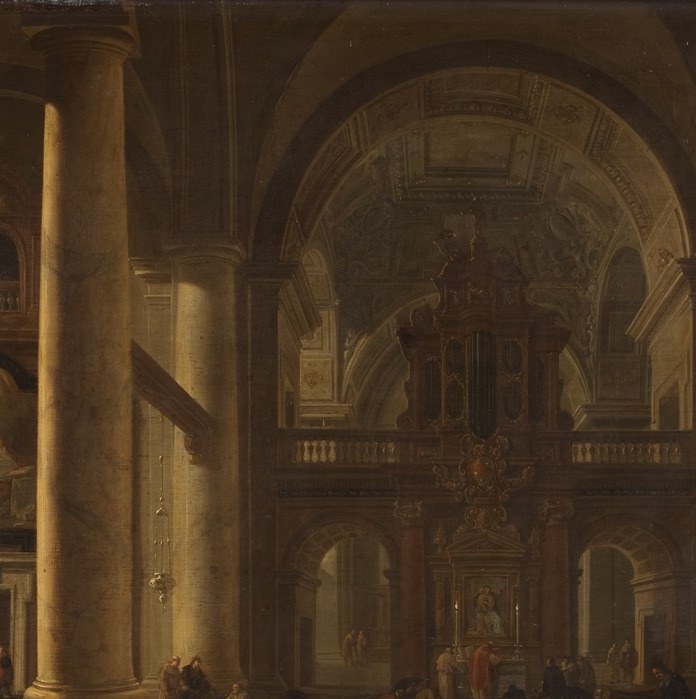
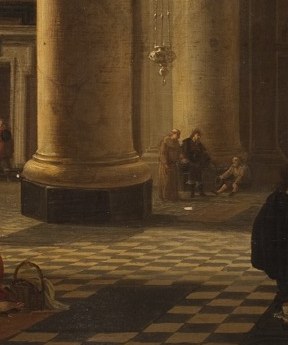
The small altarpiece glowing in the background of Gerard Houckgeest's "Interior of a Catholic Church" (1638) is easy to scroll past. But it holds the key to the whole painting, now in the collection of the Mauritshuis in The Hague.
Look for the tiny illuminated rectangle above the far altar. It is a painting within the painting: an altarpiece depicting a sacred scene. Houckgeest uses a masterful play of light and shadow, known as chiaroscuro, to pull your eye through the dark nave directly to that small, bright square.
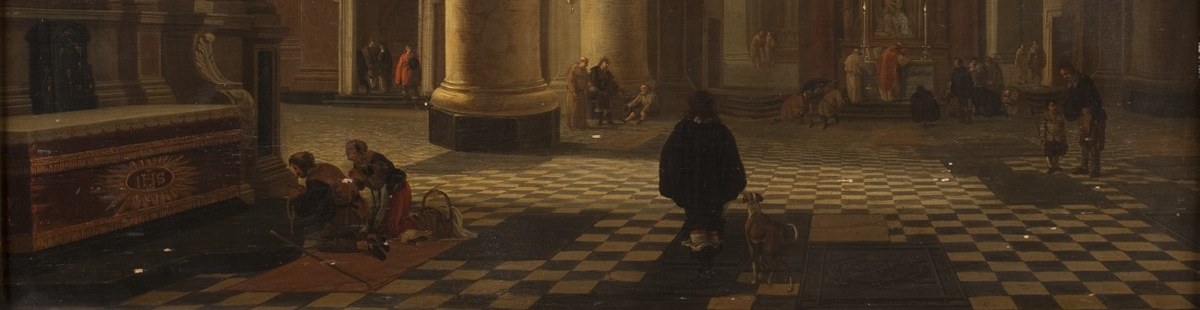
When Houckgeest painted this in 1638, the Dutch Republic was officially Protestant. Catholic worship was restricted and had to take place in hidden churches. This painting shows a Catholic interior, its altar glowing, yet largely deserted, a quiet nod to a faith practicing just out of sight. The solitary worshipper kneeling in the foreground reinforces the atmosphere of private devotion in a public space.
Next time you see a Dutch church interior, check the darkest corners and the smallest details. The real story is often no bigger than a postage stamp.
#arthistory #dutchgoldenage #gerardhouckgeest
Details
Transcript
A vast cathedral. Stone, shadow, and silence. The eye runs straight through to the far altar. But this is a Catholic church in Protestant Holland, 1638. Catholic worship was technically banned. It hid in plain sight. The altar is bright for a reason. Now look above that altar. A tiny painting glows. A painting inside a painting: the sacred story, compressed into a corner.