The Seine at Bas-Meudon by Johan Jongkind
View the artwork: The Seine at Bas-Meudon →
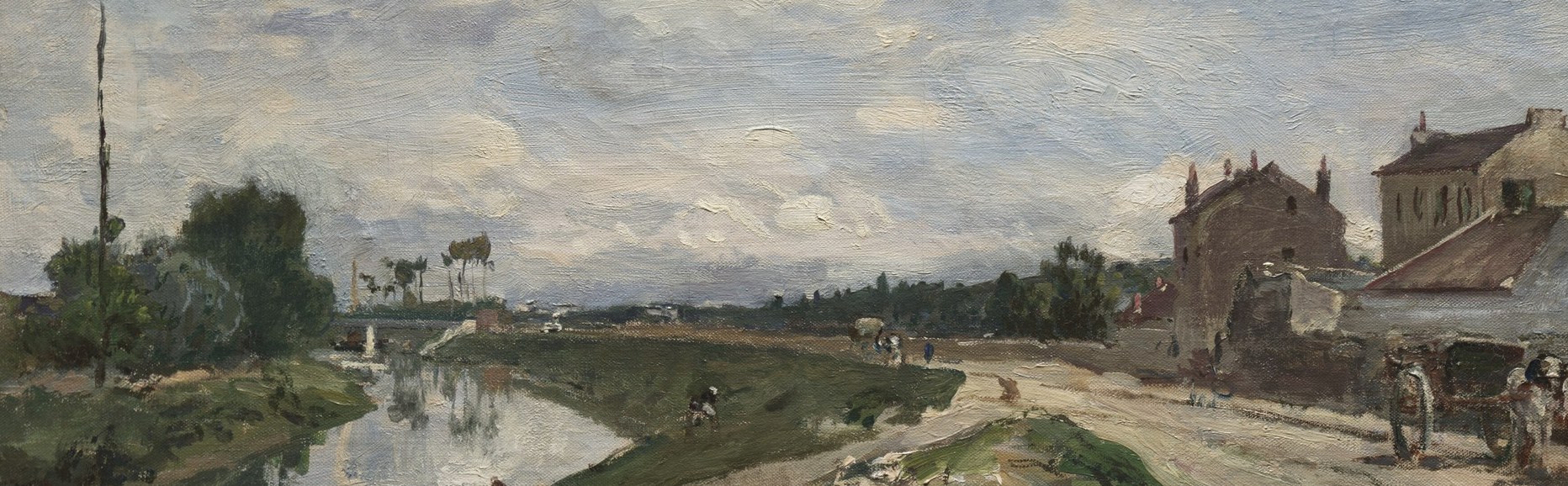
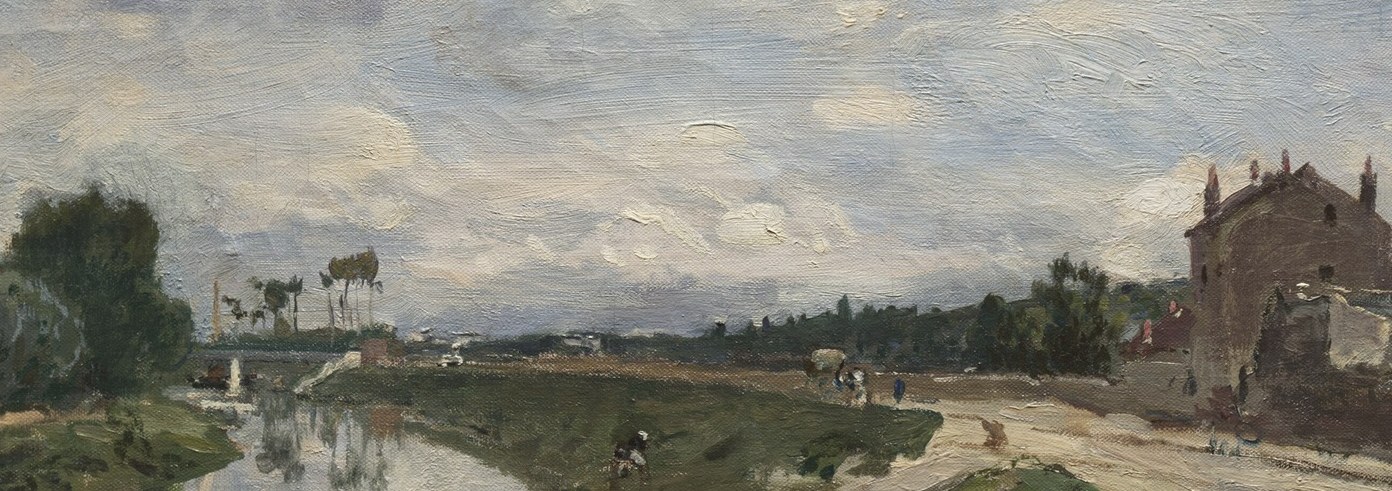
Johan Jongkind's The Seine at Bas-Meudon (1865) is a quiet river scene from the Parisian suburbs that changed the course of painting. Its loose, visible brushwork caught light and movement in a way that had never been done before, and Claude Monet later insisted that Jongkind was the true teacher of the Impressionists.
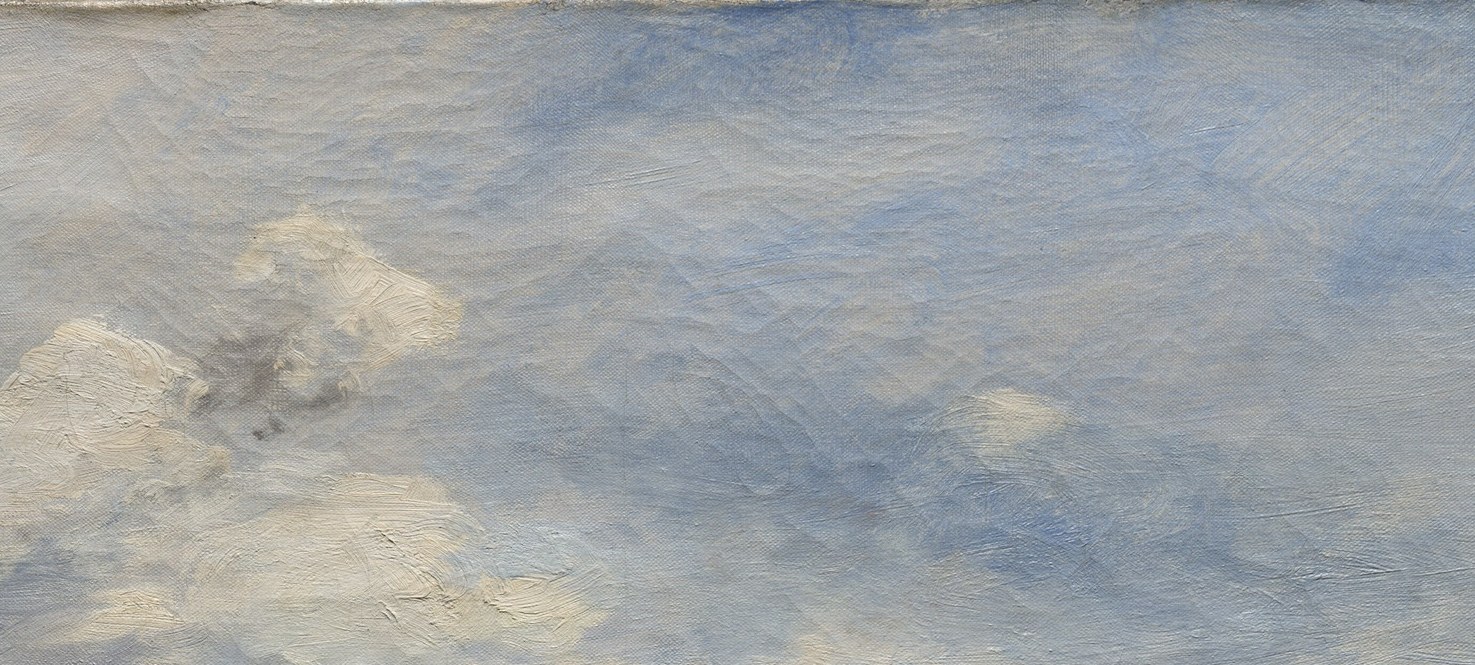
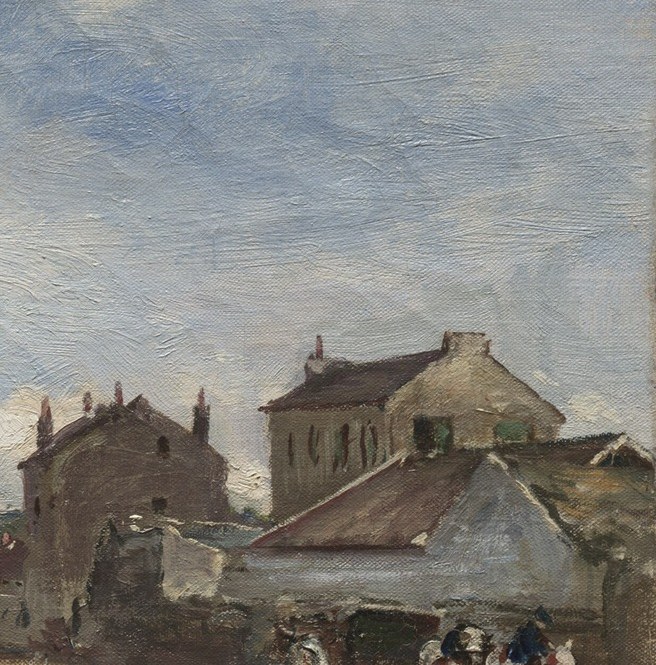
Look first at the sky. The largest cloud was painted with thick lead white worked back into while wet, you can still see the impasto. Then look at the water. The reflections are rendered with shorter, faster strokes than the clouds above, a deliberate trick to make the river feel like it's moving while the air stands still. On the right bank, a dirt path leads past modest dwellings and strolling figures who give the scene its ordinary, unposed rhythm.
Jongkind painted this stretch of the Seine repeatedly, drawn to the open vistas and the play of light on water. But despite his influence, Monet, Boudin, and Sisley all acknowledged their debt, he struggled with depression and alcoholism. In 1891 he died in a psychiatric hospital near Grenoble. His reputation faded so completely that many of his works were lost or misattributed for decades.
Today this painting hangs as a record of a hinge moment. It carries the Dutch landscape tradition in its bones, but the brushwork already belongs to the future. Sometimes the painters who make the next movement possible are the ones the movement forgets.
#arthistory #jongkind #preimpressionism
Details
Transcript
This looks like a quiet day on the Seine. But this painting was a bridge between two centuries. Look at the clouds. Wet paint worked back into wet paint. Jongkind painted fast, outdoors, catching light before it shifted. Now look at the reflections. Shorter, choppier strokes than the sky. Monet called him his real teacher. Impressionism started here. Jongkind died in an asylum. His work was nearly forgotten.