Landscape: The Parc Monceau by Claude Monet
View the artwork: Landscape: The Parc Monceau →
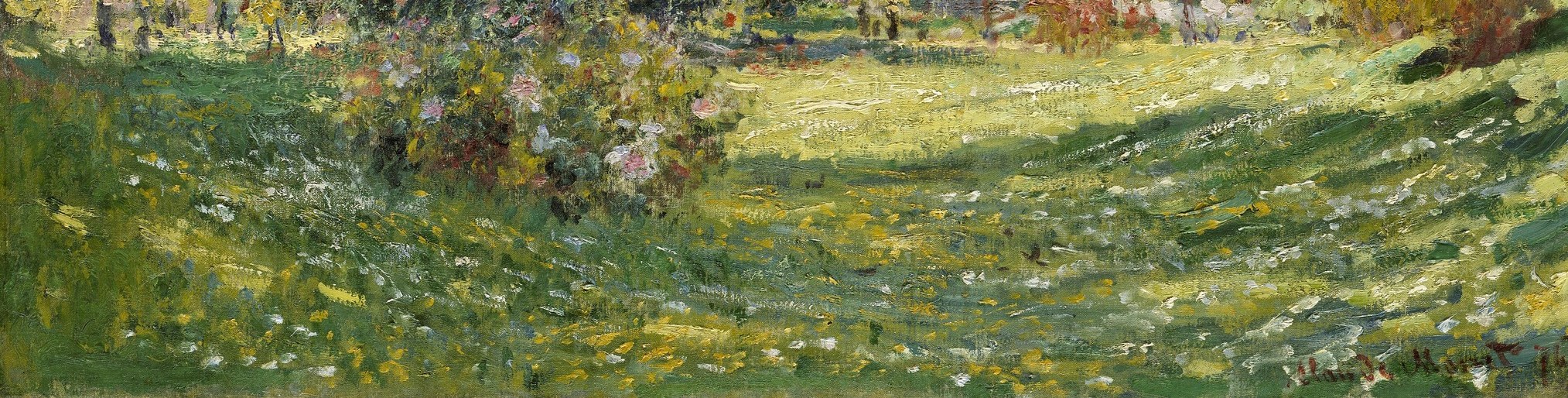
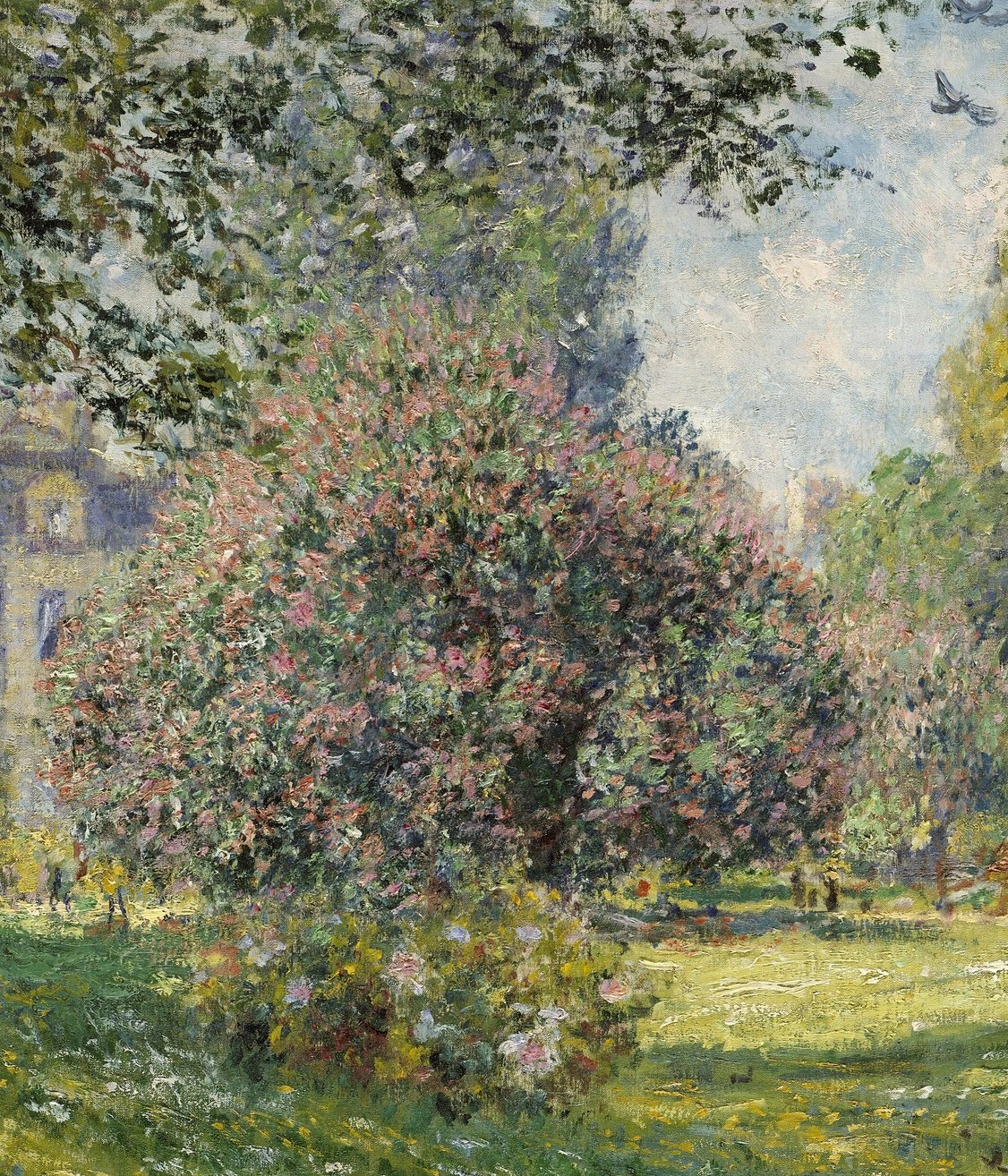
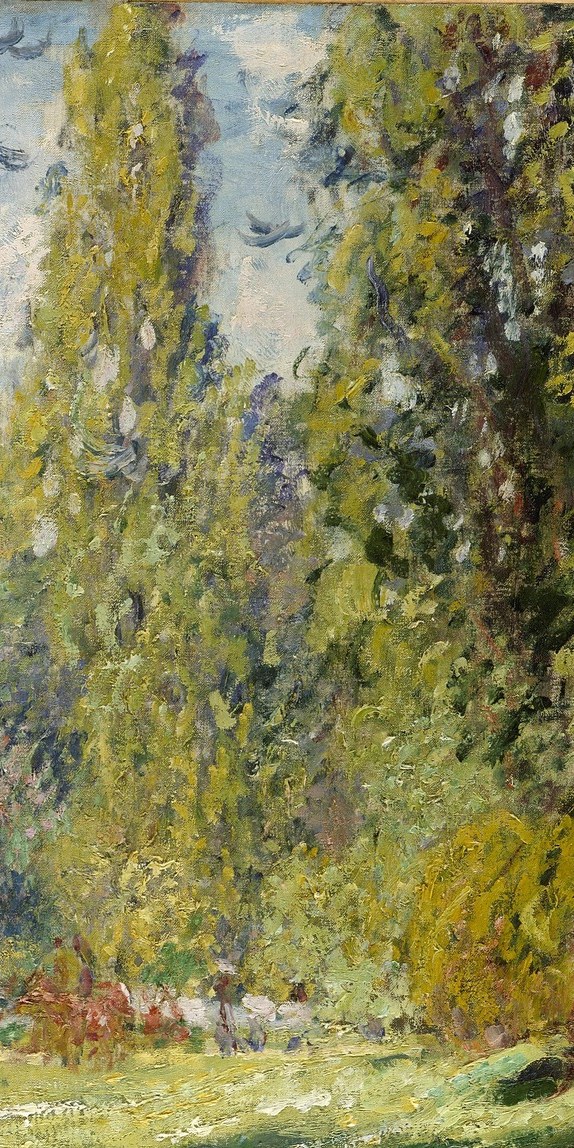
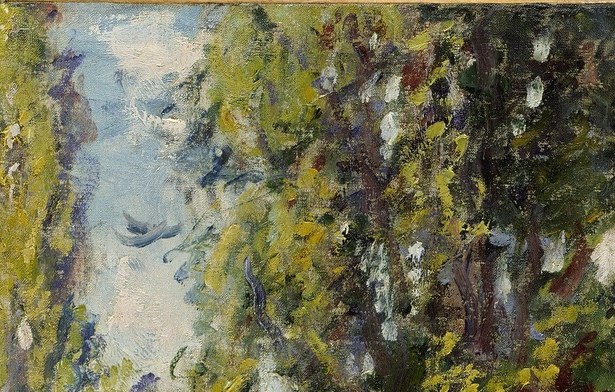
This is Claude Monet's 'Landscape: The Parc Monceau,' painted in 1876 and now held by the Metropolitan Museum of Art. It is a picture of a private park in the 8th arrondissement of Paris, commissioned by Monet's first major patron, the financier Ernest Hoschedé. Hoschedé paid Monet to paint decorative panels of his new estate; within two years, Hoschedé would be bankrupt and Monet would be effectively supporting both families.
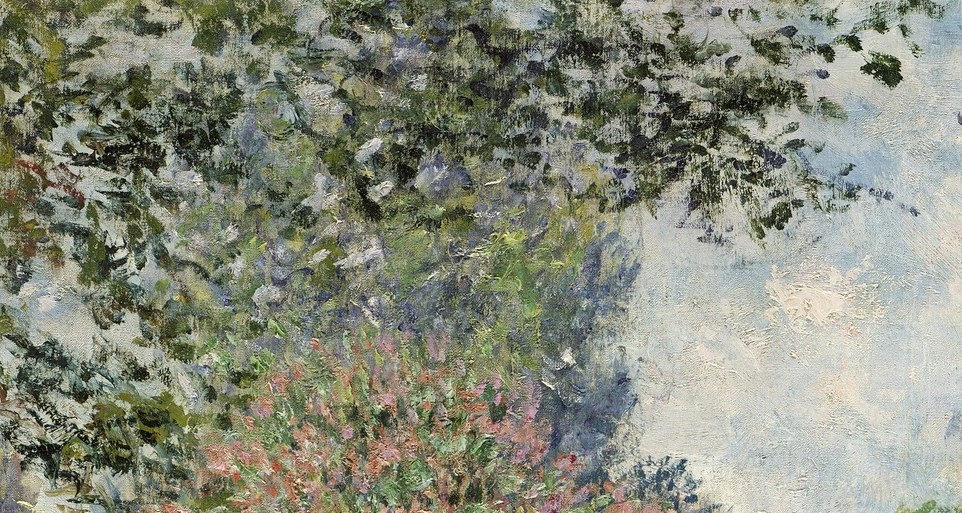
Look at the crown of the central tree. The pink blossoms are laid down in distinct, unblended strokes of pure color. Monet doesn't draw a branch and fill it in. He builds a whole zone of chromatic vibration, pink, white, warm green, and lets your eye assemble the blossom. The shadow on the trunk is warm violet, not black. He was serious about that rule.
Hoschedé sold the painting soon after the commission to pay debts. In the twentieth century it passed through several major collections, and at a 2004 auction at Christie's, it sold for $32.4 million. That's the number attached to a canvas where the central tree is, in the artist's own logic, dissolving into the atmosphere.
An Impressionist painting is a record of an artist insisting that a park in afternoon light is not a collection of objects but a field of changing color. The market agreed.
#arthistory #monet #impressionism
Details
Transcript
In 1876, a financier hired a painter to capture his private garden. The property was Parc Monceau, an exclusive Paris park with a gate fee. But look at the center. The tree dissolves. Pink and white strokes, stacked wet on wet, never blended. He made solid things into pure light. Monet hated the Salon. He wanted a new way to see. No black paint. A warm violet is his shadow. It worked. This canvas last sold for thirty-two million dollars.