Militia Drilling by William P. Chappel
View the artwork: Militia Drilling →
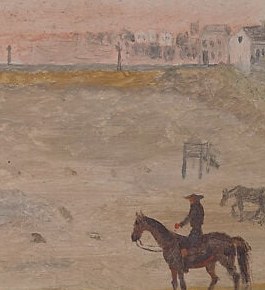
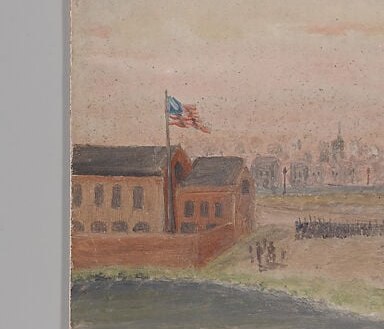
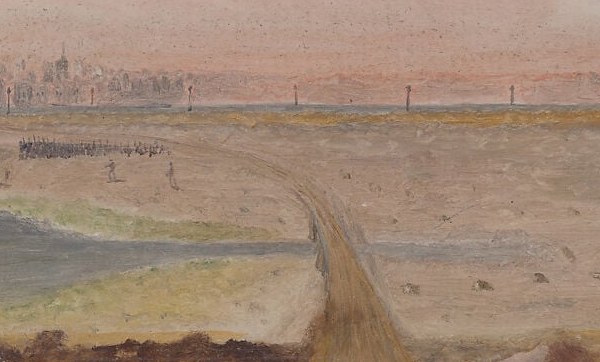
This is William P. Chappel's "Militia Drilling," painted in the 1870s. It quietly holds one of the most staggering price tags in American art history. In 1999, it sold at auction for $2.5 million, becoming the most expensive 19th-century American painting ever purchased at the time.
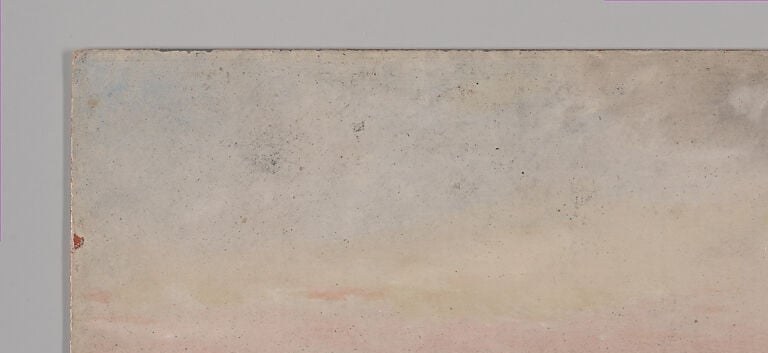
Look at the sky and the dirt. Chappel painted this on slate paper, a rigid, dark grey slab usually reserved for a draftsman's chalk. The oil paint sits on the surface so thinly that the slate itself becomes the mid-tone shadow. It's a strange, luminous trick that makes a dusty field feel almost ethereal.
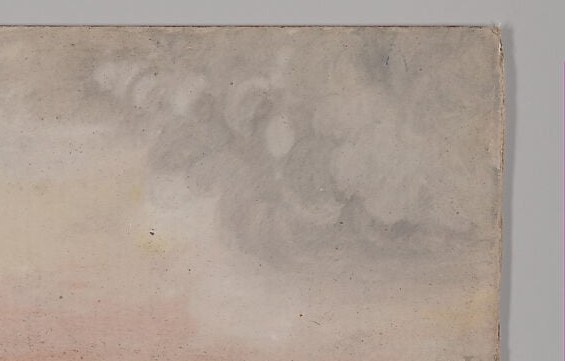
The scene is post-Civil War. The lone officer doesn't charge; a militia drills in an open field, rehearsing order rather than fighting. The storm clouds rolling in from the right suggest the weight of the recent conflict hasn't fully cleared. It's a painting about routine, not glory.
For a brief moment at the turn of the millennium, this quiet study of everyday soldiers was the single most valuable 19th-century American picture in the world. Not a portrait of a president, not a sweeping landscape, just a drill.
#arthistory #americanart #williampchappel
Details
Transcript
In 1999, a quiet American painting shattered all records. It sold for $2.5 million. No 19th-century American work had ever cost more. The subject is not a battle. It's a peacetime drill after the Civil War. He painted it on slate paper, not canvas. That's why the sky looks like chalk. The dark ground shows through the thin paint. The slate is the shadow. A storm still looms. The war is over, but the weight hasn't lifted.