Woman with a Sunflower by Cassatt, Mary
View the artwork: Woman with a Sunflower →
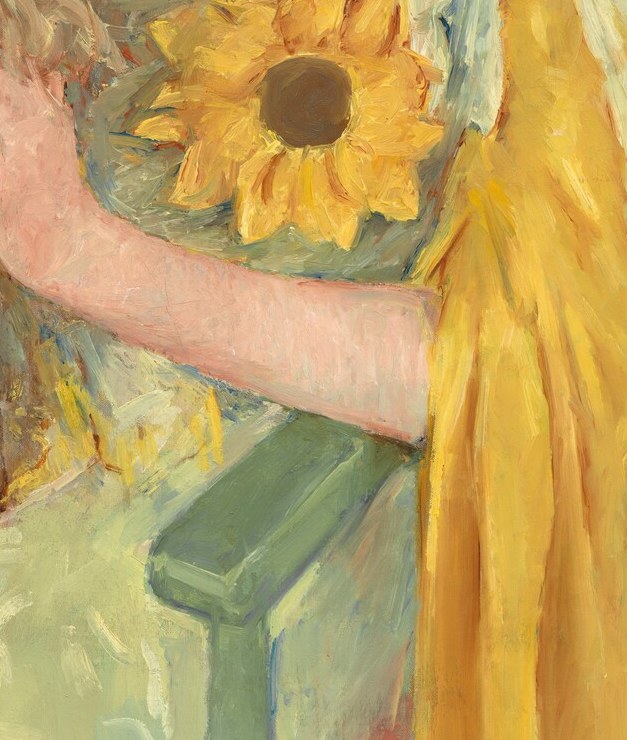
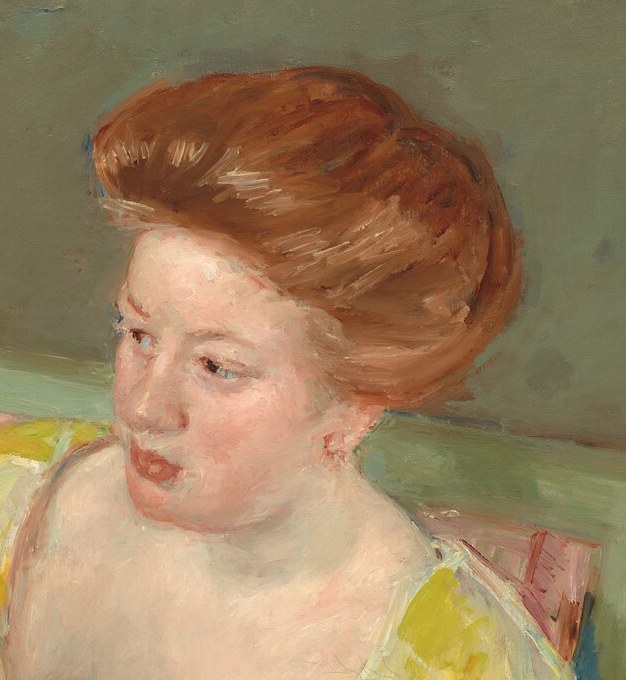
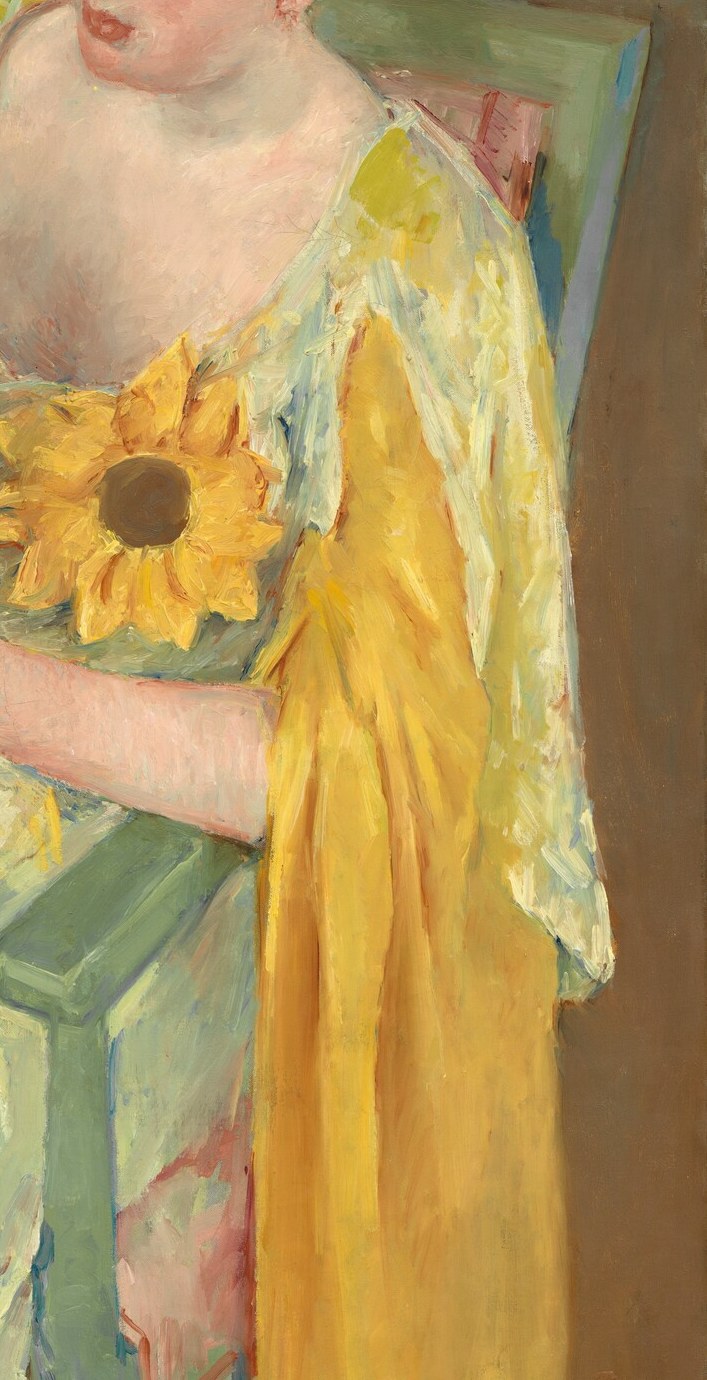
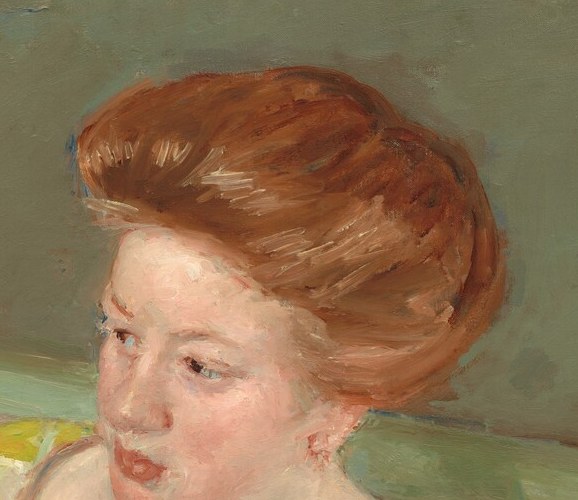
Mary Cassatt's "Woman with a Sunflower" (c. 1905) hangs at the National Gallery of Art in Washington, DC, where most visitors remember the woman, the child, and the large yellow bloom. But a small round mirror on the left margin quietly doubles the scene, and it rewards anyone who stops long enough to notice.
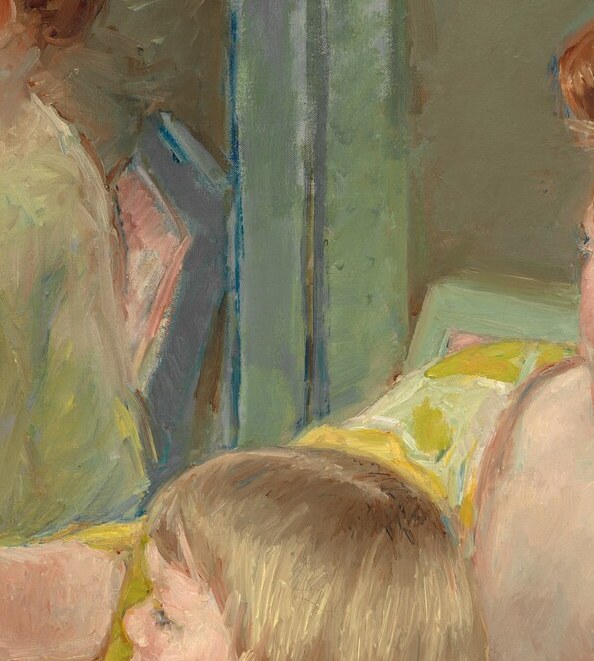
Look at the child's reflection inside that mirror. Her face appears a second time, turned outward, while the actual child reaches toward it. Cassatt does not add another figure to the composition, she simply bends the existing one, creating a quiet meditation on self-discovery without breaking the intimate domestic mood.
The sunflower itself carries political weight. Cassatt showed this painting at a 1915 exhibition at the Knoedler Gallery in New York, organized by her friend and fellow suffragist Louisine Havemeyer. The sunflower had become a symbol of the women's suffrage movement, and the exhibition raised funds directly for the Woman Suffrage Campaign Fund. So the bloom the woman holds is not merely decorative; it marks the painting's role in a fight for the vote.
Cassatt, an American who spent most of her adult life in France and exhibited with the Impressionists, made the lives of women her great subject. Here, a mother's steadying hand, a child's reaching curiosity, and a flower freighted with public meaning share the same quiet room. Next time you look, find the mirror first.
#arthistory #marycassatt #impressionism
Details
Transcript
A woman and a child. A sunflower. Warm, quiet, ordinary. She holds the flower steady while the child's arm stretches left. Mary Cassatt painted this for a 1915 suffrage exhibition. The sunflower was a symbol of the women's vote. Now follow the child's outstretched arm to the left edge. A round mirror hangs there. Most people scroll right past it. Inside: the child's reflection, looking back at herself. Cassatt doubled the child without adding another figure.