Portrait of a Young Woman by Bugiardini, Giuliano

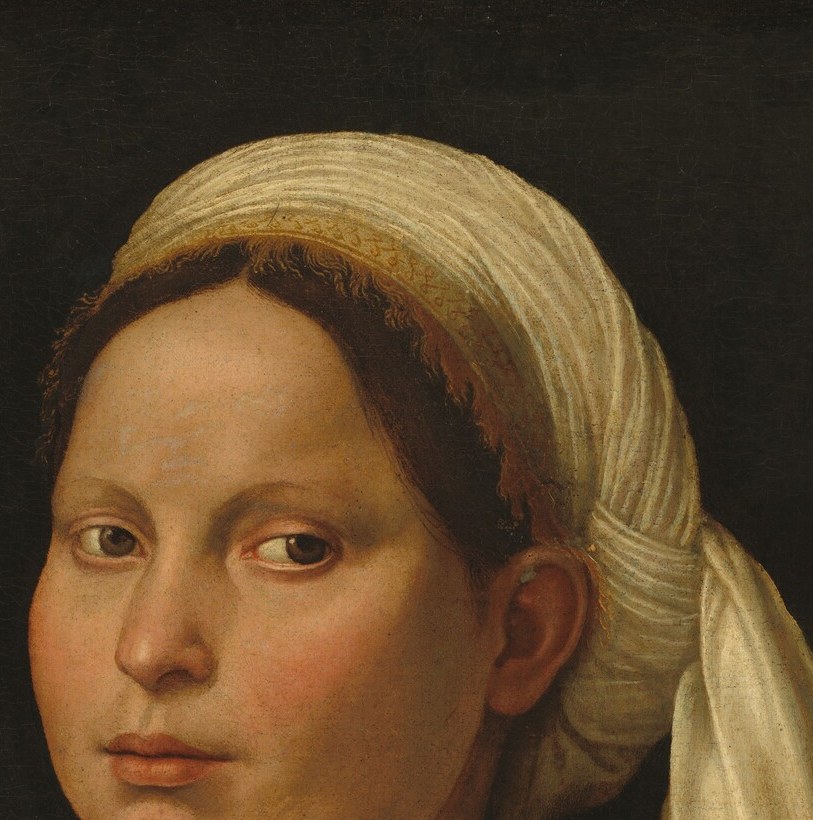
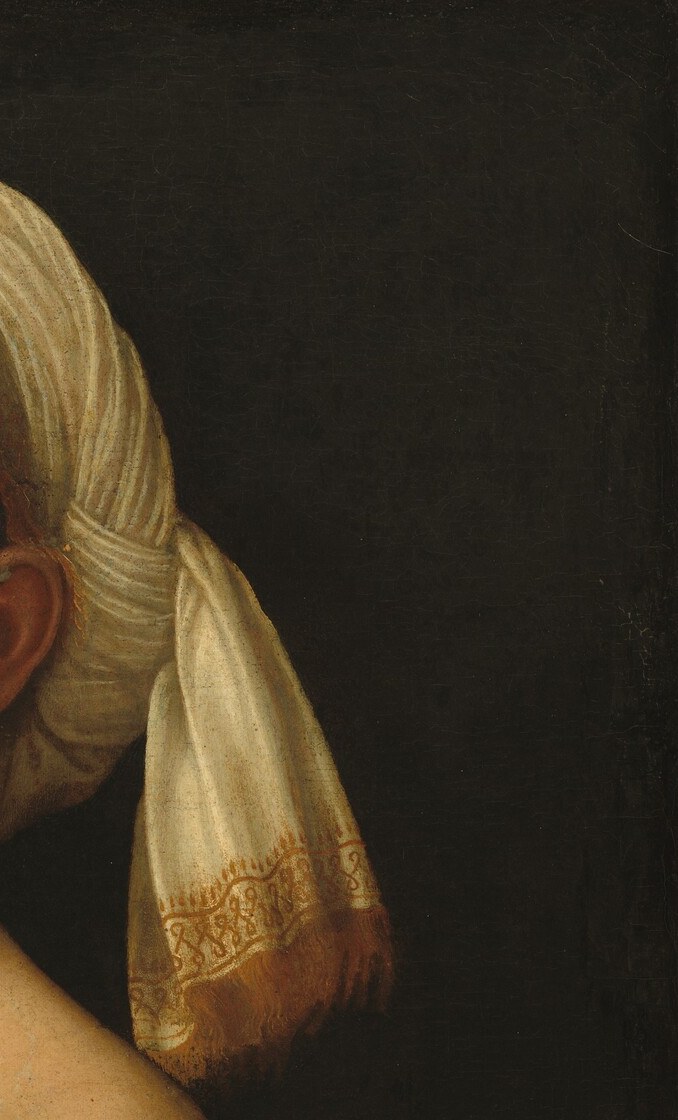
This is Giuliano Bugiardini's Portrait of a Young Woman, painted in Florence around 1525. For centuries, viewers have seen only what the artist finally chose to show: a composed, direct gaze emerging from a featureless dark void. The background reads as empty, deliberately neutral, pushing all attention onto her face.

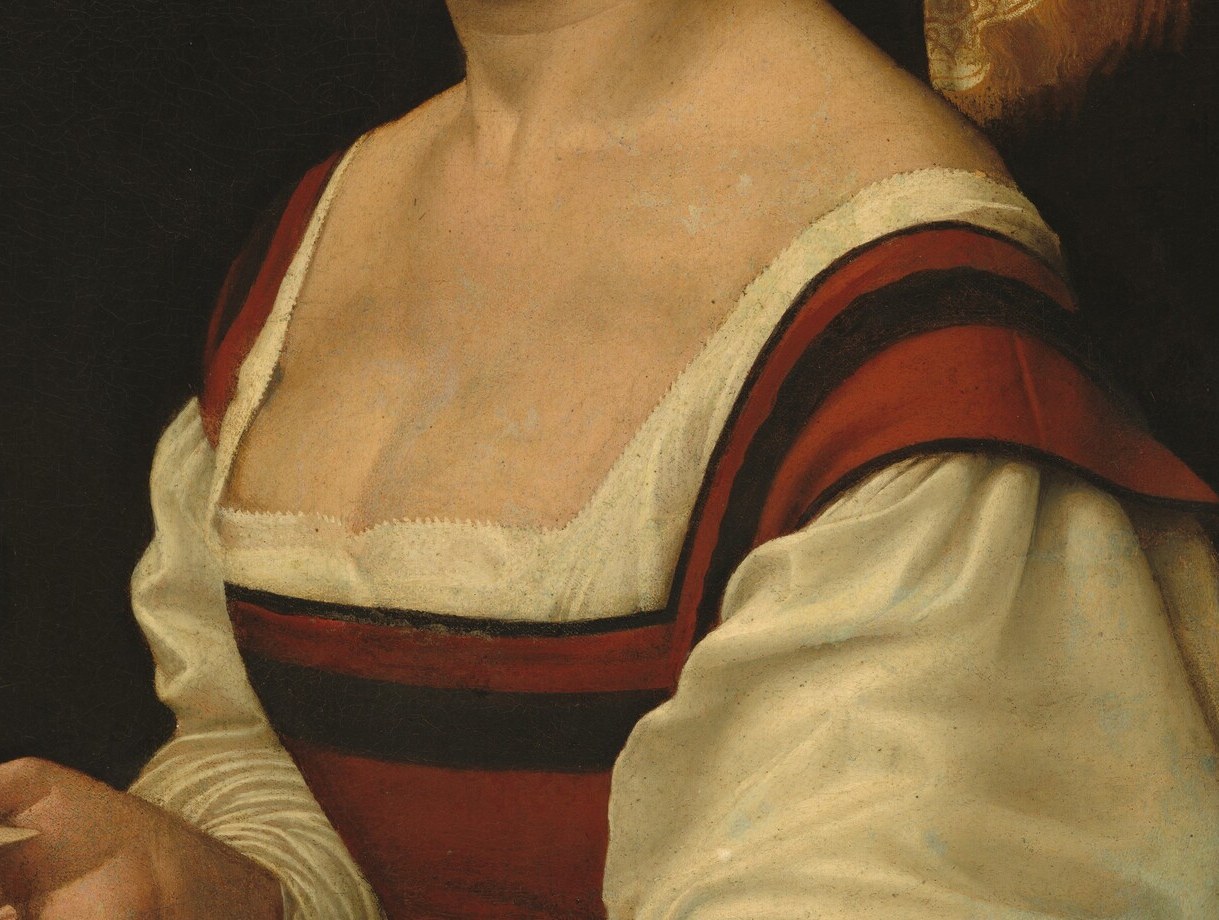
The paint itself is restrained. A white turban and veil frame her face, a crimson bodice signals wealth, and the cropped object in her hands withholds her identity. But the real secret is quite literally underneath the surface. Infrared reflectography has revealed a fully painted landscape hidden beneath that dark background: a window or open vista that the artist ultimately decided to paint over.

It is an extraordinary pentimento. We do not know why Bugiardini (or his sitter) made this choice. Perhaps the landscape distracted from her face. Perhaps the composition felt too busy. Whatever the reason, the painter buried one world to create another, leaving her isolated against the darkness, her expression now the only landscape he allowed us to see.

#arthistory #renaissance #florence

Details
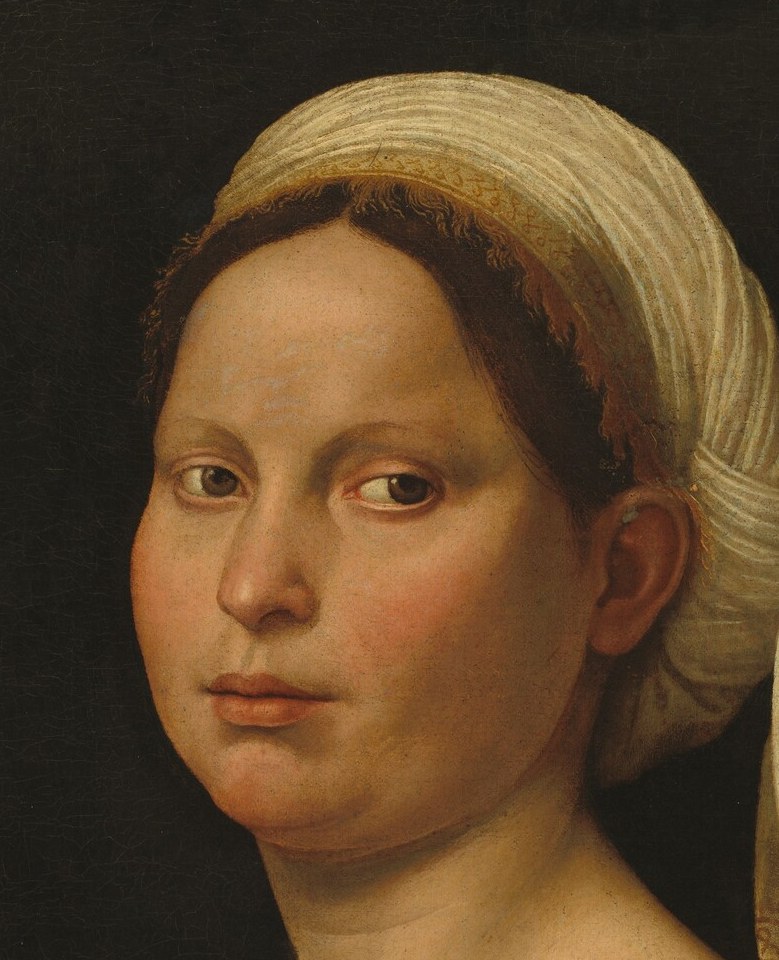
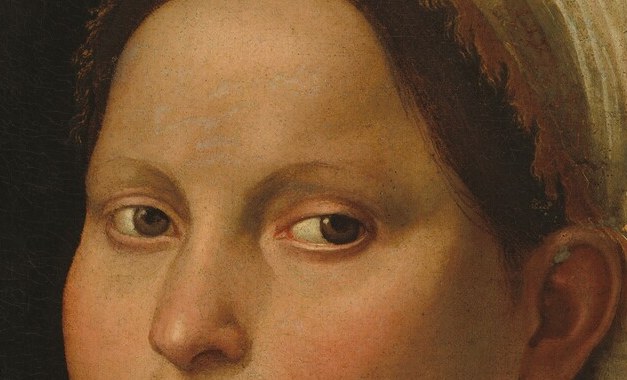
The primary emotional surface of the painting , slight asymmetry and calm, self-possessed expression are characteristic of Bugiardini's sitter psychology.
Unusual headwear for Italian female portraiture of this period , the turban may signal specific Florentine fashion of the 1520s or a domestic/clerical social status worth researching.
The saturated red signals wealth; the precise rendering of the woven border trim along the left seam is a material record of Florentine textile craft.
The undifferentiated dark ground is a Renaissance neutrality device, but in infrared or X-ray it often conceals underdrawing or compositional pentimenti , a hidden-detail candidate.
The eyes break the picture plane with quiet authority; the gaze is alert rather than vacant, suggesting an inner life the painter chose not to dramatize.
Transcript

You could scroll past this and see a simple portrait. A young Florentine woman. About 1525. The dark background seems empty. Neutral. But infrared imaging reveals what the eye cannot see. Beneath the paint: a detailed landscape. A window onto a world that was covered over. Maybe she asked him to simplify it. We will never know.