The Lamentation by Ambrosius Benson
View the artwork: The Lamentation →
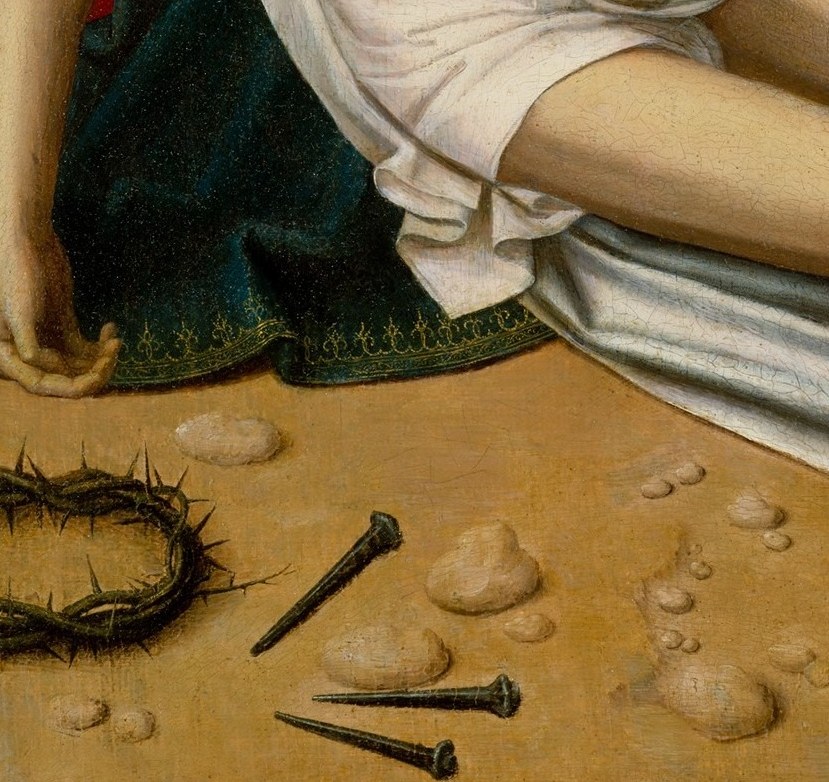
Ambrosius Benson's The Lamentation (c. 1522) is an oil painting that holds one of its most important passages at the bottom edge, where most viewers never look.
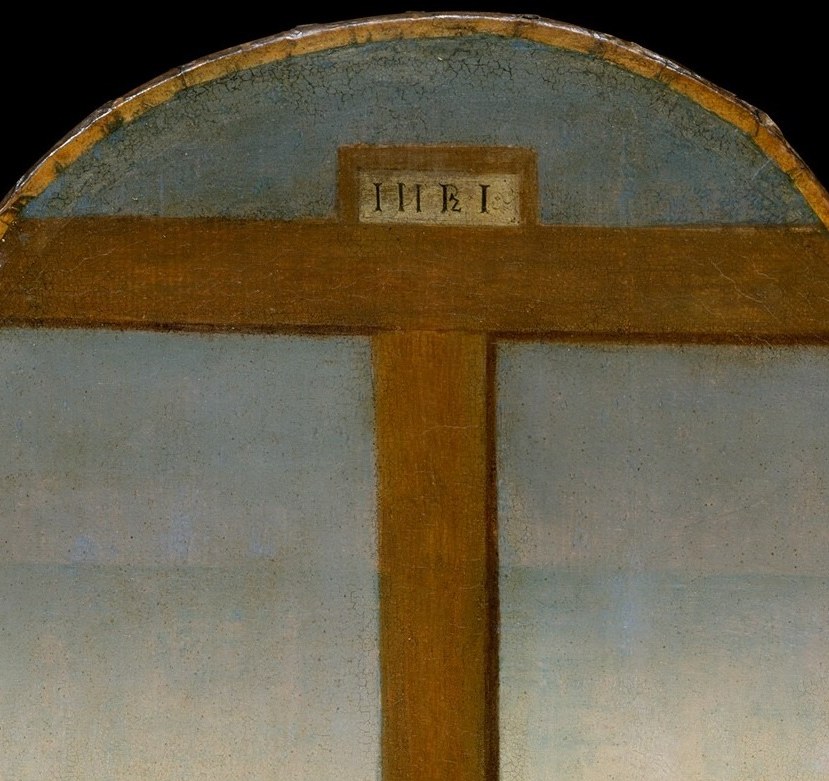
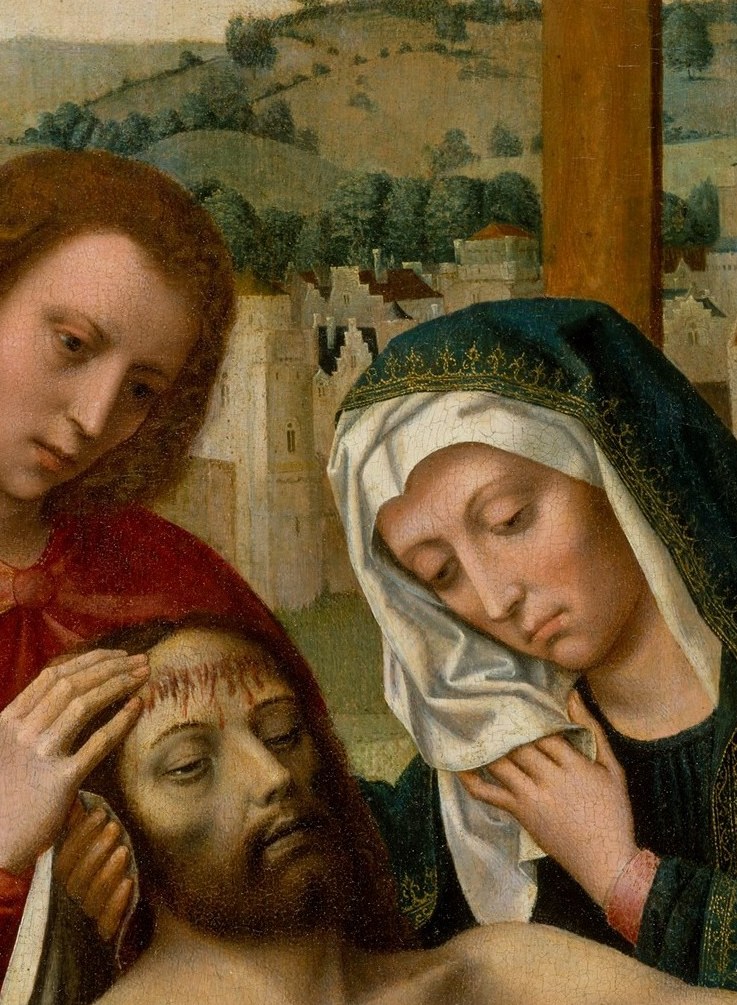
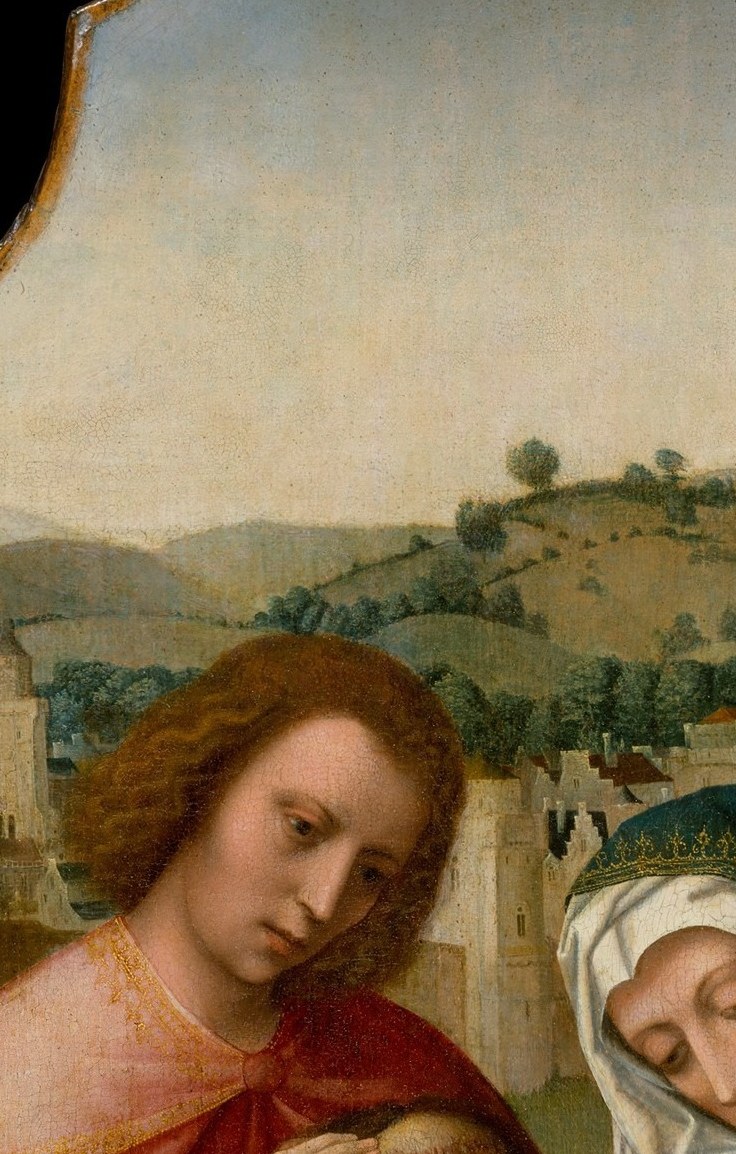
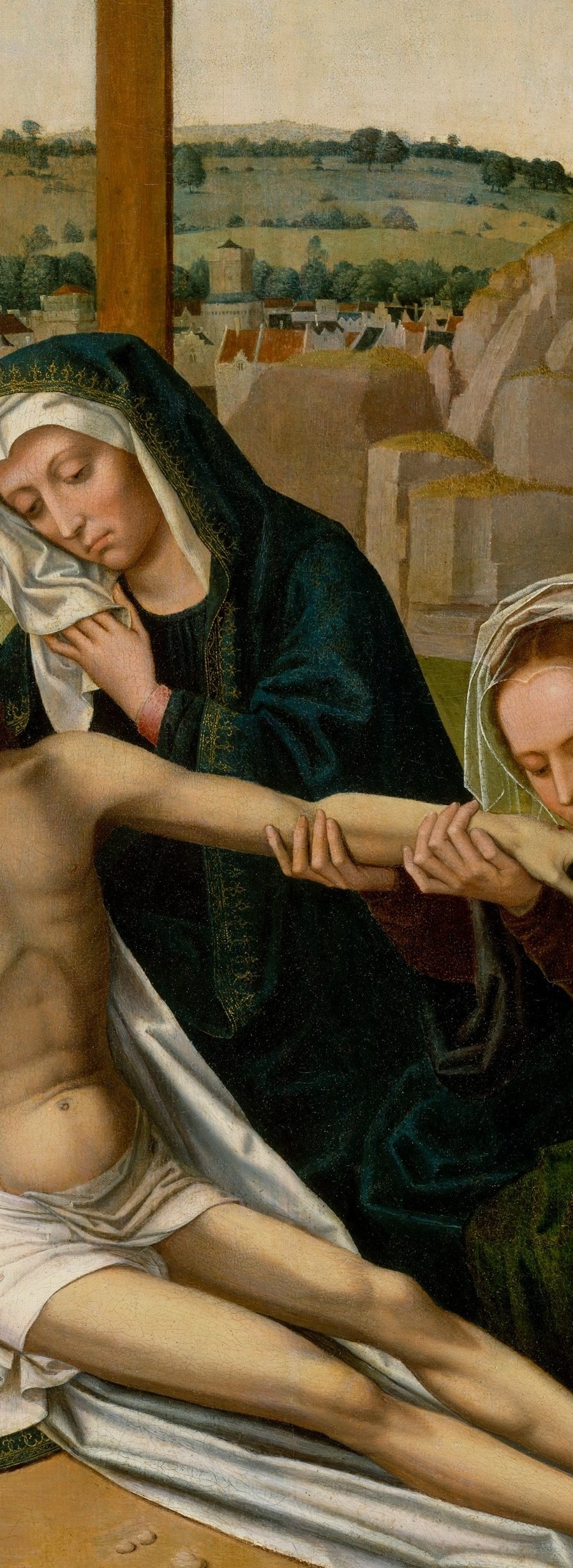
The composition centers on Christ's pale body, illuminated by a strong chiaroscuro that makes the torso almost glow against the white burial shroud. Mary, veiled in dark blue, supports his head and shoulders. A woman in green kneels beside them with a grip on his hand that reads as refusal to let go. A third figure in red stands witness, holding the burial cloth. Every face is steeped in quiet, contained grief.
But the theological weight is on the ground. Look at the very bottom of the painting: a crown of thorns lies discarded beside a set of bent iron nails. These are the Arma Christi, the instruments of the Passion. Benson places them not as a reminder of cruelty, but as relics left behind after suffering has ended. The wound in Christ's side is still visible; the nails are no longer in his hands. This is the moment between deposition and entombment, when the objects of torture become evidence of what has been overcome.
Benson was an Italian painter who built his career in Bruges, part of the Northern Renaissance. He rarely signed his work, and records of his life are thin, but his workshop was prolific and his paintings sold across Europe. This Lamentation, with its quiet staging and carefully loaded foreground, shows an artist who knew that sometimes the most important thing in the frame belongs at the very edge of the picture.
#arthistory #northernrenaissance #christianart
Details
Transcript
The pale body of Christ, surrounded by mourners. His mother cradles his torso, her face veiled in dark cloth. A woman in green will not let go of his hand. Ambrosius Benson painted this so quietly that most people miss the real story. Drop your eyes to the bottom edge. The ground itself is a relic. A discarded crown of thorns, cast aside. Beside it: the crucifixion nails. Bent iron, still in shadow. These are the Arma Christi, the instruments of the Passion, lying where the resurrection story begins.