Boston Harbor by Chambers, Thomas
View the artwork: Boston Harbor →
Thomas Chambers painted Boston Harbor around 1843-1845, and for a century hardly anyone took him seriously. He was an English immigrant who had worked as a sign-painter, and his oil paintings look like it: flat blocks of color, repeating shapes, none of the atmospheric blending that academic marine painters prized. He sold his work at auction and through city dealers in New York and Boston while the National Academy of Design took no notice.
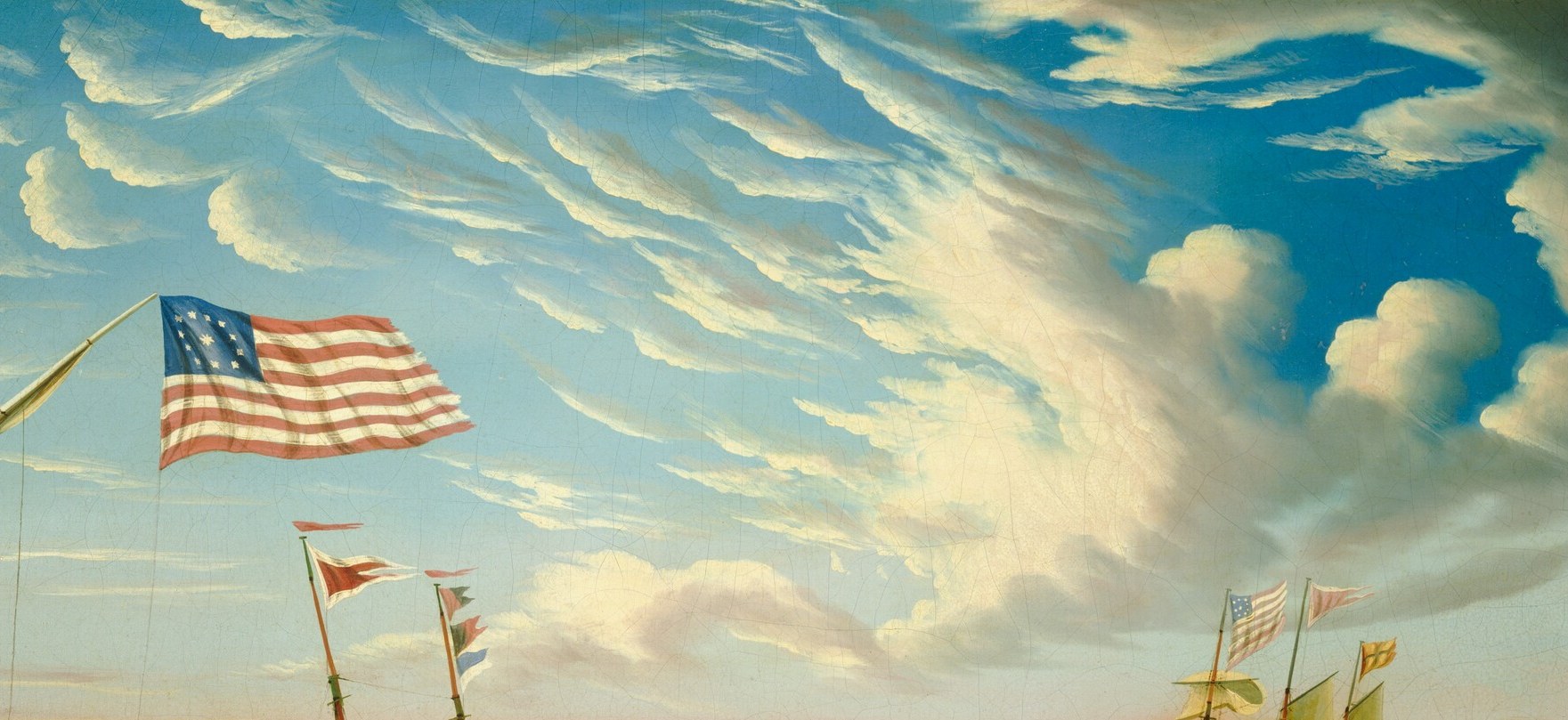
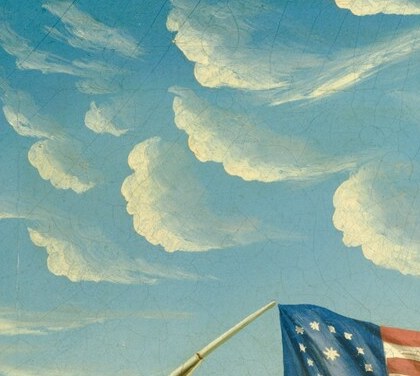
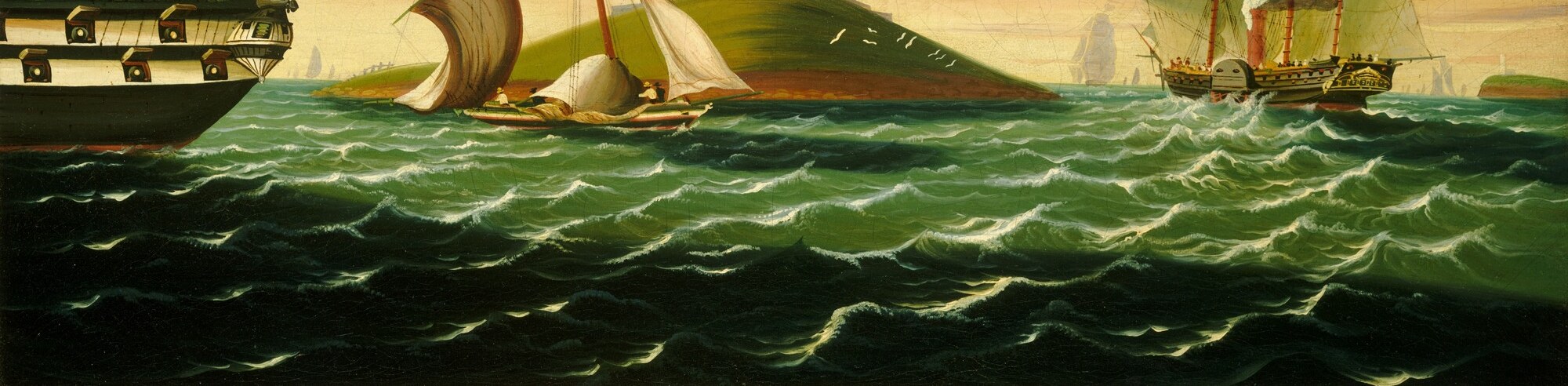
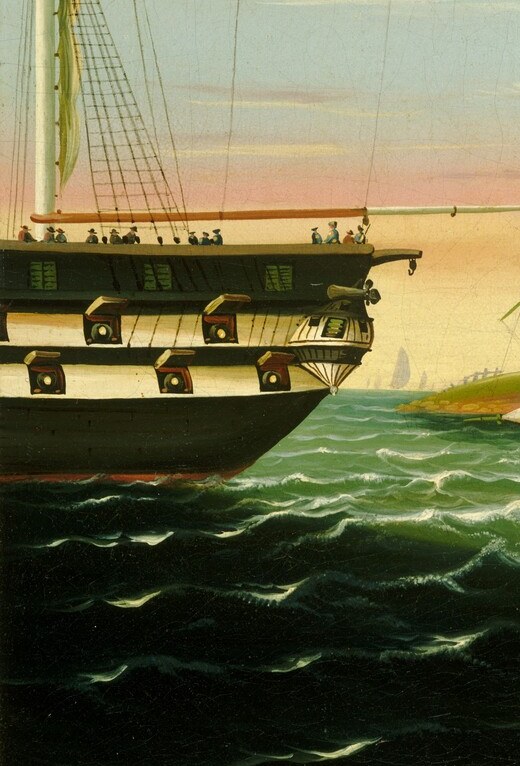
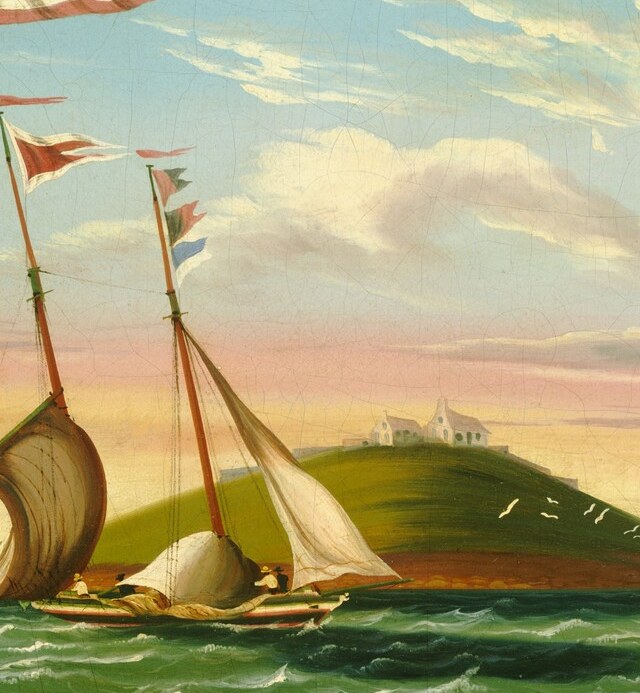
What to watch for in this painting is the complete absence of blending. The amber sails of the central schooner are one flat warm shape laid against one flat cool plane of green water, no gradation, no apology. The clouds are bold white strokes across the top half of the canvas, more than half the painting given to sky treated almost as abstraction. And the foreground waves repeat in even decorative arcs that owe more to wallpaper or a theater backdrop than to anything observed on Massachusetts Bay.
Chambers had trained alongside his brother George in sign and scenic painting in Whitby, England, before emigrating to the United States in 1832. He worked entirely outside academic circles, yet his graphic simplification and high-contrast color sense anticipate modernist impulses by half a century. Twentieth-century critics eventually gave him the label 'America's first modern,' and a major retrospective traveled from Philadelphia to New York between 2008 and 2010.
This painting now belongs to the National Gallery of Art in Washington, D.C. It spent time on loan to the White House during the George W. Bush administration and later hung at the Department of State. A painting from the margins, now in the rooms of power.
#arthistory #americanfolkart #thomaschambers
Details
Transcript
More than half this canvas is just sky. Look at those clouds. Flat white strokes, bold as a painted sign. Thomas Chambers learned his craft painting signs and theatrical sets in England. Now watch the water. Each wave an identical graphic arc. No academic painter would repeat a shape this boldly. A sign-painter would. Warm amber sails, cool green water: maximum color contrast, one flat plane each. He sold his pictures at auction, not through the Academy. The art world ignored him. A century later, curators called him America's first modern.