Lighthouse at Groix by Paul Signac
View the artwork: Lighthouse at Groix →
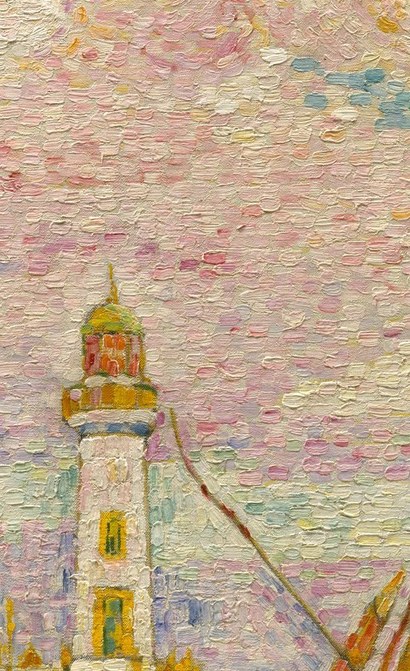
Paul Signac's 'Lighthouse at Groix' (1925) isn't just a study in color, it's a precise navigational document. A devoted yachtsman who sailed the French coast for decades, Signac painted this view of Port-Tudy harbor on the Île-de-Groix in Brittany with the eye of a sailor, not a tourist.
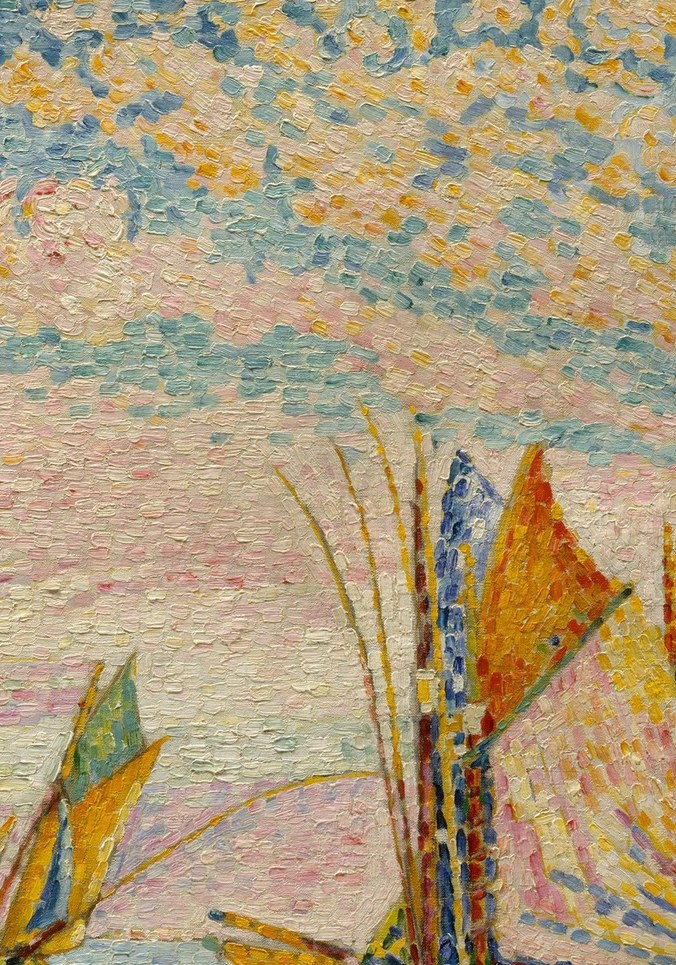
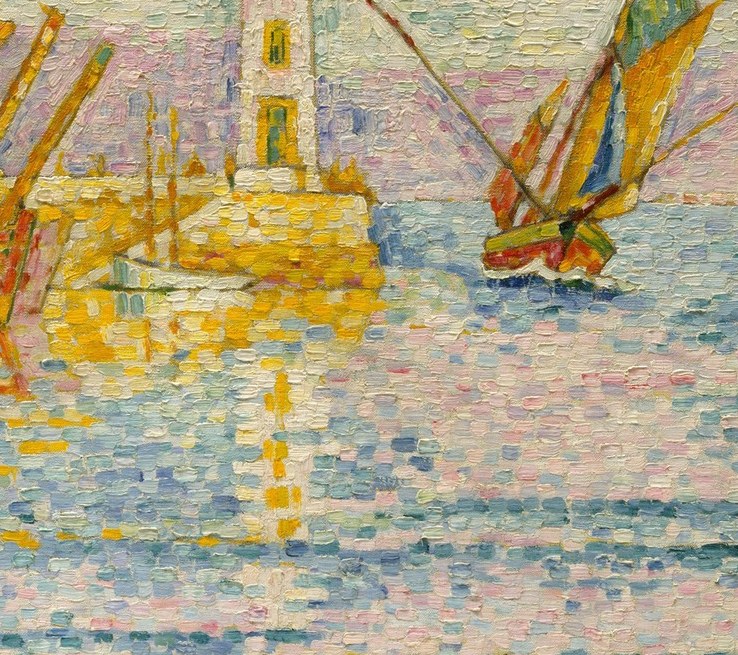
The painting centers on the white lighthouse that guides vessels into the harbor. But the true payoff is in the foreground on the left. There, the island's distinctive tuna boats carry extraordinarily long yardarms. Contemporary guidebooks described them as resembling antennae, and they were unique to Groix. Signac makes sure you see them.
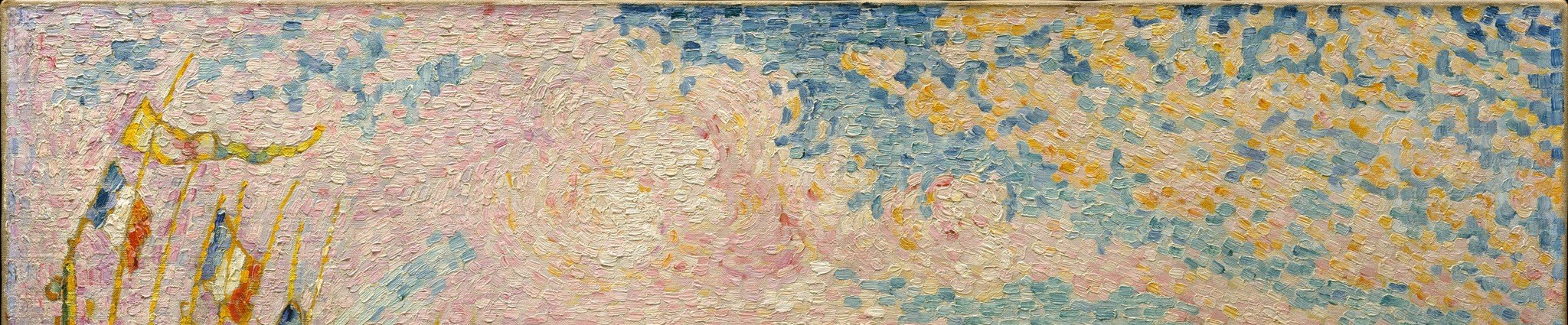
The work is a perfect example of Signac's late style. He had evolved beyond the tiny dots of pure Pointillism he pioneered with Georges Seurat in the 1880s. Here, broad, regular strokes of unmixed color let hues vibrate against one another, particularly in the lavender sky and the amber-orange sail on the right. The painting remained in private hands until 1998, when it was donated to the Metropolitan Museum of Art.
It's a painting that rewards the patient viewer. The lighthouse draws the eye first, but the real story of place is hidden in the rigging of a fishing boat.
#arthistory #signac #neoimpressionism
Details
Transcript
At first, your eye goes straight to the white lighthouse. Then you notice the brilliant orange sail vibrating against the water. But the real detail is on the left, in the tuna boats. Look at those long, antenna-like yardarms stretching from the masts. They were unique to the Breton island of Groix. Signac sailed here for decades. He knew exactly what made these boats local. The yardarms place this scene at Port-Tudy, a specific, real harbor.