The Dormition of the Virgin; (reverse) Christ Carrying the Cross by Hans Leonhard Schäufelein
View the artwork: The Dormition of the Virgin; (reverse) Christ Carrying the Cross →
This is Hans Leonhard Schäufelein's The Dormition of the Virgin, painted around 1510. The panel is double-sided, flip it over and you would see Christ Carrying the Cross. It was likely part of a small altarpiece or a private devotional object, meant to be held and turned in the hands.
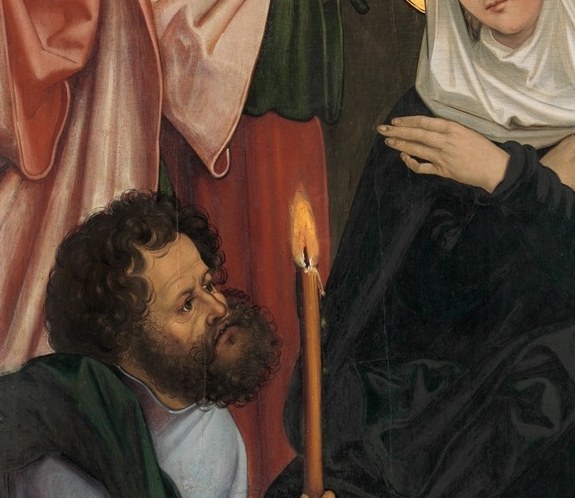
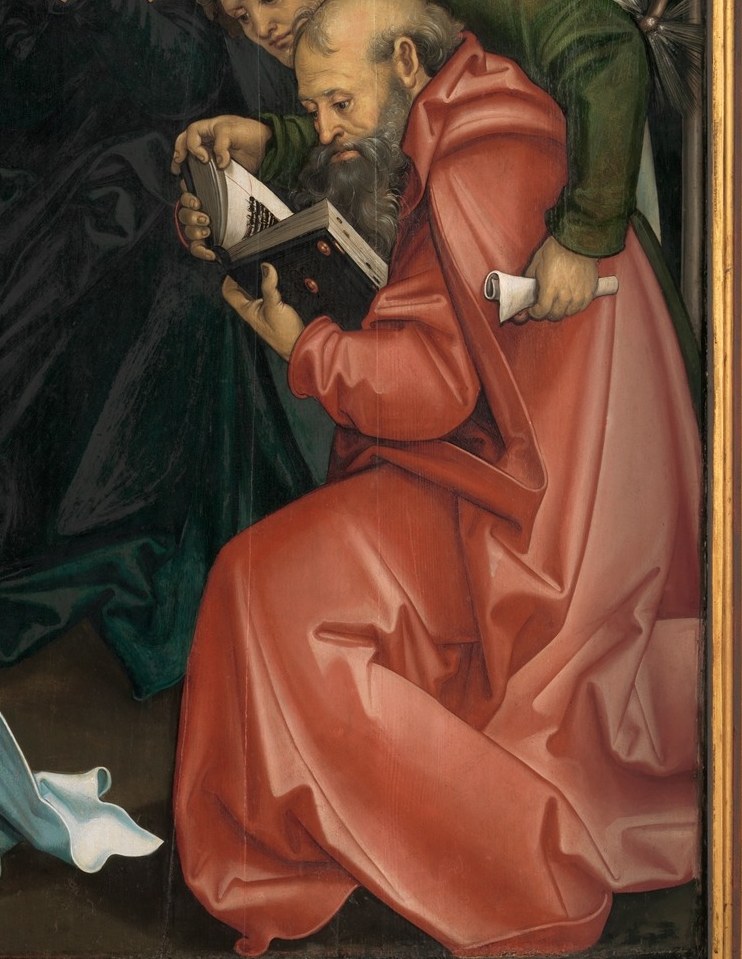
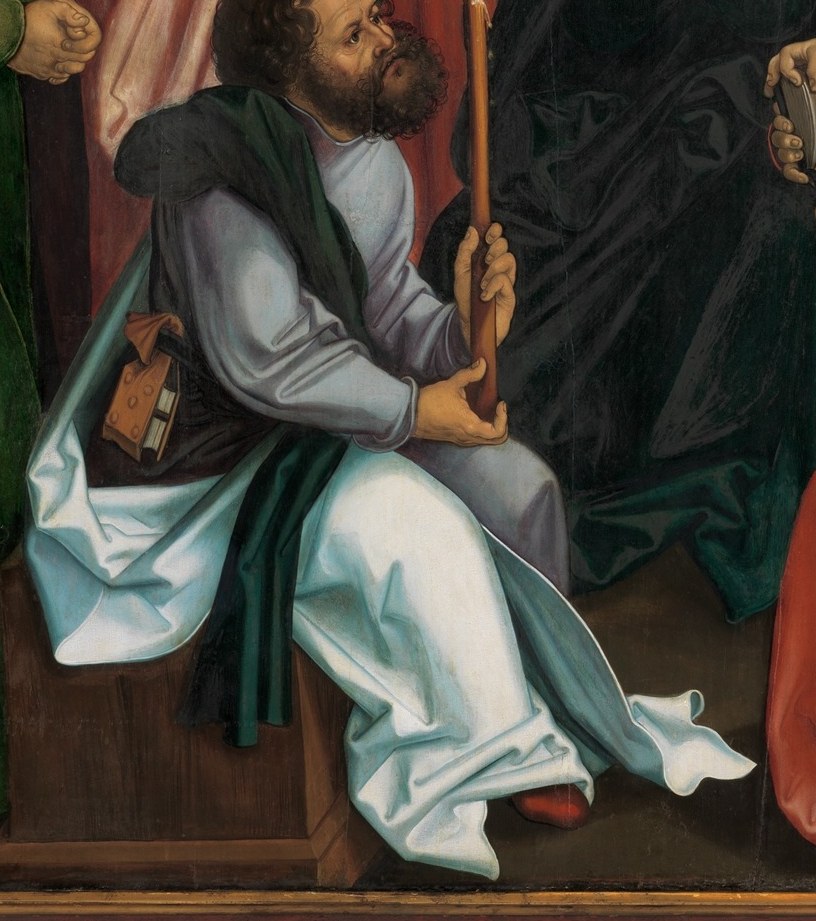
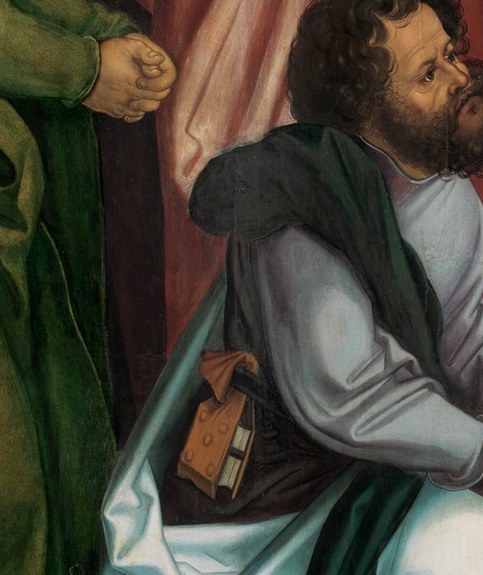
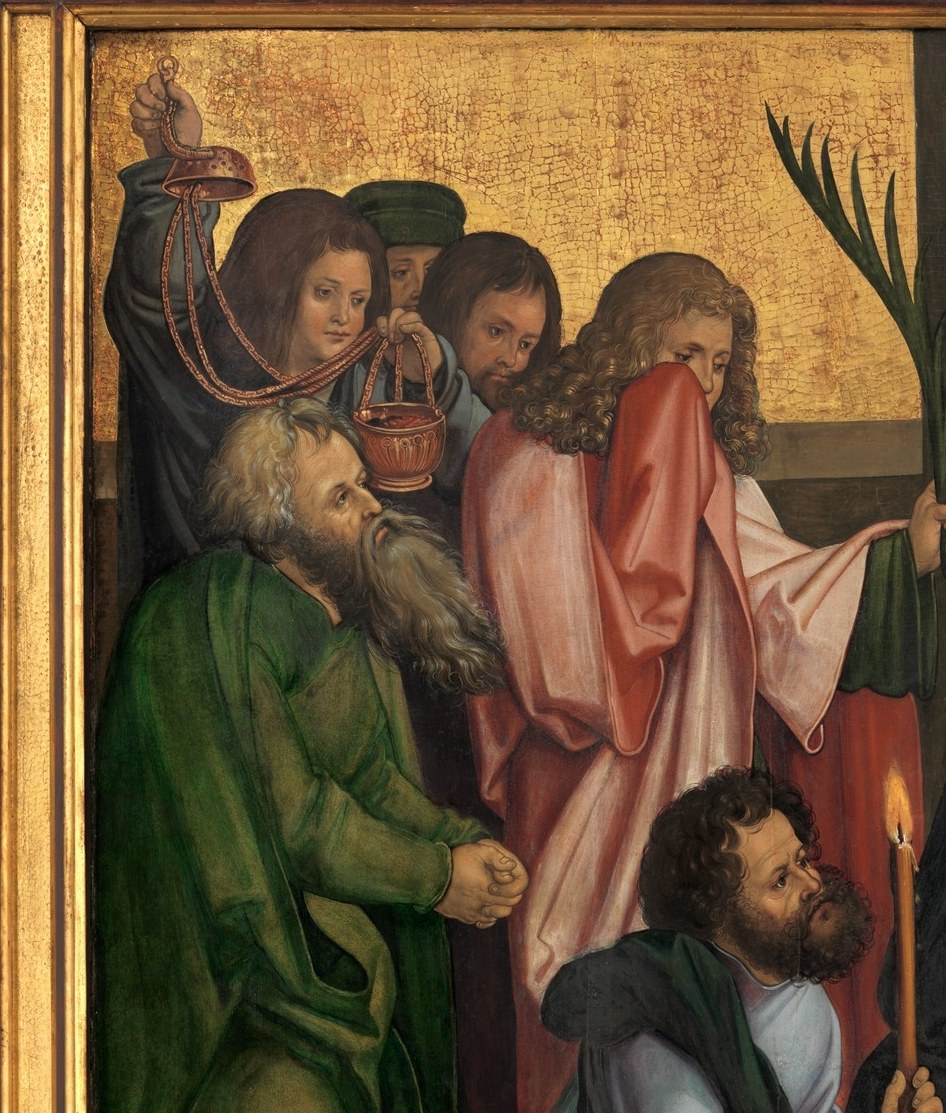
Schäufelein crowds the twelve apostles around Mary's deathbed in a tight ring of reds, greens, and deep blues. Every face in that crowd registers a different response. The young apostle at the center-left, probably John, looks directly at Mary with the stillness of a witness. The hands reaching in from the right are the emotional engine of the painting, they cannot save her, and they know it.
Schäufelein was born in Nuremberg and worked in Albrecht Dürer's workshop. You can see Dürer's influence in the sharp, individual faces and the way the crowd compresses into a single intense wall of feeling. The Virgin's white robes glow at the center because white fabric in Northern Renaissance painting was a deliberate color statement, purity, yes, but also a kind of visual silence in the middle of all that saturated grief.
The apostles came from everywhere, the story says, carried by clouds to her bedside. They arrived in time to keep vigil. And then they just stood there, not as saints but as people who knew they were losing someone.
#arthistory #northernrenaissance #hansschaufelein
Details
Transcript
She lies at the center, eyes closed, haloed in gold. They called it the Dormition, her falling asleep. Around her, the twelve apostles have gathered. Every face carries a different weight of grief. This man, likely the young John, watches her directly. Hands reach toward her, longing, helpless, human. One figure holds a deathbed candle, the ritual of last rites. The painter was Hans Schäufelein, a Nuremberg man who learned from Dürer.