Burning of Old South Church, Bath, Maine by Hilling, John
View the artwork: Burning of Old South Church, Bath, Maine →
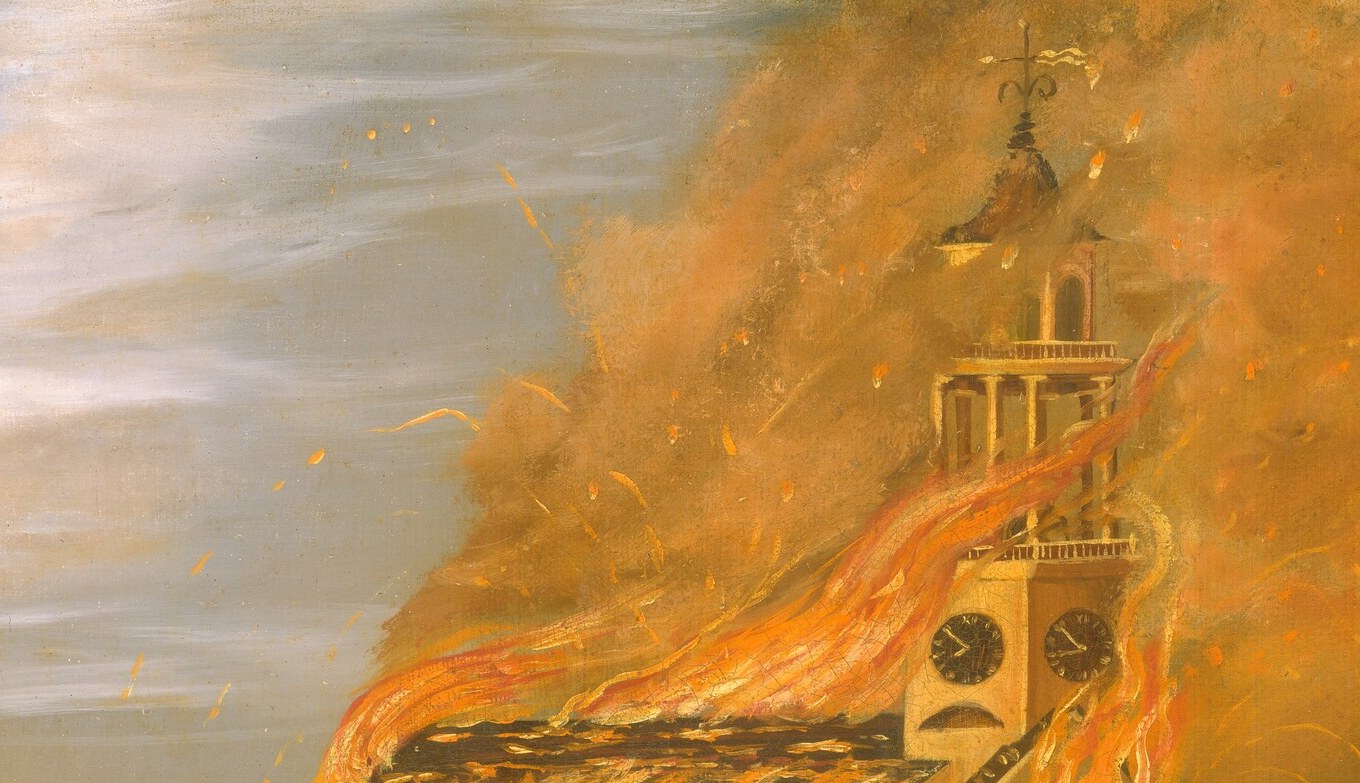
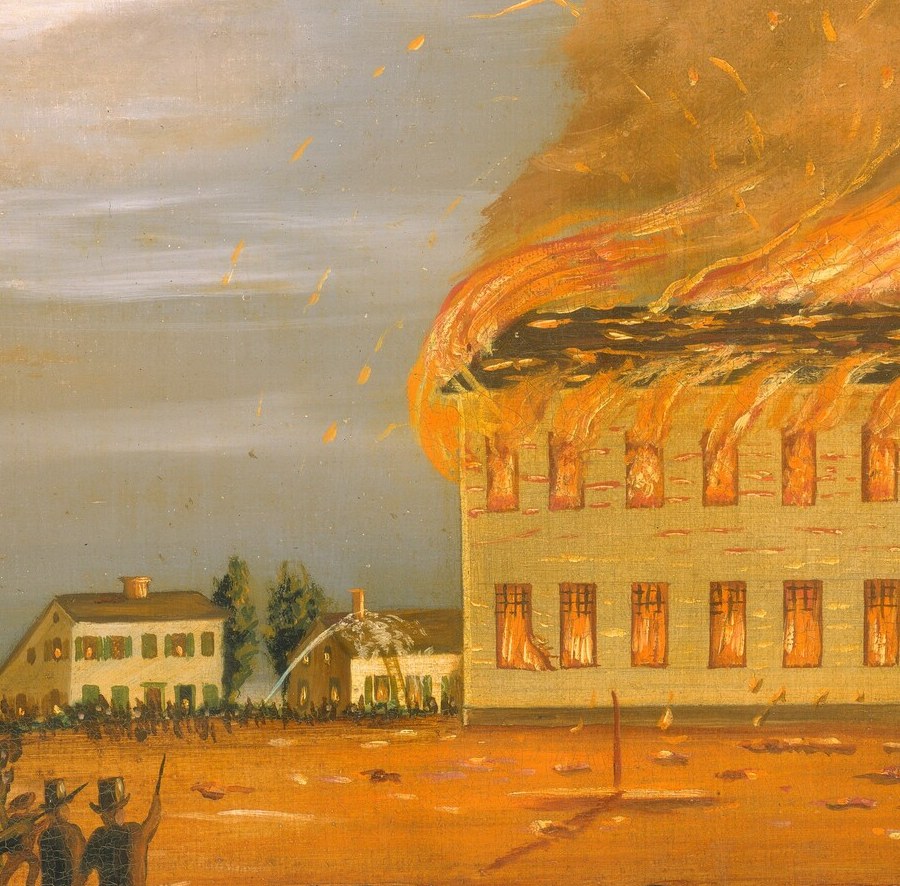
This is John Hilling's "Burning of Old South Church, Bath, Maine," painted around 1854. Hilling appears in the historical record for a single year, 1854, and this nocturnal fire scene may be the only surviving evidence of his hand. The painting is a study in how oil paint can reconstruct light that no longer exists.
Move your eye from the windows to the smoke to the street. The arched church windows burn at three temperatures at once: white at the core, orange at the edge, yellow in between. The smoke plume is the real technical feat, it transitions from fire-lit orange near the roof to near-black as it meets the night sky. And the ground glows amber from reflected light, a detail you only get if you have watched a real fire.
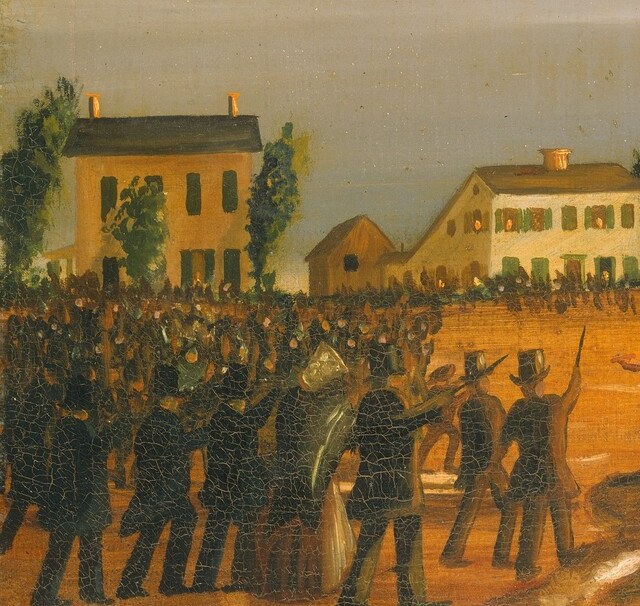
In 1854, Bath was a prosperous shipbuilding town on the Kennebec River. The Old South Church was a civic landmark, and its destruction by fire would have been a communal wound. Hilling frames it not as a distant spectacle but as something witnessed: a crowd of townspeople stands at the left, their dark silhouettes giving human scale to the flames. An American flag on the right suggests a militia or civic presence, grounding the chaos in mid-19th-century American life.
The painter's biography is almost entirely lost. But for a few months of 1854, someone named John Hilling set up an easel, mixed oils, and tried to solve one of painting's hardest problems, how to make a flat canvas glow.
#arthistory #americanart #19thcenturyart
Details

Transcript
Night. A church burns in Bath, Maine. Look at the windows. Each arch is a furnace mouth. Orange, white, yellow. The fire's smoke shifts from hot orange to dead black. The street below glows amber from the flames above. And the untouched sky behind it all stays soft pink. John Hilling had one year as a painter. 1854. This is what he made.