Mother and Child with a Rose Scarf by Mary Cassatt
View the artwork: Mother and Child with a Rose Scarf →
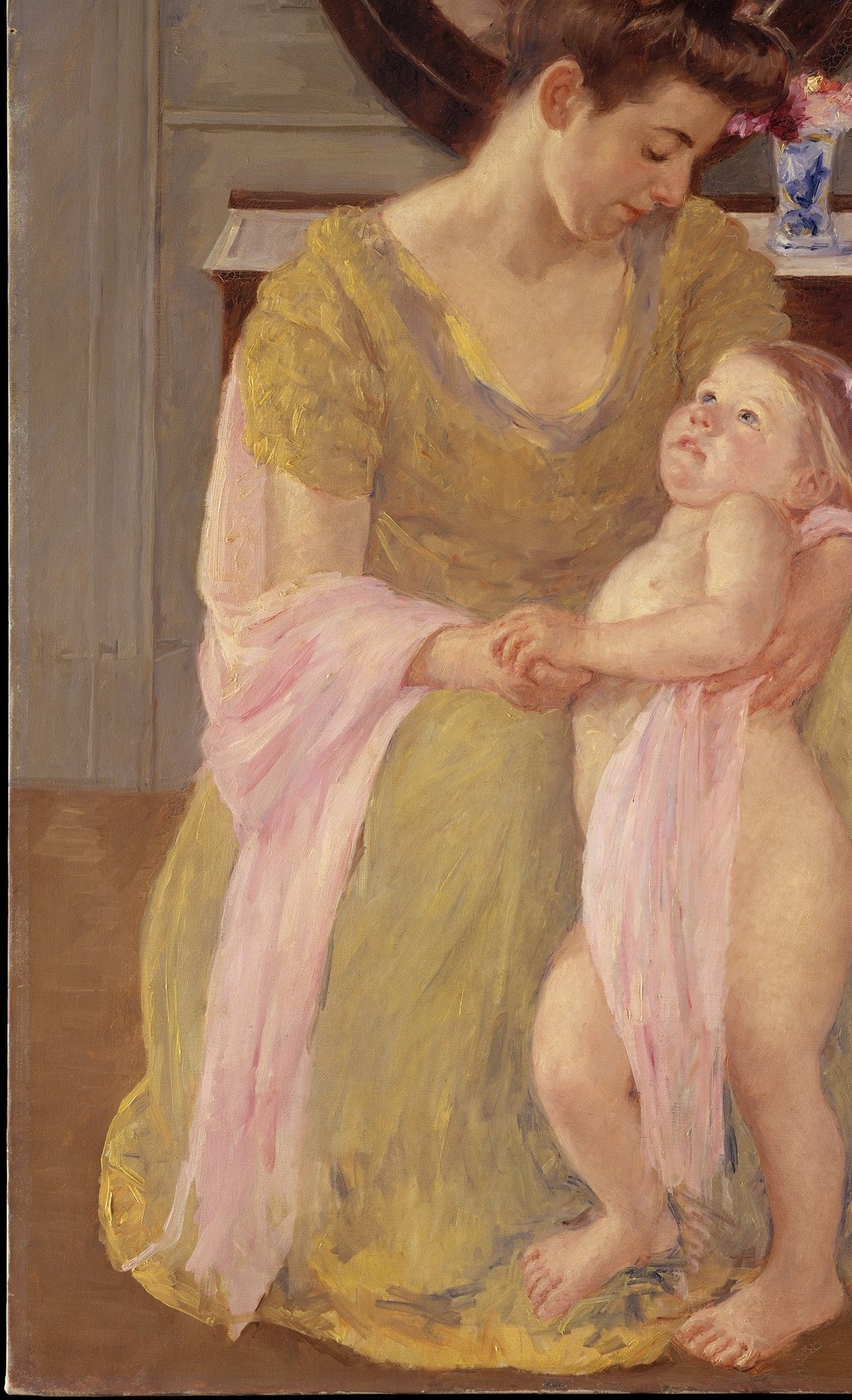
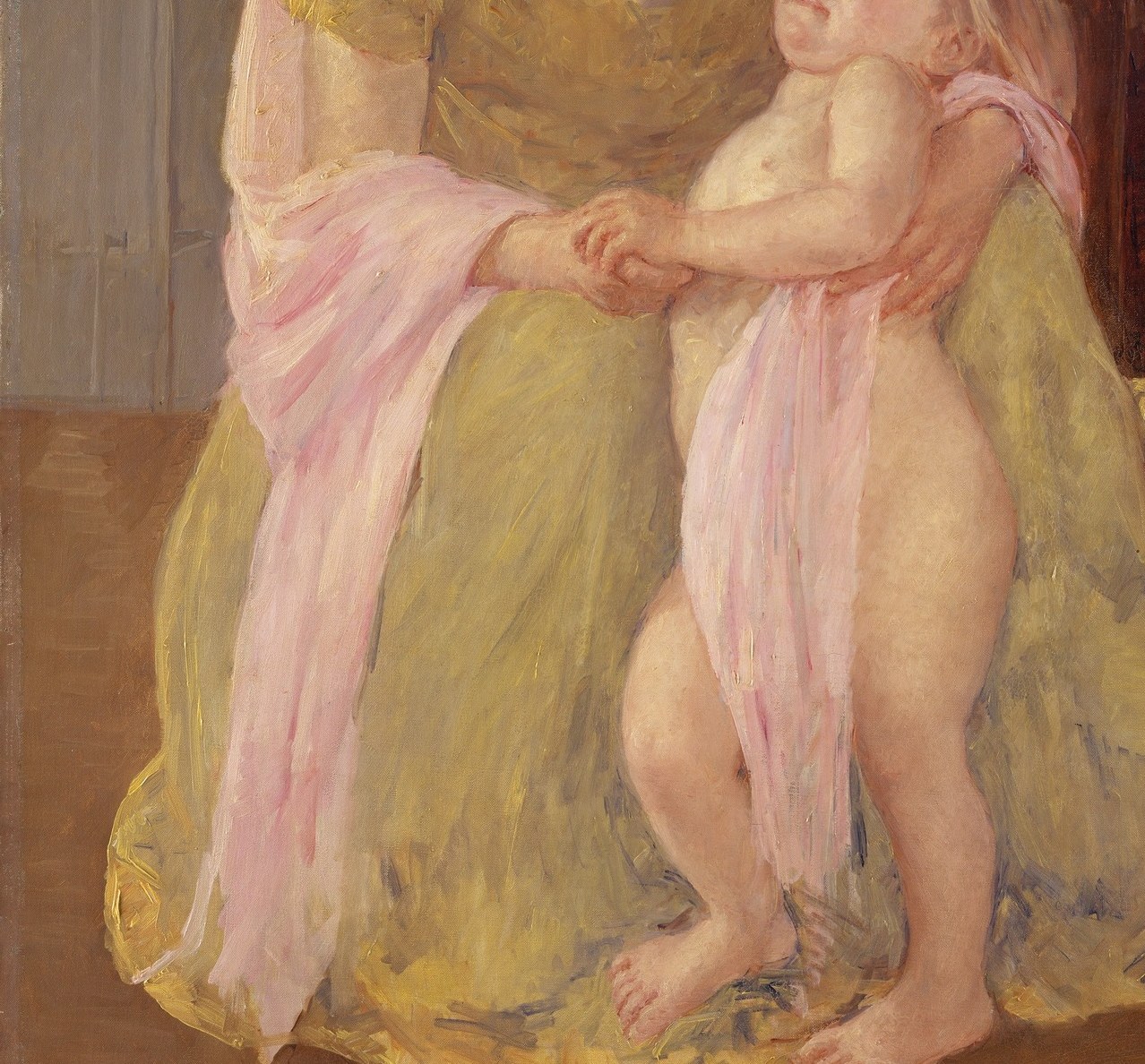
Mary Cassatt's 'Mother and Child with a Rose Scarf' was painted around 1908, near the end of a career singular in American art. Cassatt was the only American ever invited to exhibit with the Paris Impressionists, yet she spent her final three decades painting almost nothing but mothers with their children. This canvas, now in the Metropolitan Museum of Art, was a bequest from Adelaide Milton de Groot in 1967.
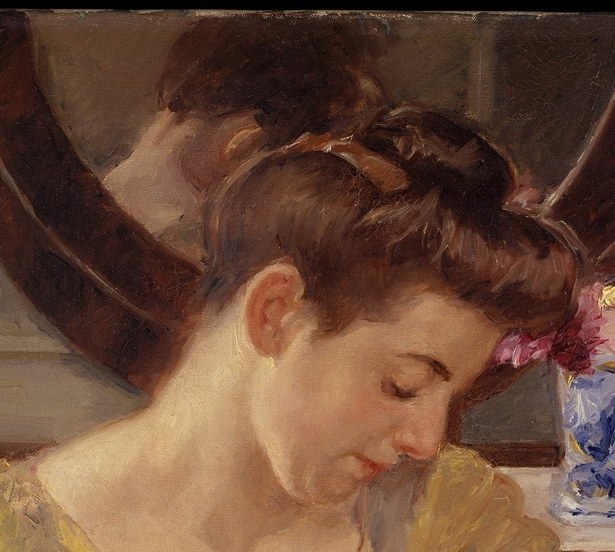
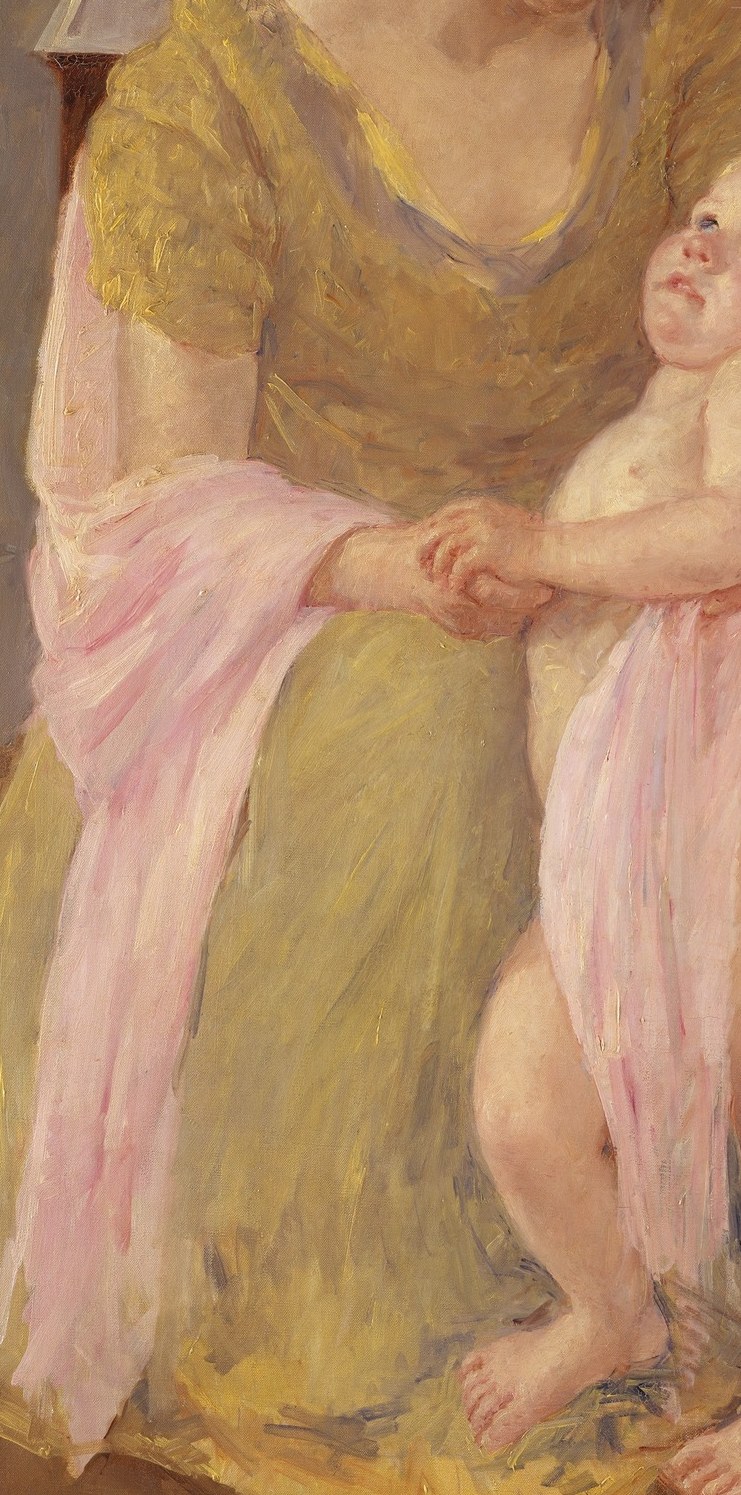
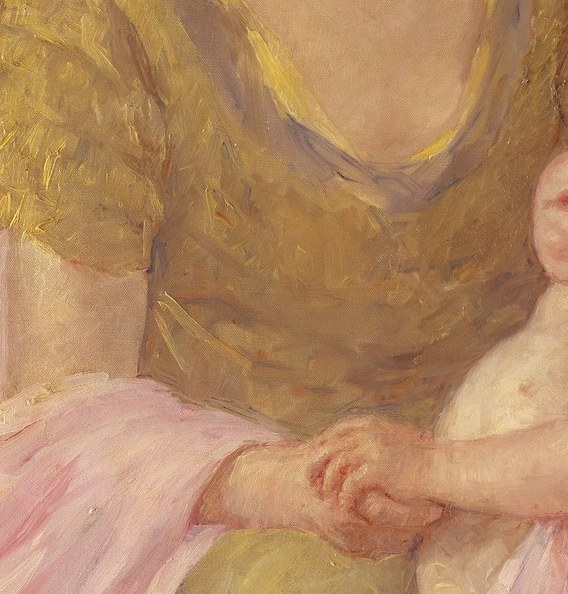
The emotional weight of the painting lives in two places: the mother's closed, downward-tilting face and the clasp of her hands around the child's wrists. Cassatt returned to hands in nearly every version of this subject, the touch is where protection becomes tangible. The child looks outward, toward the world; the mother looks inward, toward the child. That asymmetry of gaze is the entire story.
Mary Cassatt never married and never had children of her own. She was born in Pennsylvania in 1844 and settled in France permanently, befriending Degas and fighting for her place in a male-dominated avant-garde. Why she devoted her later years so completely to the mother-child bond is a question her letters never fully answer, but the paintings do. She treated domestic intimacy not as a minor genre but as a subject worthy of the same formal seriousness as any history painting.
What she felt, looking at a scene like this and painting it again and again, she left on the canvas. The rest is silence.
#arthistory #marycassatt #impressionism
Details
Transcript
Philadelphia, 1877. Mary Cassatt leaves for Paris. Degas invites her to show with the Impressionists. She is the only American. But for the last 30 years of her life, she paints just one subject. Mothers and children. Over and over. She never married. She never had children of her own. Look at her closed eyes. She is not posing, she is feeling. The child's hands rest in hers. That touch was everything to Cassatt. She said this bond was the finest thing she knew. She gave her whole working life to it.