The Strong Family by Charles Philips
View the artwork: The Strong Family →
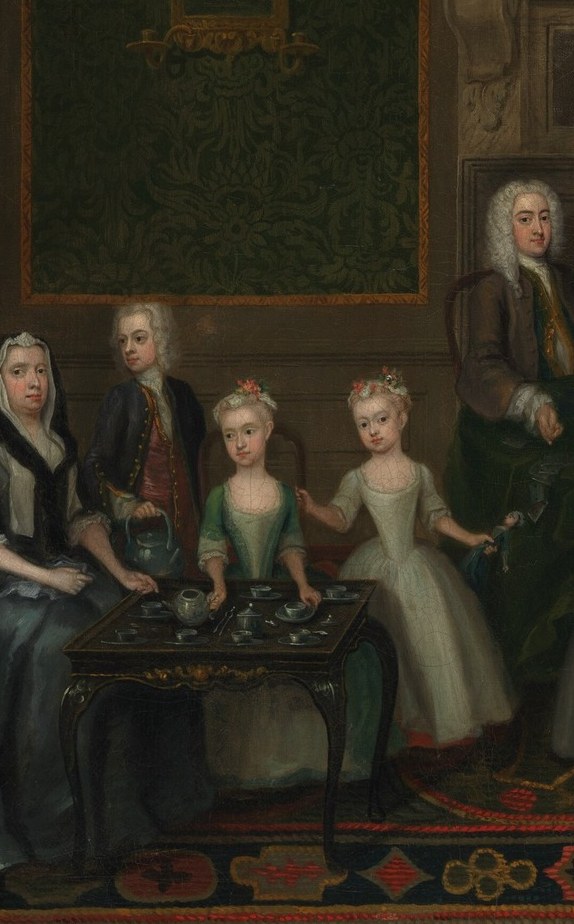
The Strong Family, painted by Charles Philips in 1732, hangs today at the Yale Center for British Art. It is a portrait of nine members of an affluent Georgian family, but for painters, it is also a fabric demonstration reel.
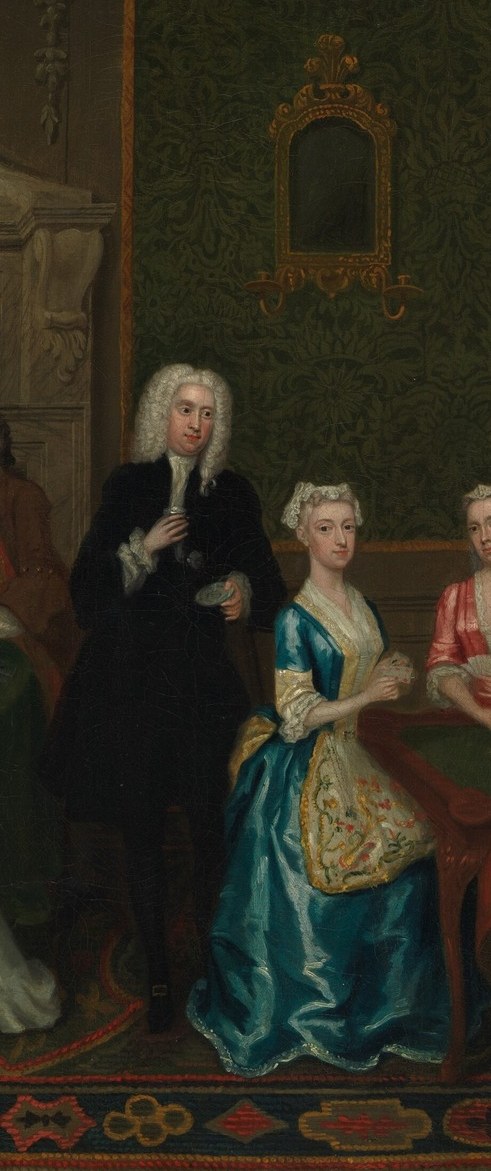
Look first at the woman in the vivid blue satin gown. That sheen is not simply blue paint. Philips achieved it by laying down a bed of lead white, then glazing over it with a translucent layer of ultramarine or Prussian blue. The light passes through the blue, hits the white underneath, and bounces back to your eye, creating the illusion of shimmering satin.
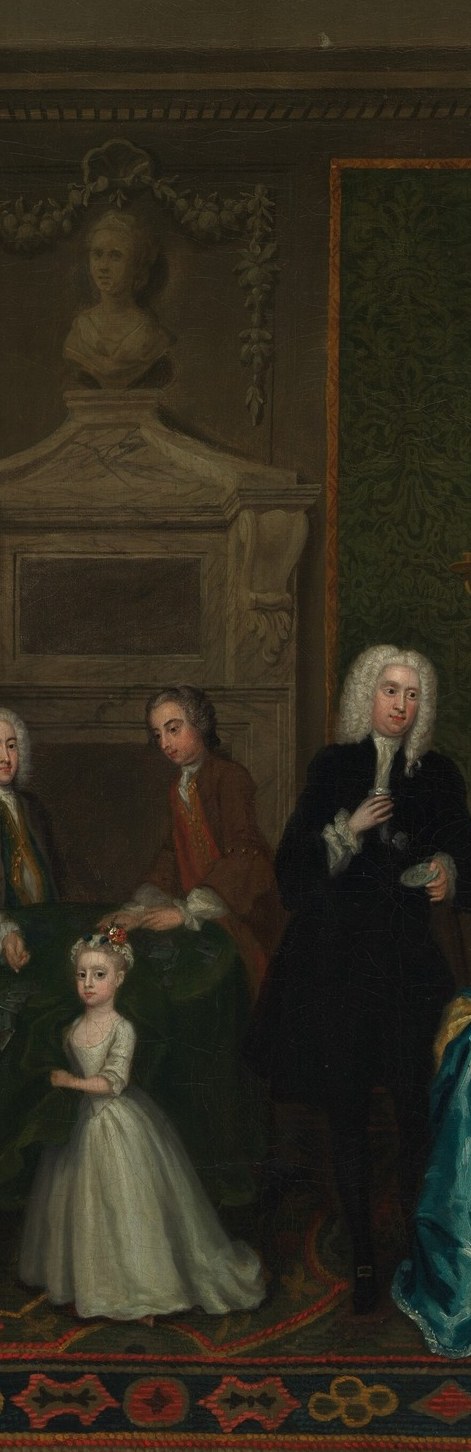
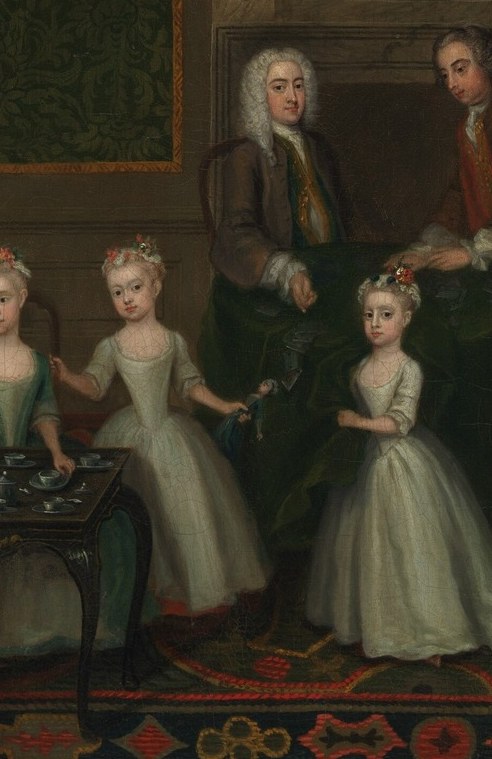
Now look at the patriarch's dark wool coat. There is no underglow here. Philips used dense, matte pigment, likely bone black, applied thickly so it absorbs light rather than reflecting it. Compare that to the lace cuffs worn by the man on the far right. The lace is painted with small, dry flicks of white and grey, allowing the sleeve color beneath to show through the gaps.
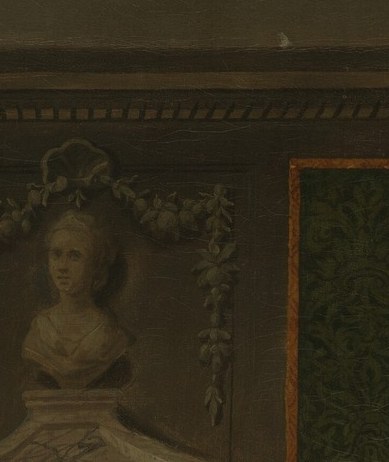
Philips was a specialist in the conversation piece, a type of group portrait showing families at leisure. This painting puts his entire technical range on one canvas: the glossy blue, the light-eating wool, the pierced lace, and the deep green recession of the panelled wall. A painting like this was not just a family record. It was a quiet assertion of mastery, bought at the high price of a complex commission.
Which of the textures here do you think gave him the most trouble?
#arthistory #18thcenturyart #charlesphilips
Details
Transcript
Nine members of one family, dressed in their absolute best. Philips was a sought-after portraitist for noble and royal patrons. Now watch how he manages the fabrics in this room. The blue satin glows because Philips layered white beneath translucent blue. Next to it, the dark wool coats. No sheen, just deep, matte black. And here, lace cuffs so thin the sleeve color shows through. Three fabric textures in one painting. The satin was the party trick.