Still Life with Strawberries in a Compote by Severin Roesen
View the artwork: Still Life with Strawberries in a Compote →
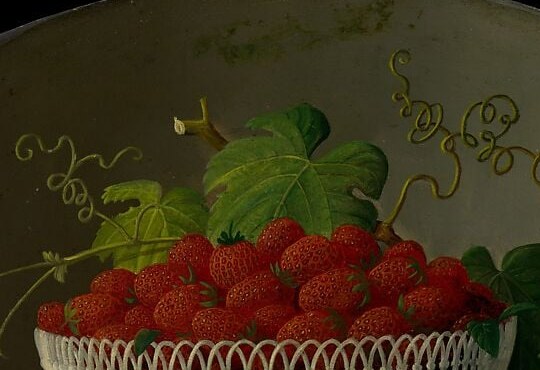
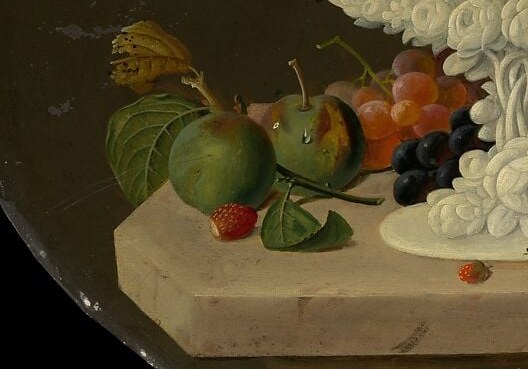
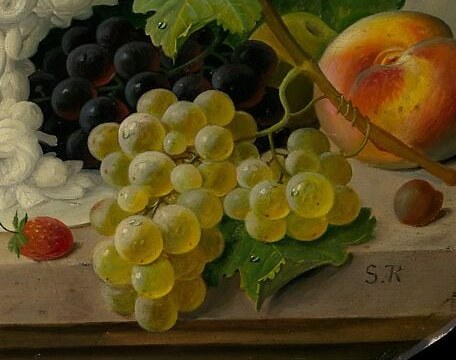
Severin Roesen's Still Life with Strawberries in a Compote, from around 1870, is a textbook example of why he was once everywhere in American homes and why his story ends in a complete historical void.
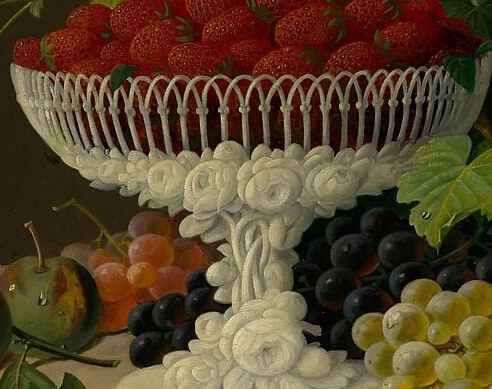
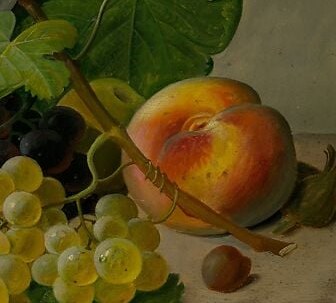
Start with the strawberry mound. Dozens of ripe berries, each with a tiny highlight on its seed. Then move to the white porcelain compote. The stem is a lace-like openwork, and Roesen paints the negative space, the actual holes, against the dark background. The grapes draped over the rim are another signature: abundance so extreme it cannot be contained.
Roesen emigrated from Prussia after the 1848 revolutions and found a hungry market. Affluent American families wanted these lavish, optimistic still lifes. He painted them by the dozen, often repeating the same objects. His work hangs in the Met and the White House.
Then, after 1872, he vanishes. No obituary, no burial record, no last painting. A man who filled canvases with impossible abundance left behind a life with a missing final chapter. We know everything about what he painted, and almost nothing about how he ended.
#arthistory #americanart #severinroesen
Details
Transcript
A mountain of strawberries that looks like a portrait of every single seed. The painter, Severin Roesen, filled American dining rooms with this exact abundance. Grapes so heavy they spill over the rim. He made this move his signature. Look at the white pedestal bowl. He paints the holes where the porcelain is cut away. In the 1860s, this was the height of fashion. He painted dozens of these. Then, around 1872, he simply disappears from the record. No death certificate. No grave. His final years remain as dark and empty as the background he painted behind every feast.