A Hunter with a Dog by Mortier
View the artwork: A Hunter with a Dog →
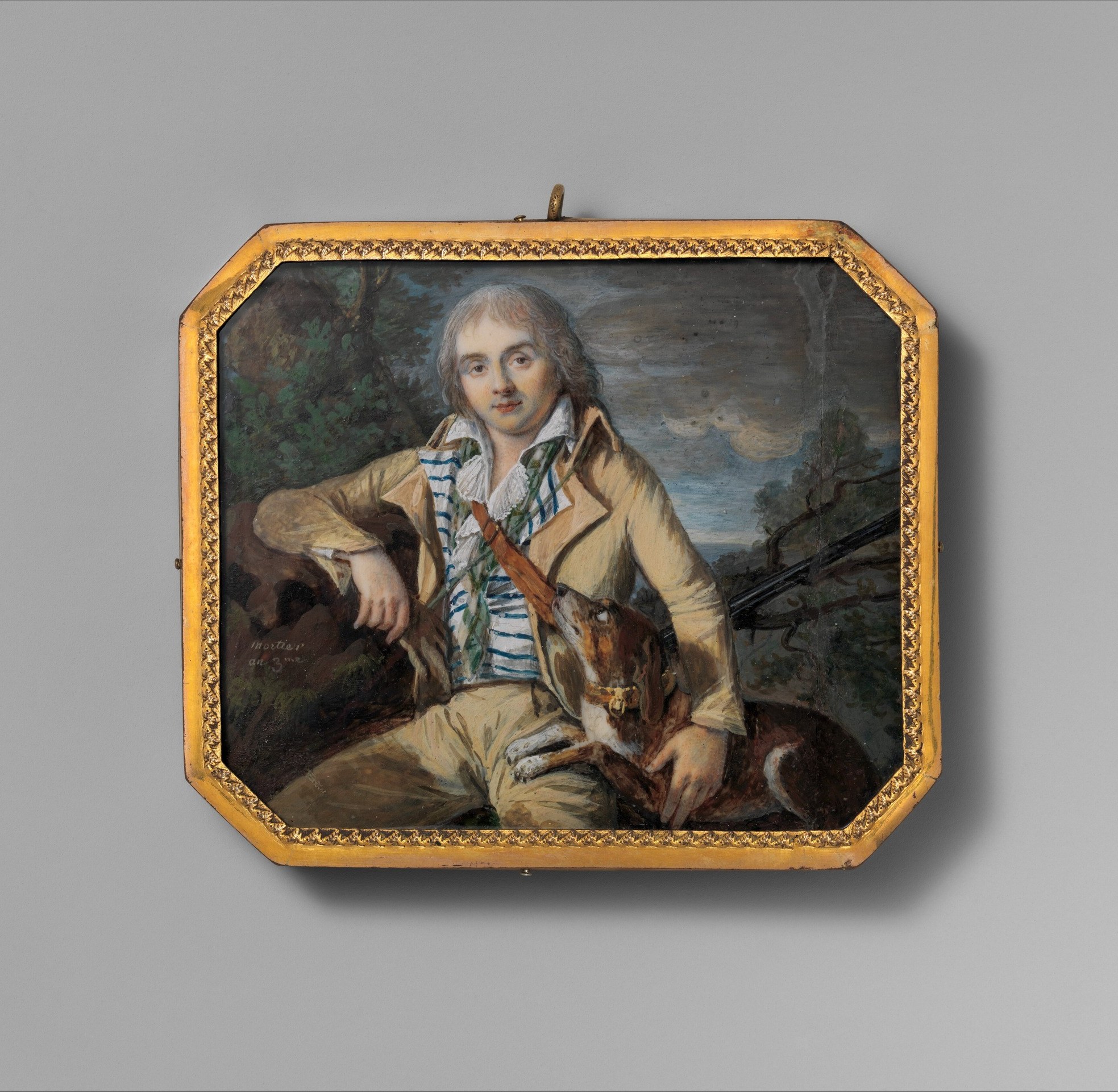
This is A Hunter with a Dog, painted in 1794 by an artist known to us only as Mortier. That year, the French Revolution was entering its most violent chapter, the Terror had ended only months before, and yet here, on a sliver of ivory smaller than an adult hand, a quiet pocket of life persists. Instead of ambition or ideology, someone commissioned this: a record of himself, at rest, with his dog.
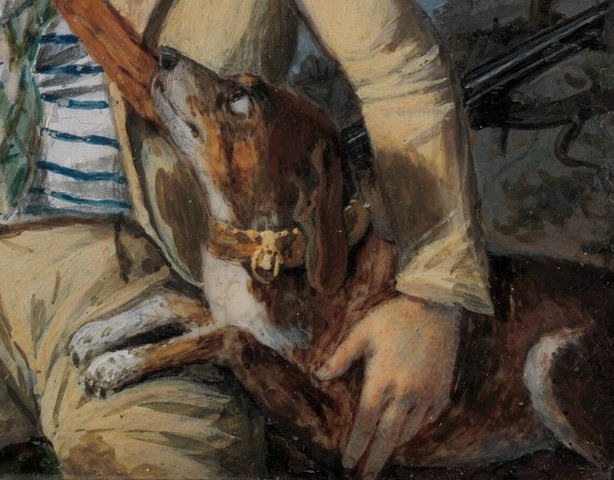
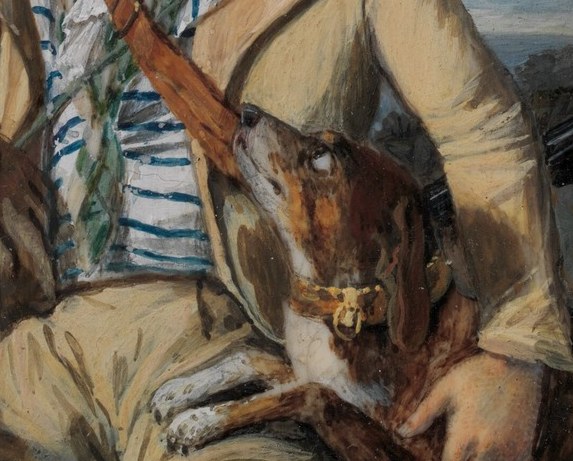
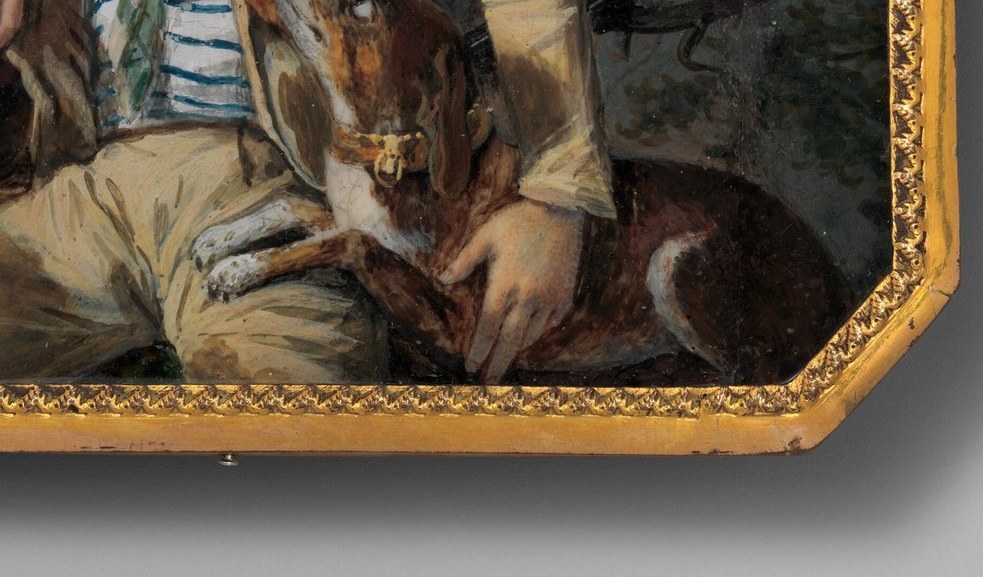
Look for the dog. Its head is turned upward toward the hunter, who touches its back with a gentleness that defines the whole miniature. The gun is present, but its diagonal crosses the composition like a secondary thought, the real connection here is between the man's hand and the animal's upturned face. Also note the blue and white striped shirt beneath the tan coat: a sharp, period-accurate detail of late-18th-century French fashion that helps date the painting exactly.
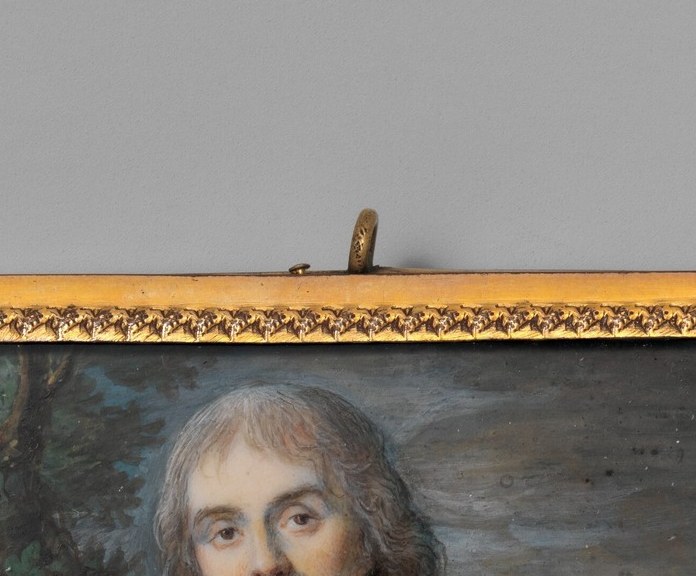
Ivory miniatures like this were intimate objects, commissioned to be held, worn inside a locket, or kept in a pocket. The octagonal frame, the luminous sky where the ivory ground glows through thin paint, all of it was designed for closeness. The hunter's eyes meet yours directly, and that eye contact turns a portrait into a relationship. His expression is calm and self-assured, as though he knows he is being remembered.
This painting is not a masterpiece in the grand museum sense, but it was never meant to be. It was someone's proof of existence in a time of erasure. The hunter is unknown to us now, but in 1794 he offered his face to you, and it is still here.
#arthistory #miniatureportrait #18thcenturyart
Details
Transcript
1794, in revolutionary Paris, a man sits for a miniature. Ivory the size of your palm. Meant for a locket or a pocket. He wears the stripes of late-18th-century French fashion. Now look at him. His hand rests on his dog, not the gun. And the dog waits. This is companionship, not the chase. He looks out at you. Someone carried this.