The Virgin and Child by http://www.wikidata.org/.well-known/genid/de5dc5d7440dc8c6e282be304f6bed21
View the artwork: The Virgin and Child →
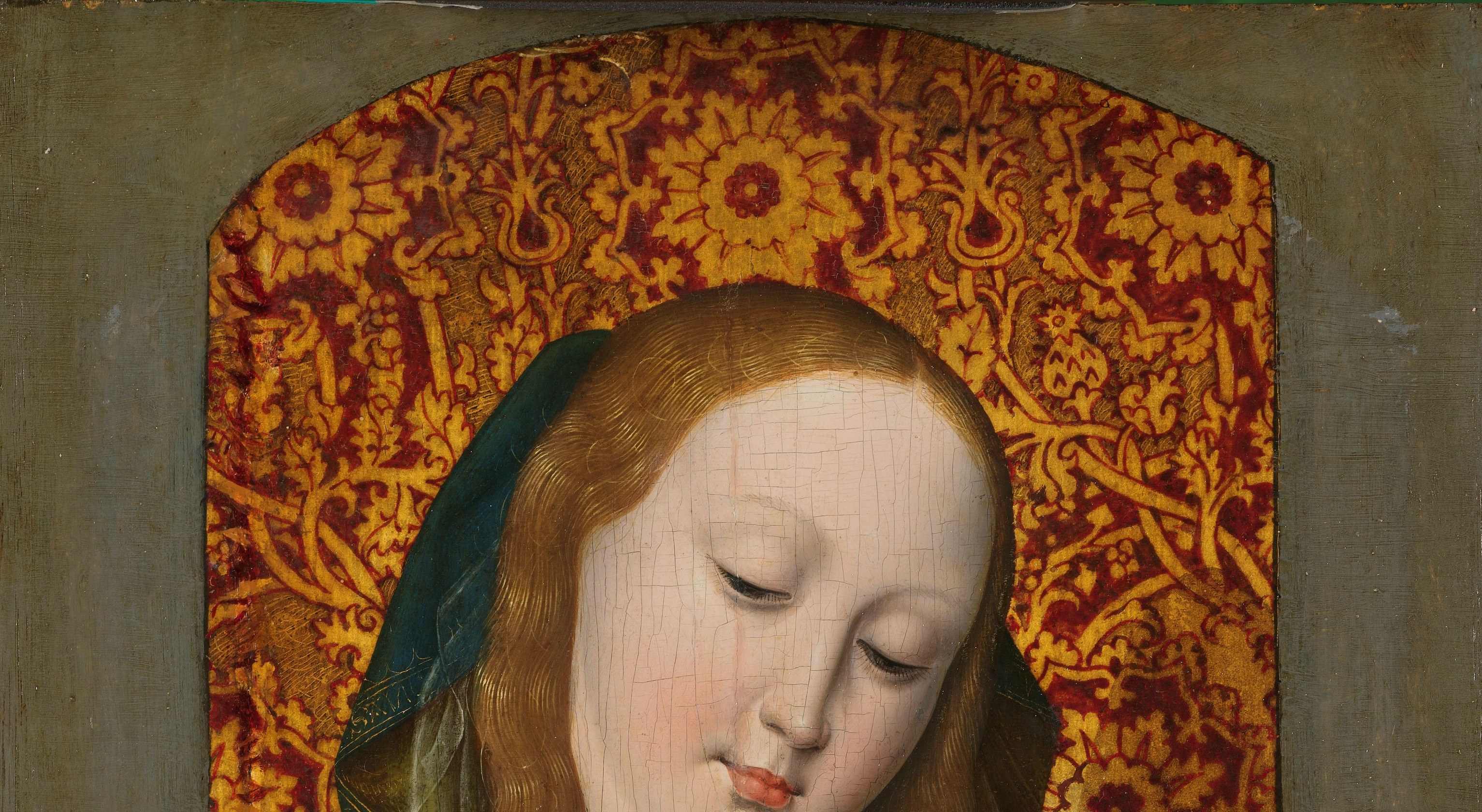
This is Rogier van der Weyden's The Virgin and Child, painted around 1450, and it now hangs in the J. Paul Getty Museum in Los Angeles. But for one day in 1959, it was the most expensive painting on earth.
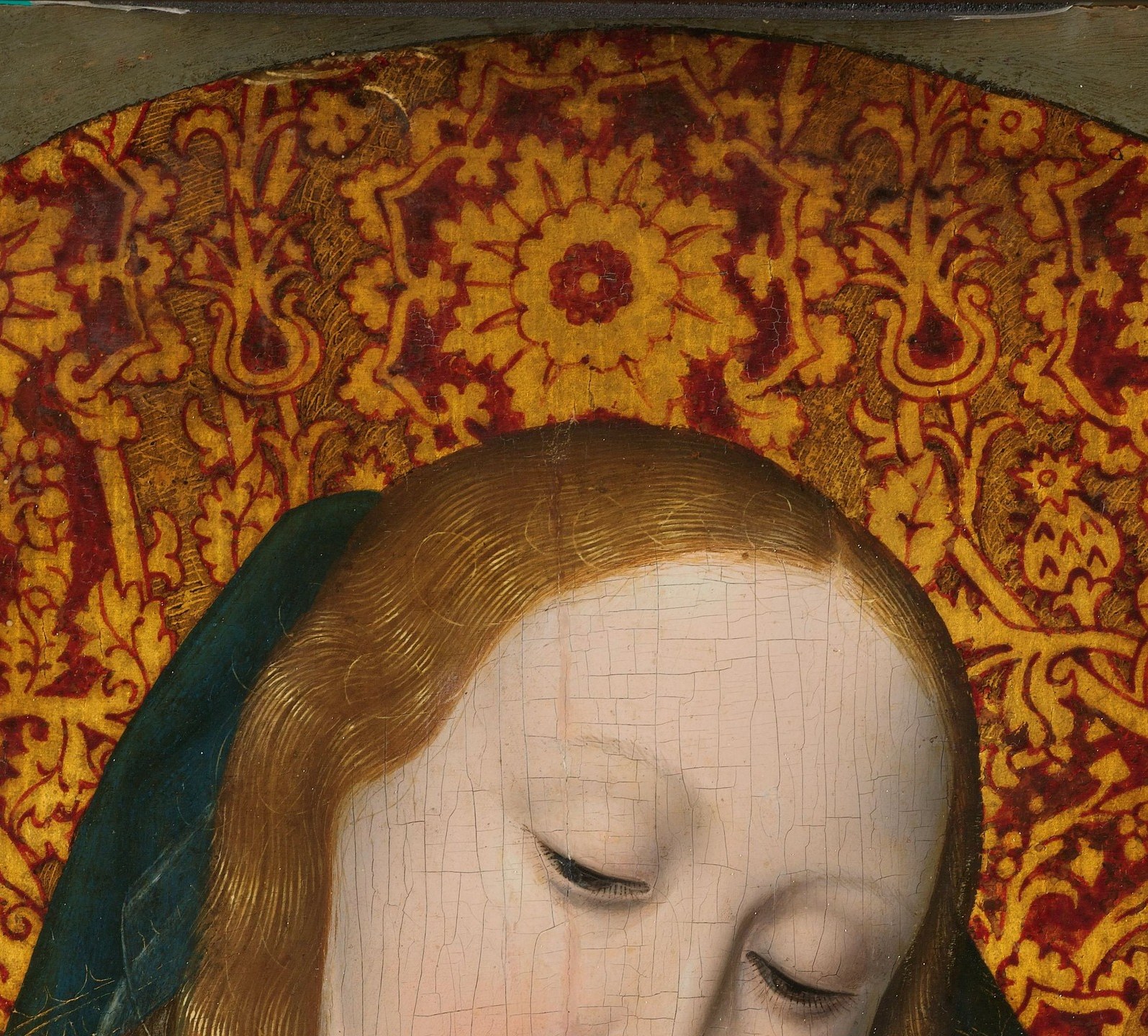
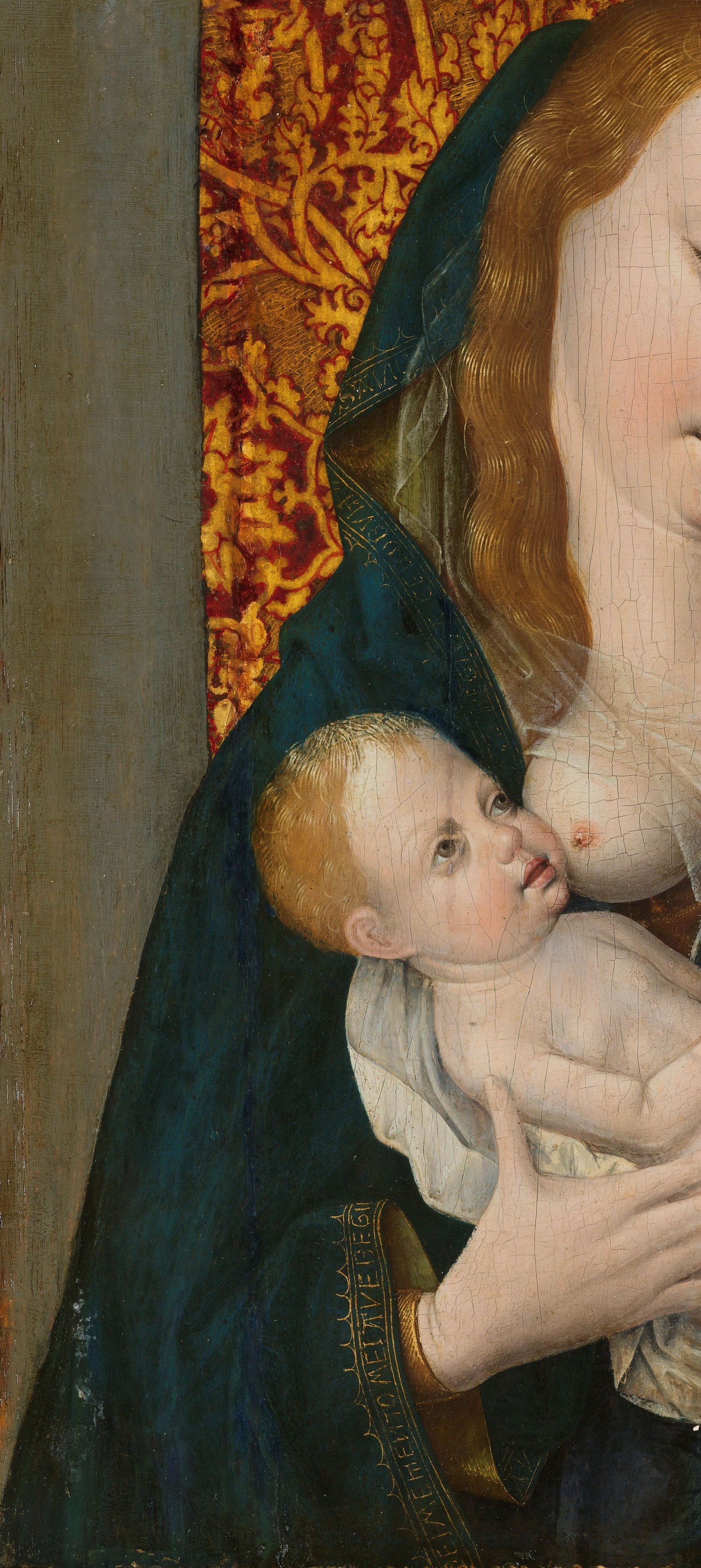
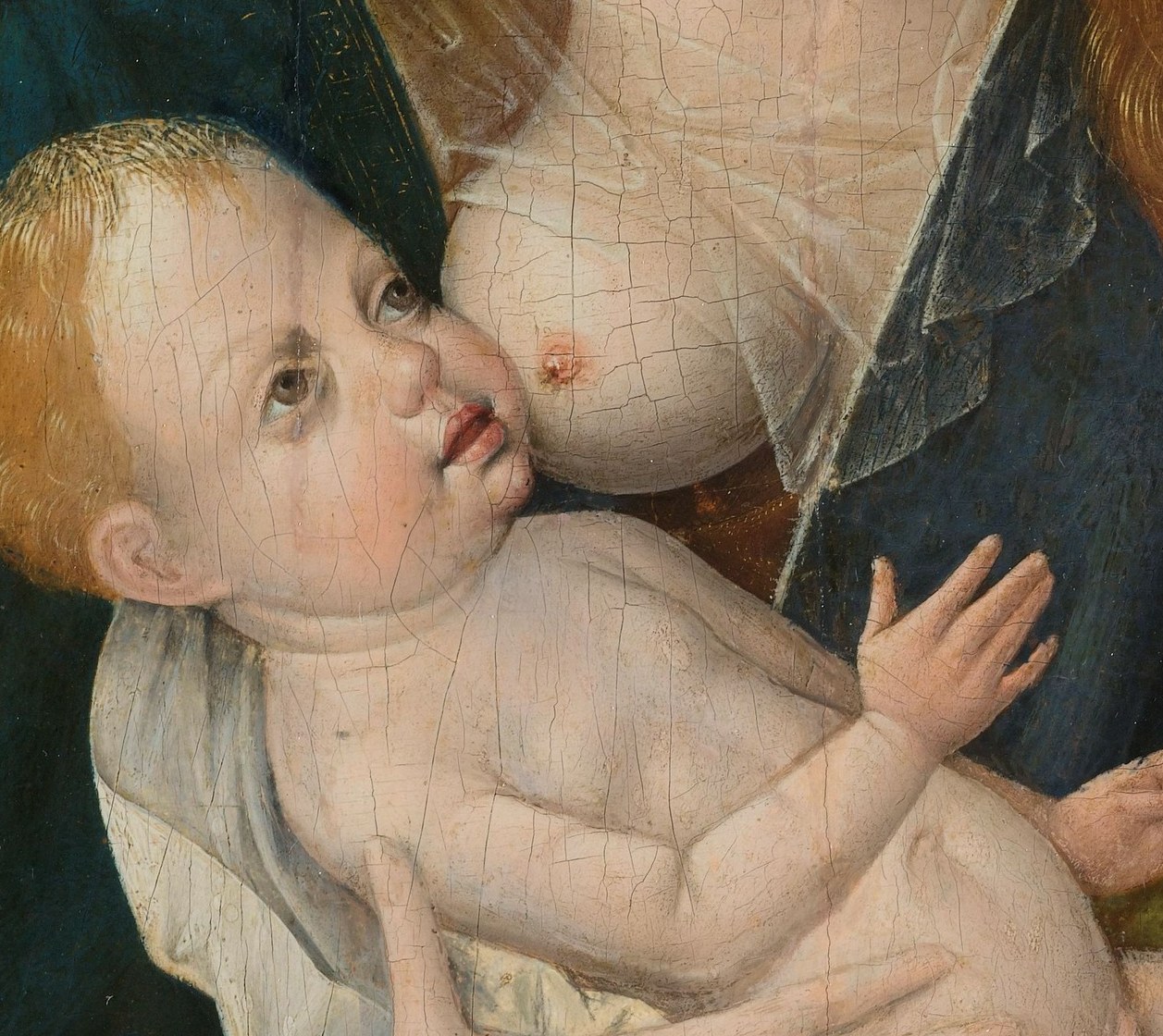
Look how the artist built the intimacy: Mary's half-closed eyes never meet yours. She is completely absorbed in the child. The infant's raised hand reads as both a blessing and a baby reaching for its mother. Every detail, from the clutching left hand to the shadow where his body presses against her drapery, grounds the sacred scene in real, observed touch.
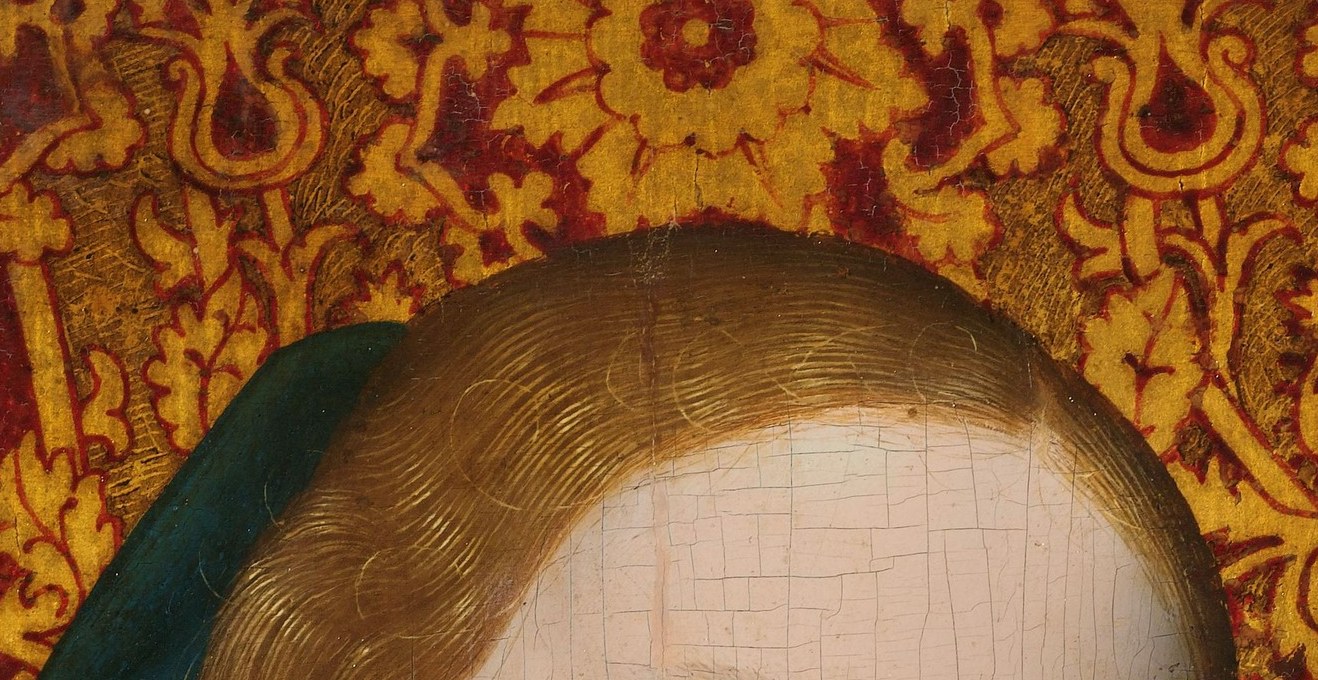
Van der Weyden was the city painter of Brussels during the 15th century, when Flemish oil technique was the most advanced in Europe. The lapis lazuli in Mary's mantle and the red lake glaze in her underdress were ruinously expensive pigments, reserved for the most important commissions. The brocade background, repeating sunflowers in crimson and gold, comes from a different tradition: German devotional panels often used flat patterned grounds to suggest heavenly light.
The price story is just as rich as the paint. A Russian prince, short on cash, sold it quietly. Four days and one flip later, J. Paul Getty had his first great acquisition, and the art market had a new ceiling.
#arthistory #rogiervanderweyden #flemishart
Details
Transcript
In 1959, a Russian prince needed money quietly. He sold this small painting to a London dealer for fifty thousand pounds. Four days later, it resold to an American magnate. The price he paid: three hundred and seventy thousand pounds. It was the most anyone had ever paid for a painting. The buyer was J. Paul Getty. This was the first trophy.