Tea by James Tissot
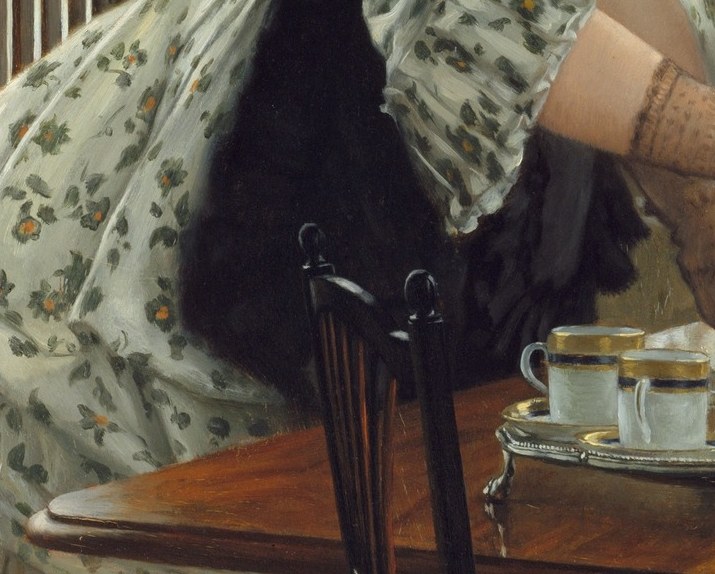
James Tissot's "Tea" (1872) is a painting that is physically half of a story. The artist first created a larger canvas called "Bad News," showing a woman receiving word of a captain's departure while a companion looks on. Then, for reasons known only to him, Tissot copied just the left portion onto this single wood panel, isolating the woman's private reaction as its own complete work. You can see it at the Metropolitan Museum of Art.
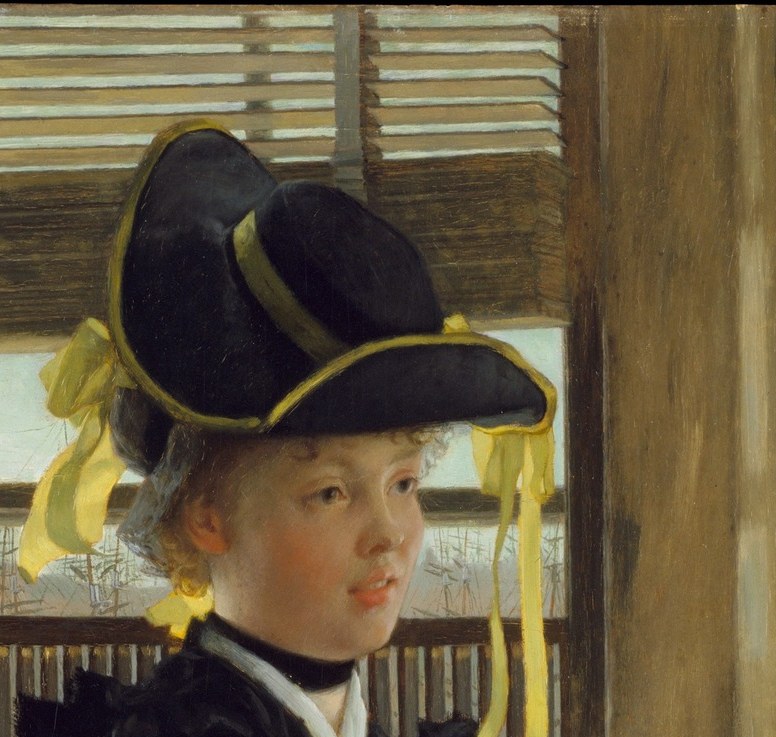
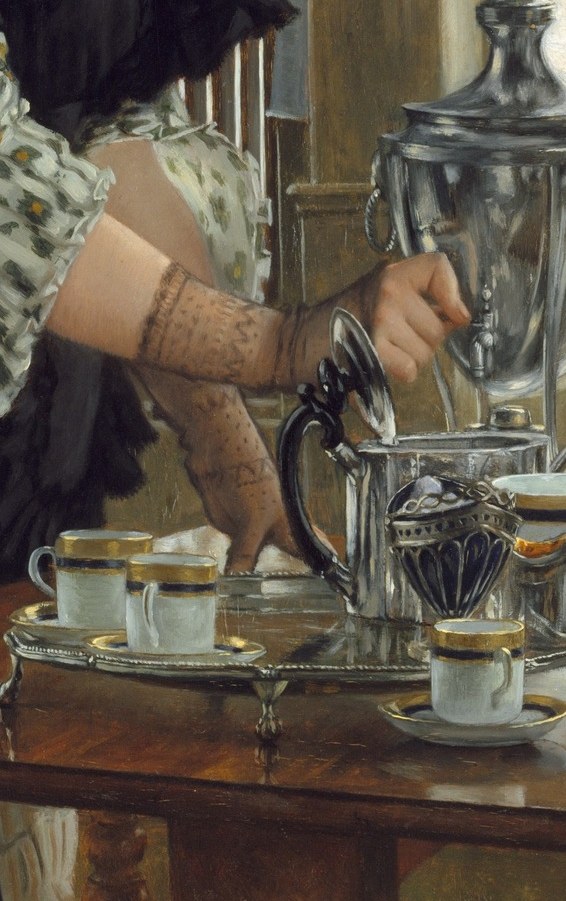
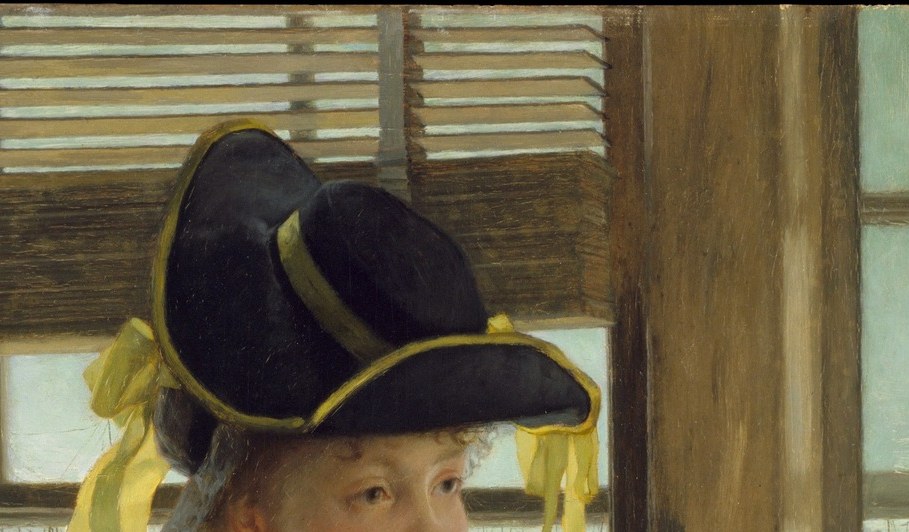
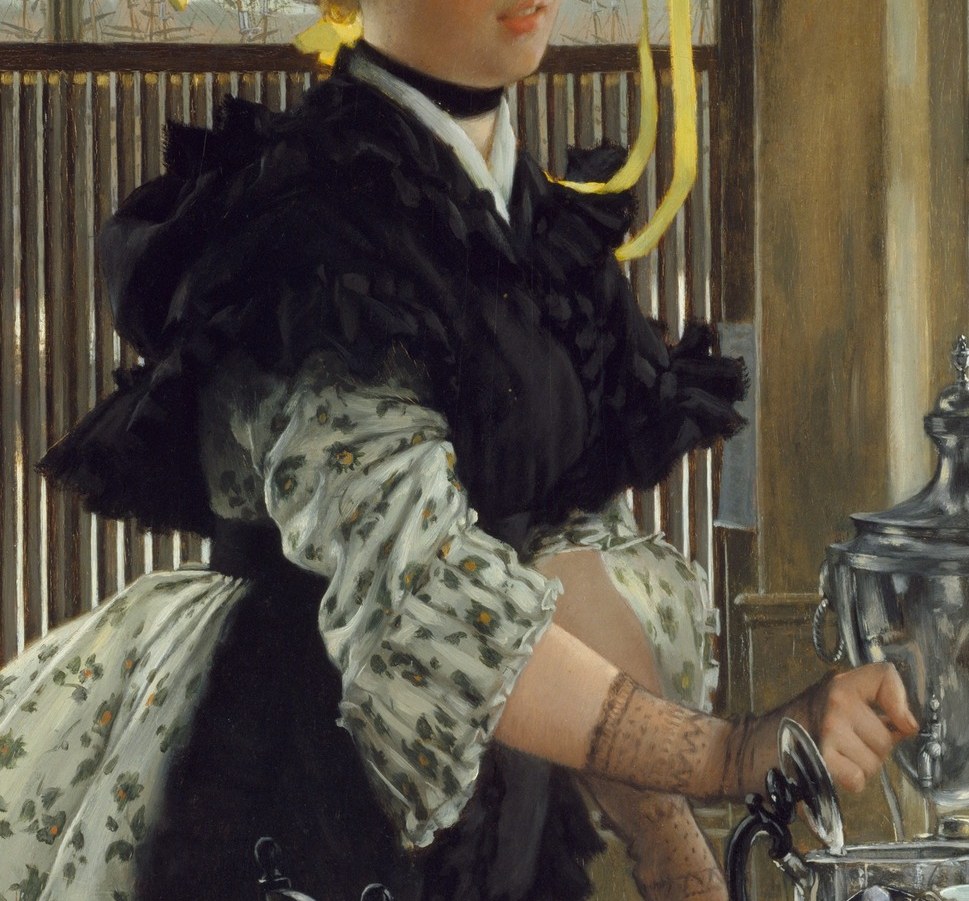
Look at the suspended quality of her hands in their black lace mitts. The tea urn, cups, and cream jug are fully arranged, yet the ritual has stopped cold. The silver urn reflects a ghostly, distorted window and cityscape near the lower right of its surface, a hidden second world embedded in the metalwork. Through the window behind her, a hazy London roofline presses in, the wider world into which the captain is departing.
Tissot had recently fled Paris after the Franco-Prussian War and the Paris Commune, arriving in London in 1871. This panel dates from his first full year there, a period when he was building a new career painting fashionable Victorian society. The pencil study for this composition was once owned by his friend Edgar Degas and bore an inscription from Tissot himself, tying this intimate London scene back to the Parisian avant-garde.
She does not look at the tea. She does not look at us. Whatever the captain's news was, Tissot leaves the second figure out of the frame entirely and gives us only the silence afterward.
#arthistory #jamestissot #victorianart
Details
Transcript
This is not a full painting. It is half of one. James Tissot first painted a larger scene called Bad News. Then he copied just this left side onto a wood panel. A captain is leaving. She has just been told. Her hands have stopped. The tea will not be poured. Edgar Degas once owned the pencil study for this panel. Tissot had fled Paris after the Commune. He remade himself in London.