Marine Landscape by Alfred Thompson Bricher
View the artwork: Marine Landscape →
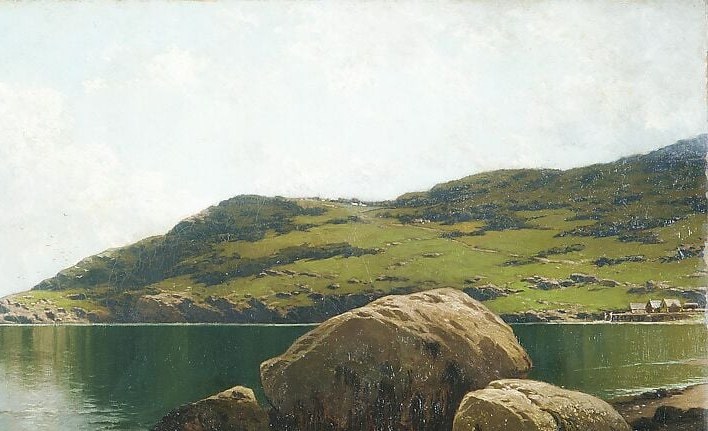
Alfred Thompson Bricher painted 'Marine Landscape' around 1895, and it hides its geography in plain sight. Housed at the Metropolitan Museum of Art, this oil on canvas is a masterclass in Luminist subtlety, a style devoted to the precise, almost scientific observation of light and atmosphere.
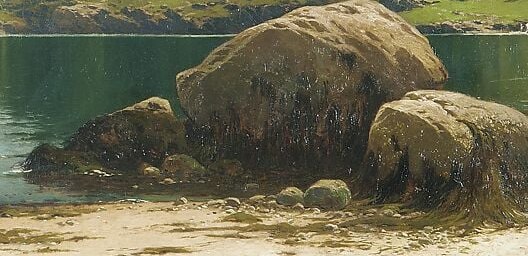
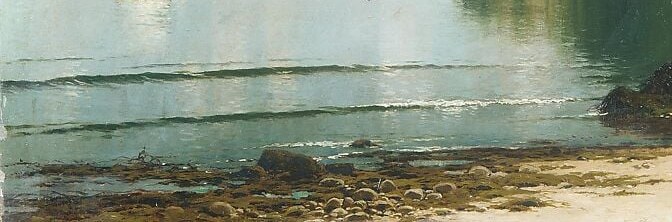
Most viewers scan across the vast wet sand and glassy water, but pause on two details. A lone two-masted schooner sits in the mid-distance, its ghostly reflection merging sky and sea. Then look at the far left margin. A faint secondary landmass recedes into the haze, barely there. That small silhouette is the key to the whole composition, it means you are standing inside a sheltered inlet, not staring at the open Atlantic.
Bricher began his career as a clerk in a Boston dry-goods store before turning professional in 1858. By the late 19th century, he was an Associate of the National Academy of Design and his seascapes were widely reproduced as popular chromolithographs. This painting entered the Met's collection in 1908, donated by Mrs. William Wheeler Smith, the same year the artist died.
So much of Luminism is about what is barely said. Here, the land is almost gone, the ship is tiny, and the real subject is the cool, silvery air itself.
#arthistory #americanart #luminism
Details


Transcript
You might mistake this for a pure void of light and water. But a small schooner cuts through all that stillness. Bricher painted this around 1895, using invisible brushwork to turn oil into atmosphere. He was one of the last American Luminists, obsessed with light on water. Now look at the far left edge of the painting. A second shoreline dissolves into the haze, nearly invisible. It places you inside a bay, not facing the endless open ocean. A gift to the Met in 1908, the year Bricher died.