Madonna and Child with Saints and Donors by Sebastiano del Piombo
View the artwork: Madonna and Child with Saints and Donors →
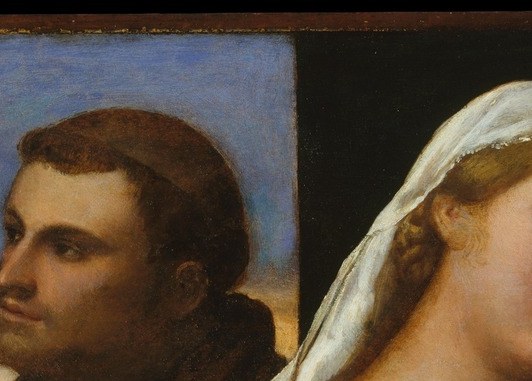
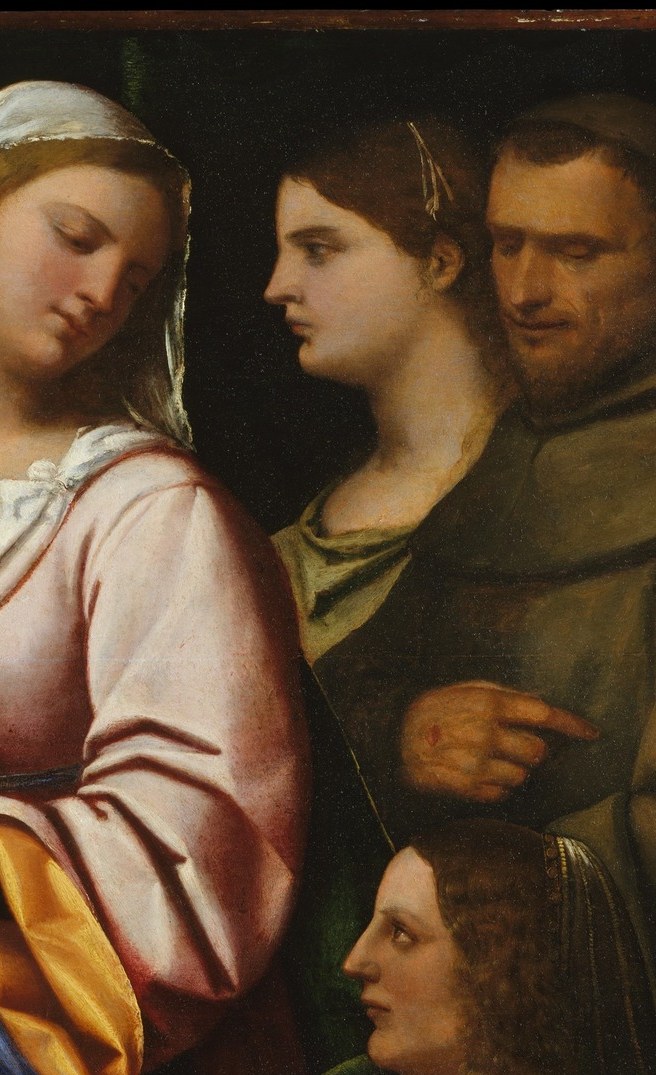
This is "Madonna and Child with Saints and Donors," painted around 1507-1510. It is attributed to Sebastiano del Piombo and is considered one of his earliest surviving works, from the years just before he left his native Venice for the papal court in Rome.
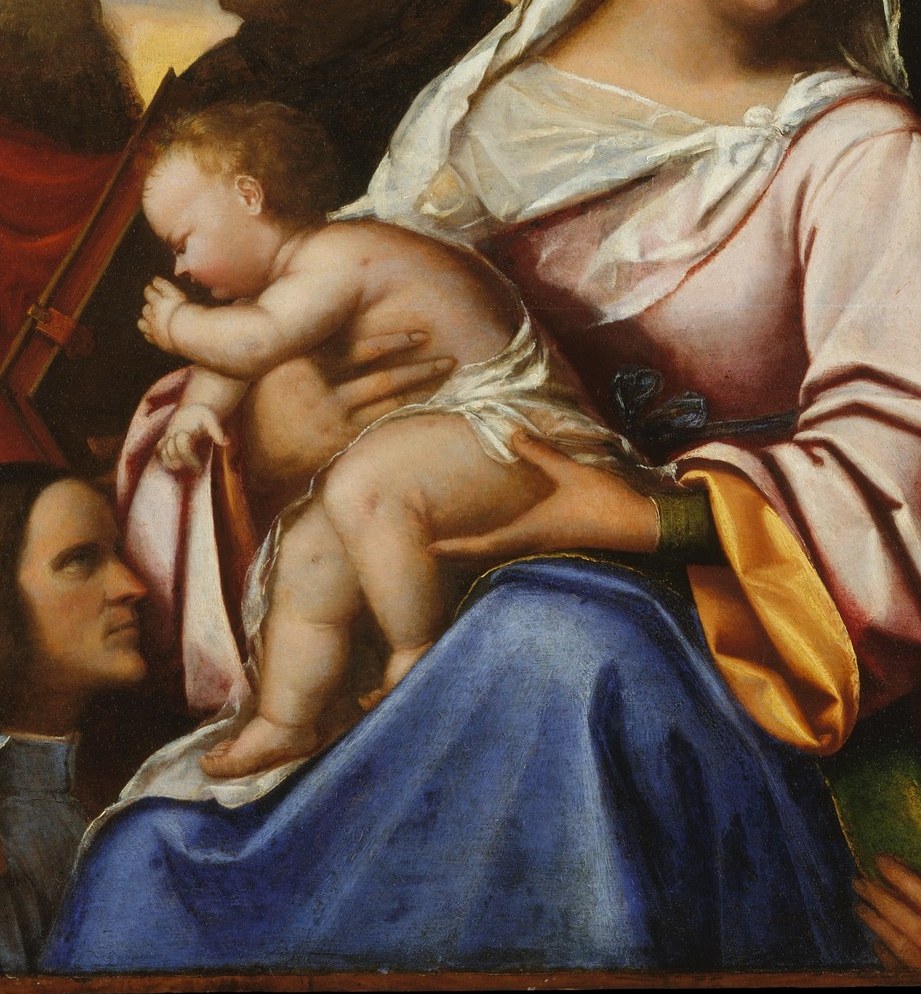
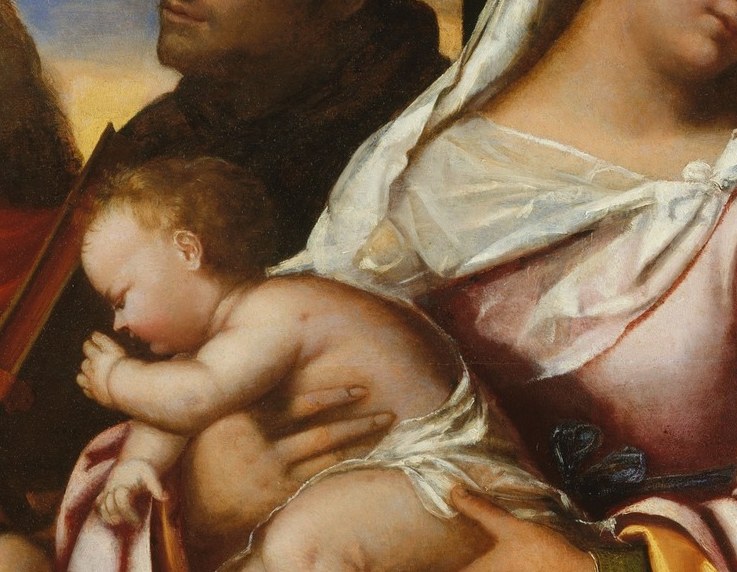
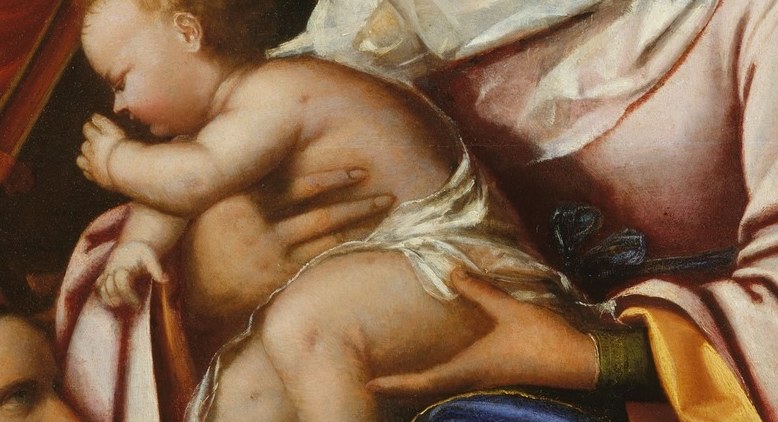
Look at the Madonna's hands cradling the child. The soft, tonal modeling of the flesh is a signature of Venetian painting, a technique del Piombo would carry with him for the rest of his career. The Christ Child squirms with a real infant's energy, a moment of human vulnerability at the center of a formal sacred gathering. On the lower left and right, the two kneeling donors are rendered with enough specificity that their faces read as portraits of the actual patrons who commissioned the panel.
In 1970, Josephine Bieber bequeathed this panel to the Metropolitan Museum of Art in memory of her husband Siegfried. Her own act of dedication echoes the painting's original purpose: a joint act of devotion made permanent in oil and wood. After this picture was finished, Sebastiano moved to Rome, befriended Michelangelo, and eventually took a job as the Keeper of the Papal Seal, a position that earned him the nickname "del Piombo," meaning "of the lead."
Some paintings document a life that was about to change. This one holds the quiet light of a city the artist was about to leave behind, and a tenderness he would never quite paint the same way again.
#arthistory #sebastianodelpiombo #venetianpainting
Details
Transcript
He was about to leave Venice forever. But first, sometime around 1508, he painted this. Her tenderness is soft, Venetian, tonal. The child turns, restless and human. Below them kneel the couple who paid for it. She donated this very panel to the Met in memory of her husband. The painter took this Venetian light with him to Rome.