Untitled by Tara
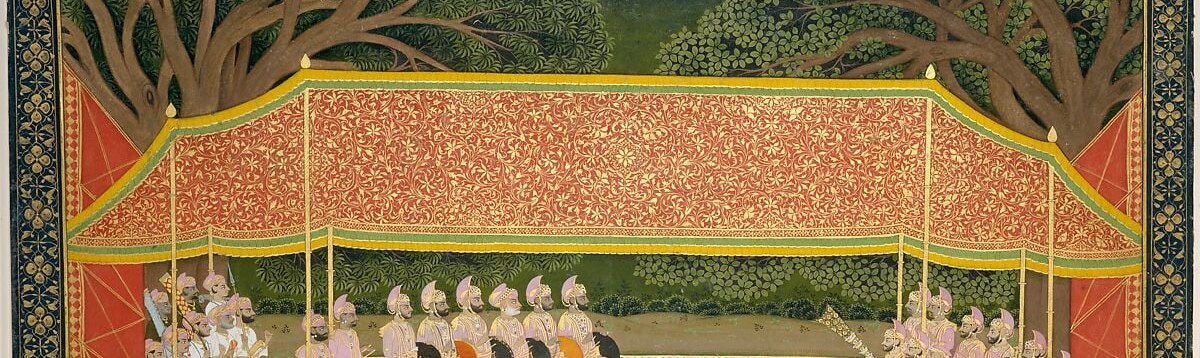
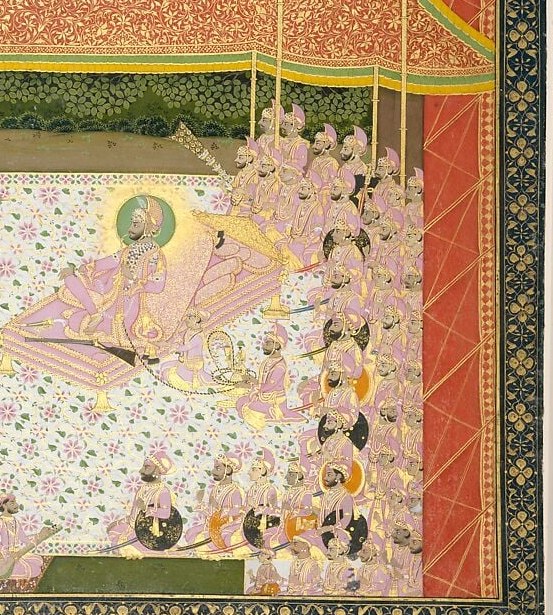
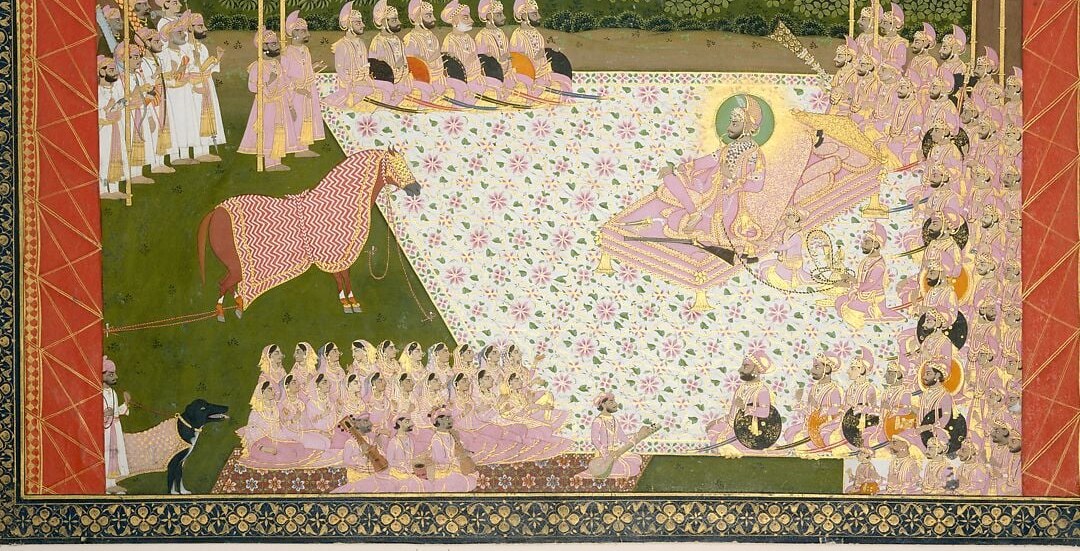
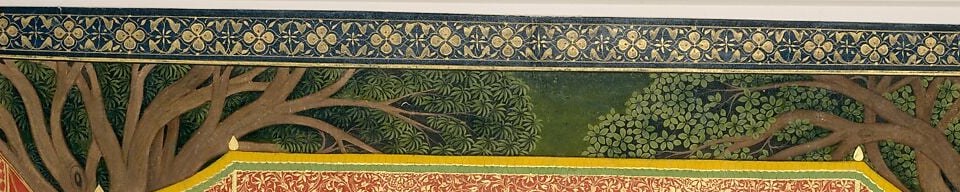
This painting by the artist Tara documents a formal court event in Udaipur around 1845-46: Maharana Sarup Singh inspecting a prized white stallion. It is a world of meticulous order, captured in opaque watercolor, ink, and gold on paper, and now held by The Metropolitan Museum of Art. A partly legible inscription on the reverse names the ruler, the horse, and the principal nobles, suggesting it commemorates a specific day, possibly the maharana's birthday.
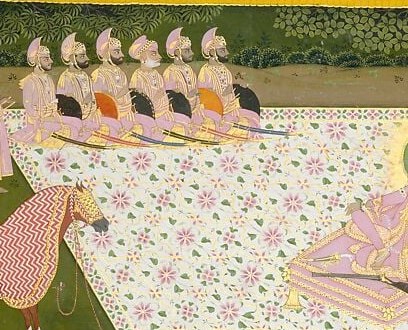
Look closely at the composition. Tara does not rely on facial expression or dramatic gesture to convey meaning. Instead, he packs the courtiers into rigid, vertical, geometric rows. The dense wall of white-clad attendants on the right is not meant to capture a fleeting moment but to make the court's hierarchy physically visible. The maharana's isolation at the center, seated beneath the striped canopy, encodes his supreme rank through spatial logic alone.
Tara was the most important painter in Sarup Singh's atelier, and the ruler's sustained patronage allowed his career to flourish. He trained both of his sons, Shivalal and Mohanlal, to continue the family profession as court painters. A rare watercolor study by the English artist William Carpenter even shows Tara seated with his sons in 1851, offering a contemporary portrait of the painter at work. This was a craft passed from father to son, intended to last for generations.
His work stands at a quiet, profound threshold: between traditional Indian painting and the emerging documentary impulse of early photography. Tara was not an innovator who shattered a tradition. He was the master who perfected it, right before the world that supported it began to vanish.
#arthistory #indianart #metmuseum
Details
Transcript
A ruler inspects his prized white stallion. But look at the sea of white surrounding him. Every courtier is packed into rigid, geometric rows. This is not chaos. It is hierarchy made visible. The painter, Tara, trained his two sons to do this work. His meticulous world was about to be transformed by photography. He stands at the very end of a centuries-old tradition.