The Seine by Tanner, Henry Ossawa
Henry Ossawa Tanner painted The Seine around 1902, and he never meant for it to hang in a museum. The small oil sketch, only 22.8 by 33 centimeters, was a personal gift. Tanner inscribed the back to Frederick F. Gutekunst, a Philadelphia photographer whose friendship with the artist is otherwise lost to history.
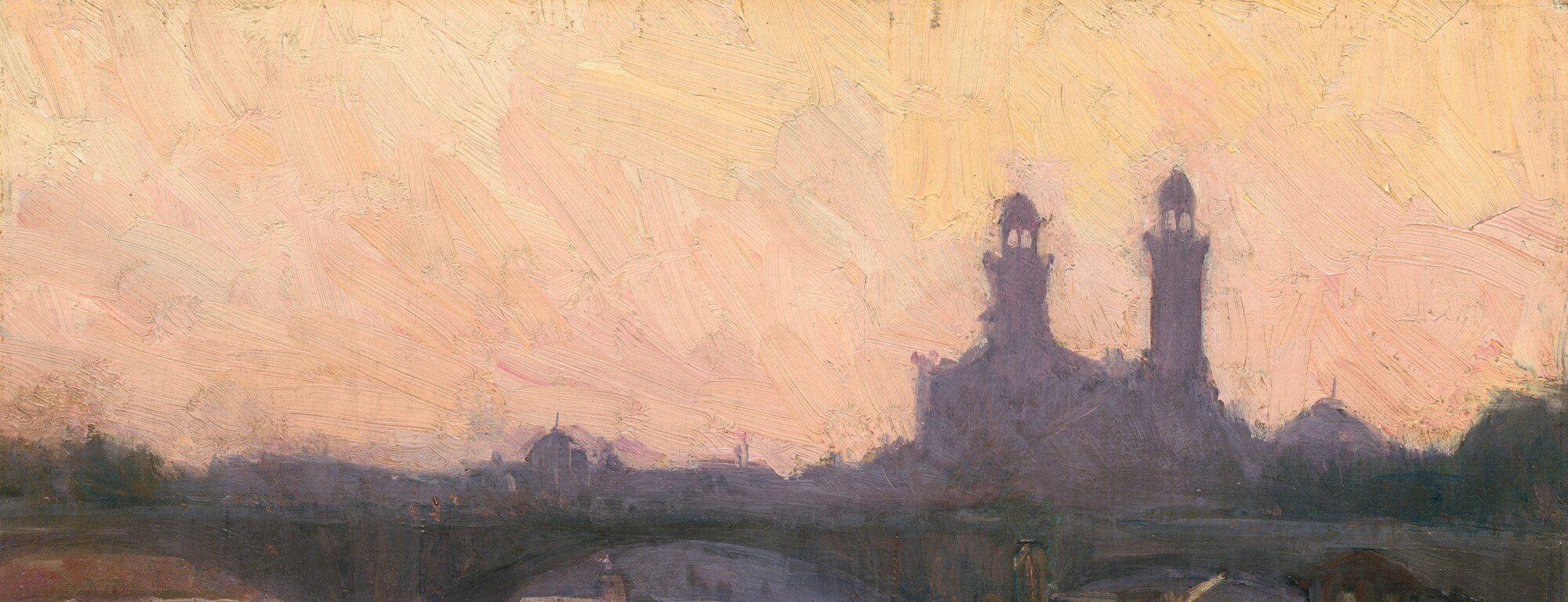
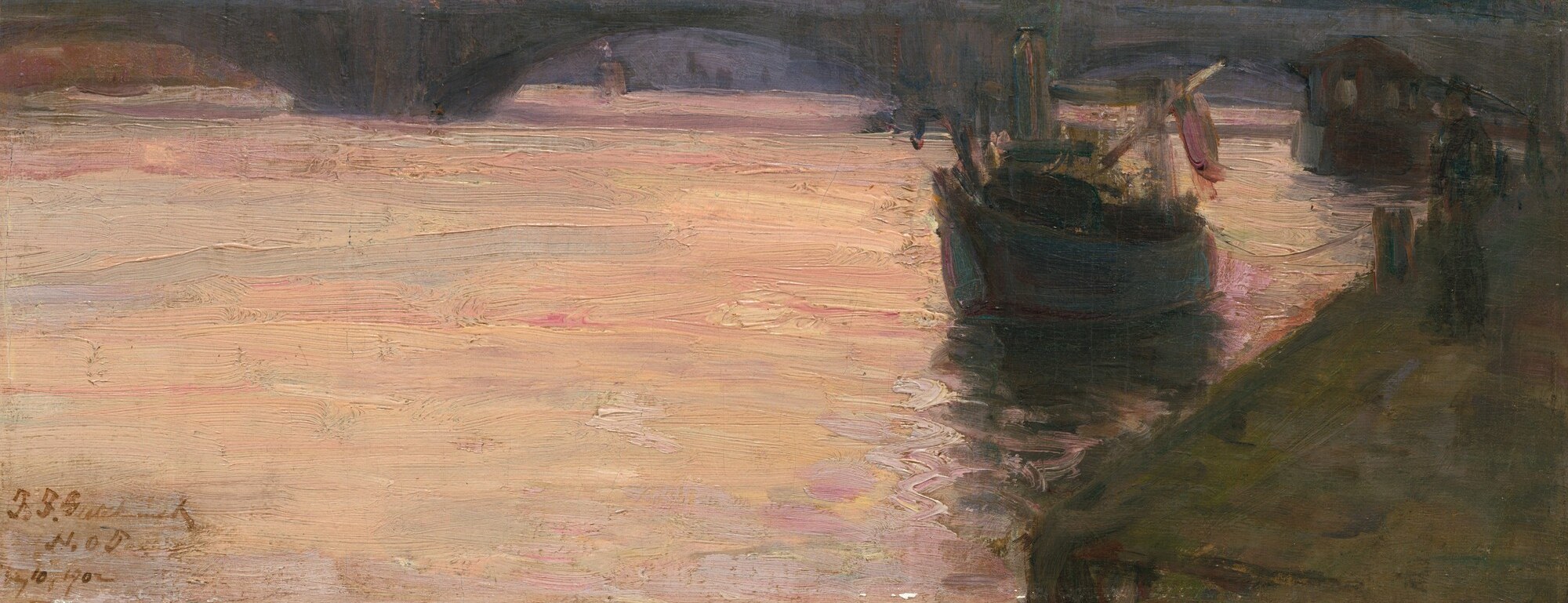
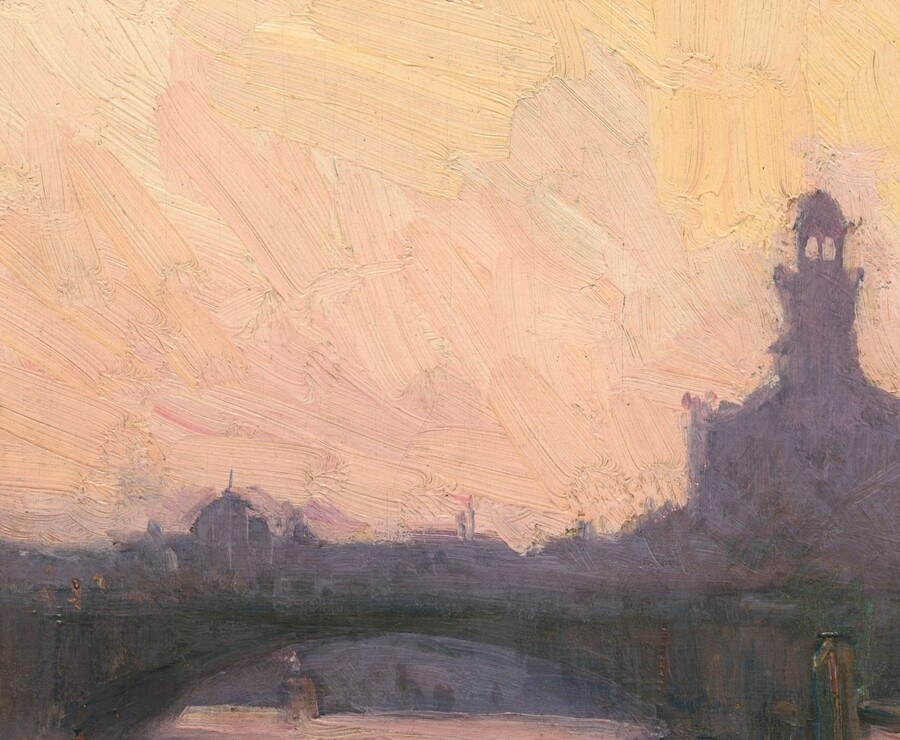
The painting offers a topographically precise view from the right bank of the river looking west toward the ornate twin towers of the Palais du Trocadéro. Short, heavily loaded brushstrokes animate the water with broken light, creating an atmospheric effect that art historian John Wilmerding called surprisingly modern and Whistlerian. The city nearly dissolves.
Tanner had moved to Paris in 1891, escaping American racism and studying at the Académie Julian. He became the first African-American painter to gain international acclaim, though this rare pure landscape is far from his celebrated religious works. He likely brought the canvas to the United States in 1903 during an extended visit and gave it to Gutekunst then. The National Gallery of Art acquired it in 1971.
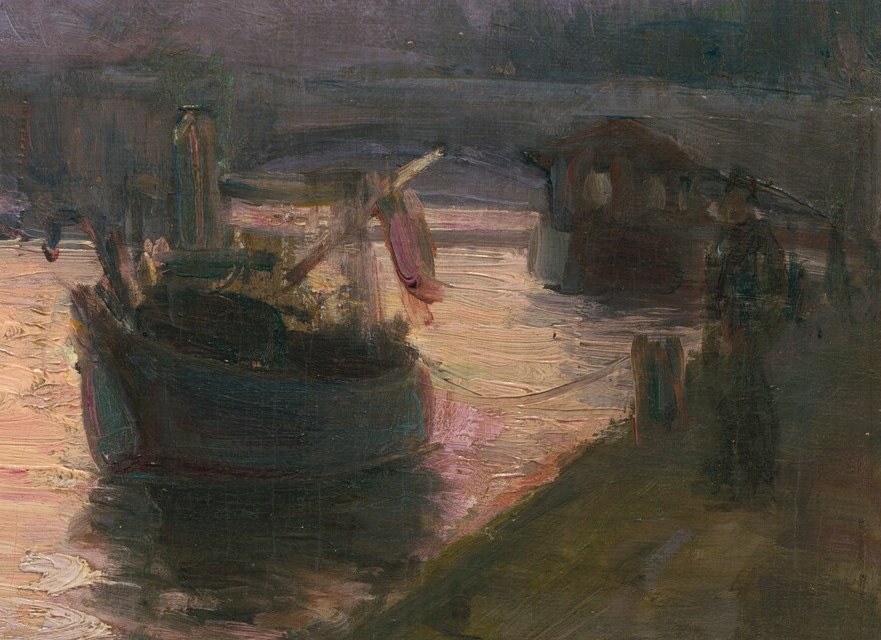
Look at the lower right edge. A single figure stands by the water, so small you might scroll past them entirely. The whole of Paris, reduced to light and atmosphere, and one person bearing witness. What was Tanner feeling when he put himself there?
#arthistory #henryossawatanner #americanimpressionism
Details

Transcript
Paris, 1902. A view most tourists miss. The Palais du Trocadéro, dissolving into the haze. Short, loaded brushstrokes build the entire scene. This was a gift. The painter inscribed the back to a friend. A dark barge grounds the river, heavy with paint. Now look at the edge of the frame. One solitary figure, barely there. The whole city, and one person.