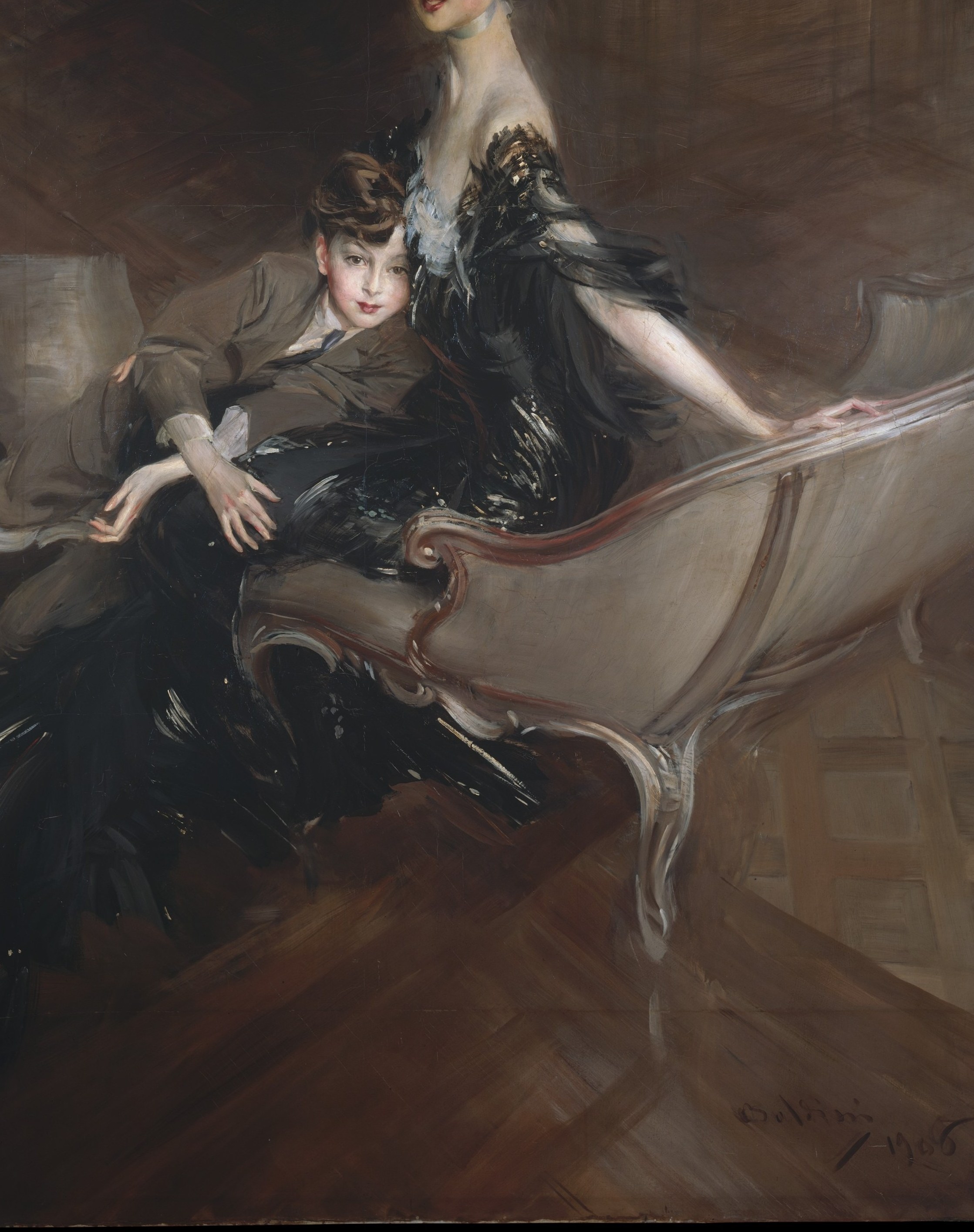
Consuelo Vanderbilt (1876–1964), Duchess of Marlborough, and Her Son, Lord Ivor Spencer-Churchill (1898–1956) by Giovanni Boldini
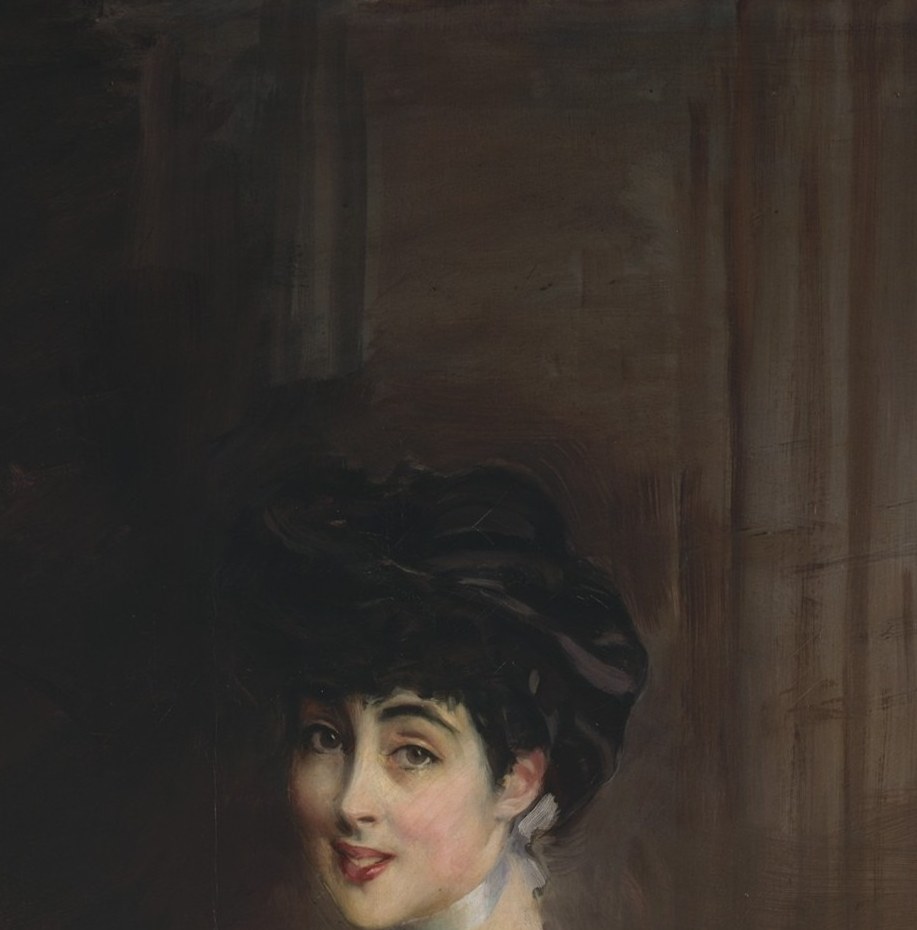
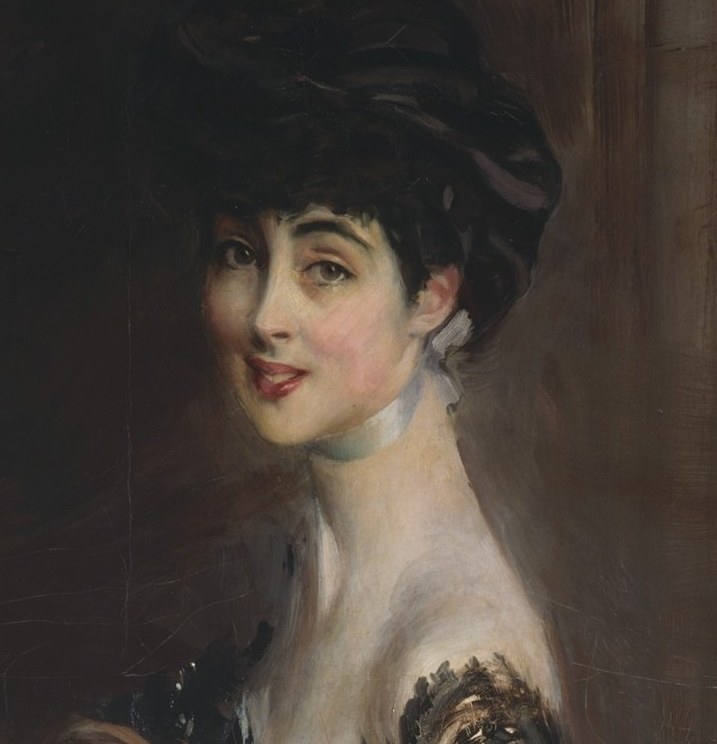
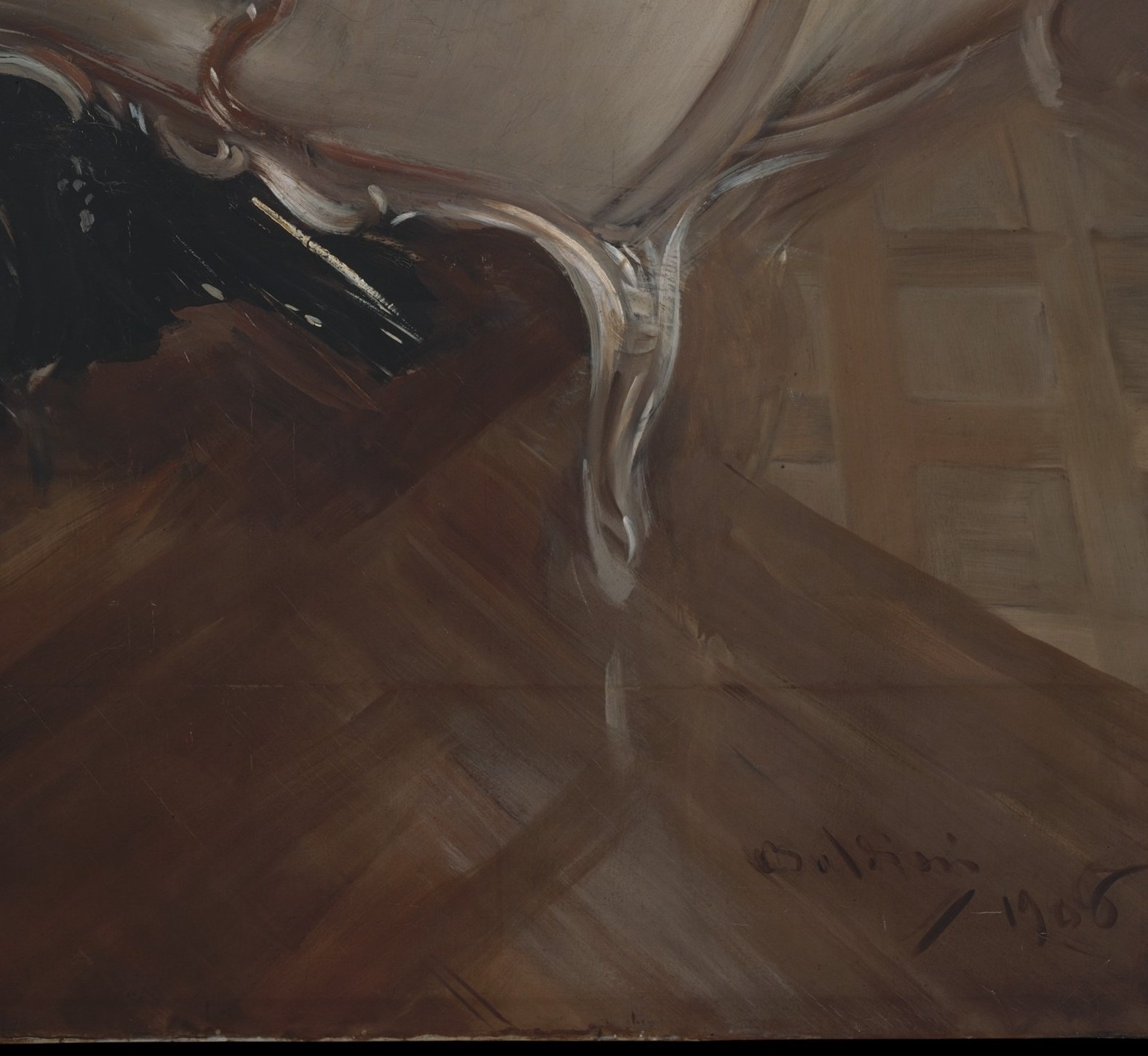
This is Consuelo Vanderbilt, painted in 1906 by Giovanni Boldini, and it hangs in the Metropolitan Museum of Art. She was the most famous American heiress of the Gilded Age, a dollar princess whose mother forced her into marriage with the Duke of Marlborough when she was eighteen years old. The deal bought the Vanderbilt family a duchess and the Marlboroughs a fortune to save Blenheim Palace. Consuelo later wrote that she stepped out of the church a duchess and spent the rest of her life trying to become a person again.
Boldini gives her a face of perfect social armor. Her gaze is direct but offers nothing. Beside her is Lord Ivor, the second son, pressed to the left edge of the canvas. His hands are folded obediently in his lap. The boy is eight years old and has already learned to perform for the painter. Boldini's brushwork tells its own story: the black silk gown swirls with a kinetic life that neither sitter's expression will share. The dress feels more alive than the people inside it.
The marriage was a catastrophe from the start. Consuelo had loved another man. The Duke told her on their honeymoon that he only married her for the money. She bore him two sons, fulfilled the contract, and after twenty-six years finally secured an annulment. She later remarried for love and became a force in French social welfare. Boldini, called the Master of Swish for his flowing style, painted a portrait that records the arrangement perfectly: two figures in physical proximity, sharing nothing but a bloodline.
The dress still swirls. She is still not smiling.
#arthistory #boldini #gildedage
Details

Transcript
In 1895, a teenage American girl was forced to marry a Duke. Her mother had one instruction: produce an heir. This is the second son. The spare. She wears the black silk gown she was painted in. The paint moves more than she does. Now look at her face. Consuelo Vanderbilt did her duty. And she never forgave it.