Autumn - On the Hudson River by Cropsey, Jasper Francis

Jasper Francis Cropsey painted "Autumn, On the Hudson River" in 1860 while living in London, and the colors you see here are exactly what caused the uproar. The painting is nearly nine feet wide, now at the National Gallery of Art in Washington, D.C.

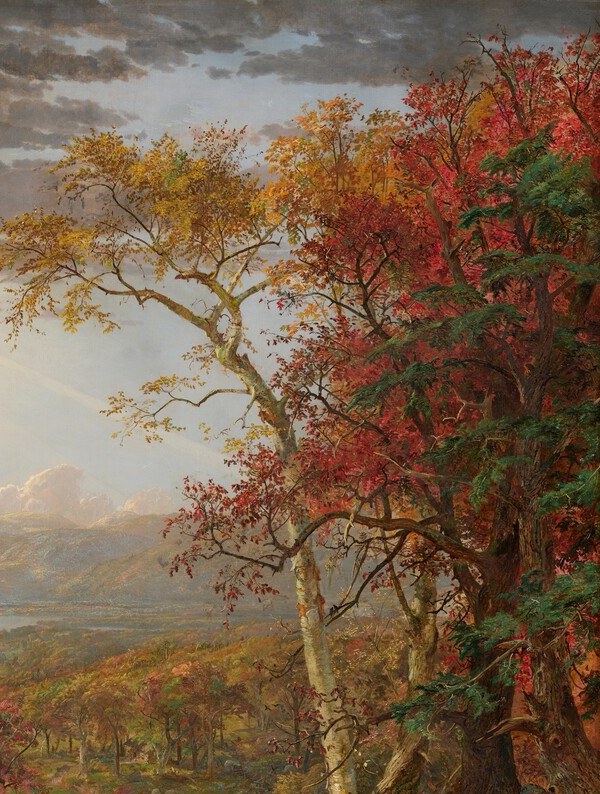
Look at the left edge. That tree’s intense chemical orange is not a trick of the light. Cropsey was using newly available synthetic pigments that simply had not been seen on canvas before. The entire composition is framed by this modern color technology on both sides.

He was showing the painting in London when someone arranged for Queen Victoria to see it. She reportedly looked at the fluorescent autumn foliage and flatly doubted that American trees could ever look so vivid. Cropsey’s response was beautifully literal: he gathered real autumn leaves from the Hudson River Valley, packed them up, and sent them across the ocean to her.

The rock in the foreground carries his signature carved into stone, with the date and the word "London" embedded in an American landscape. A landscape he painted entirely from memory and sketches, making a case for his distant homeland while the nation was fracturing toward civil war. The color was the argument.

#arthistory #hudsonriverschool #jasperfranciscropsey

Details
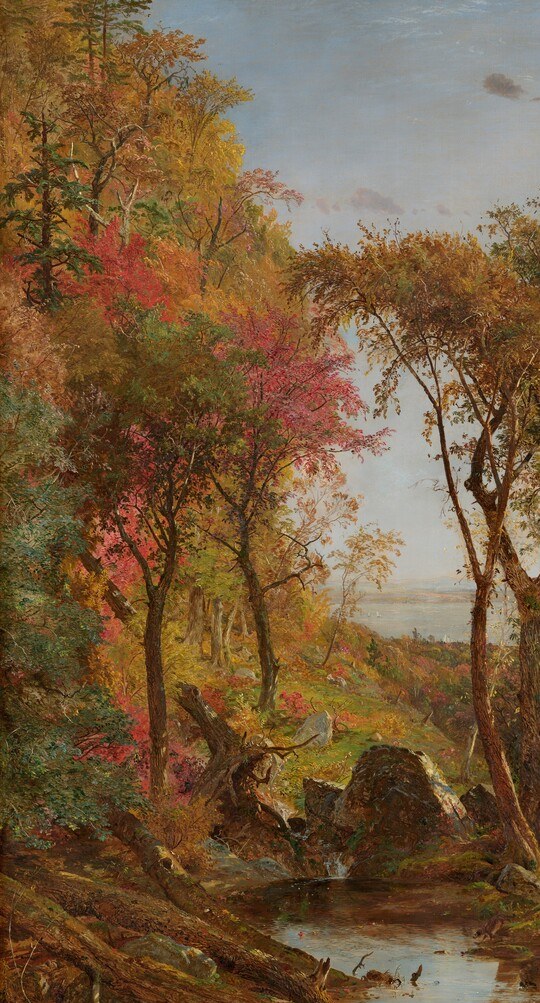
The saturated chemical-orange foliage was the element that reportedly astonished London viewers and Queen Victoria , Cropsey used newly available industrial pigments to produce a color that felt impossible for 1860, making this tree the painting's chromatic argument.
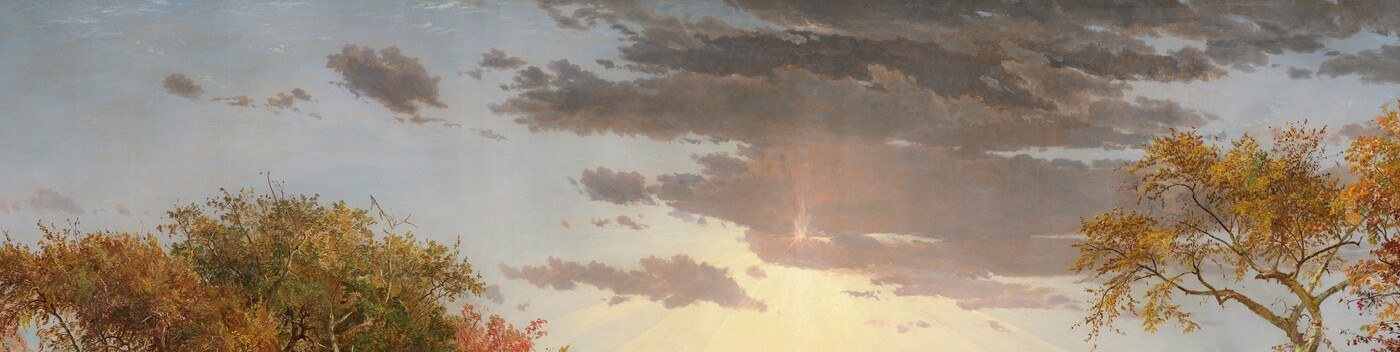
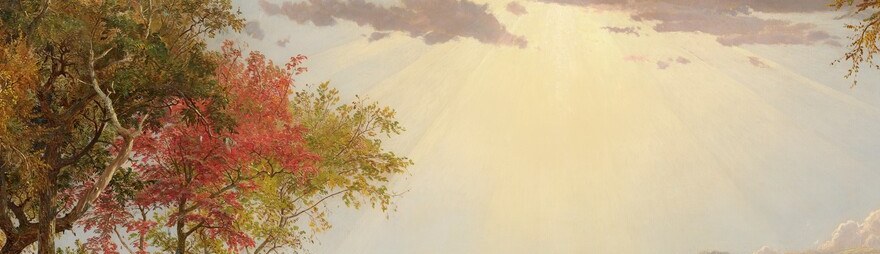
A Claudian light shaft that pulls the eye deep into the panorama , Cropsey links American wilderness to Old Master convention while simultaneously insisting on New World distinctiveness; the light is the painting's emotional engine.
Chromatic bookend to the left tree , saturating both frame edges with the new chemical pigments that made the London debut sensational; the painting is literally framed by industrial modernity painting pre-industrial nature.
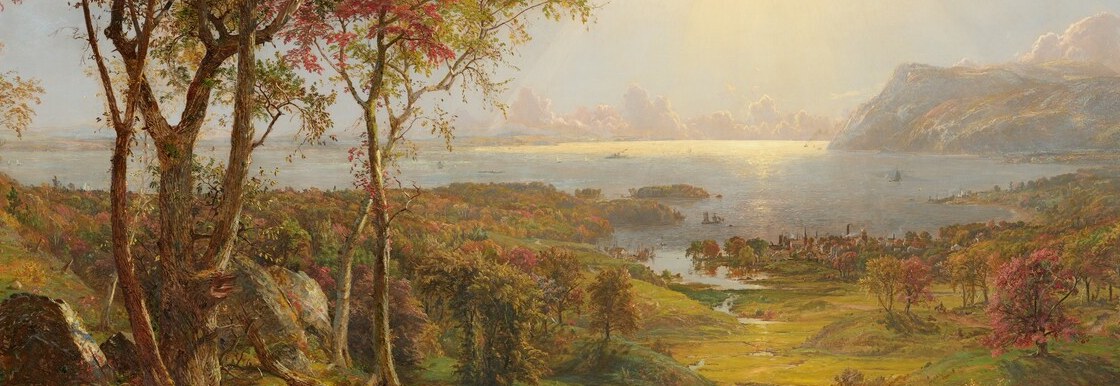
The meadow holds summer green while the heights burn autumnal , Cropsey stages seasonal death at the margins and fertility at the center, a theological argument about American abundance disguised as observation.
The river is the destination the entire composition funnels toward; its mirror-like surface unifies the foreground hunters, the pastoral valley, and the distant mountain into one interconnected American landscape.
Transcript

London, 1860. An American painter is homesick. He signs this rock as if carving his name into the landscape. Back in America, the Hudson River Valley was ablaze with autumn. That orange tree on the left stopped Londoners in their tracks. He painted it with new industrial pigments. The color looked impossible. Queen Victoria saw the painting and refused to believe autumn could look like that. So Cropsey shipped real American leaves across the Atlantic as proof.