View from Vaekero near Christiania by Dahl, Johan Christian
View the artwork: View from Vaekero near Christiania →
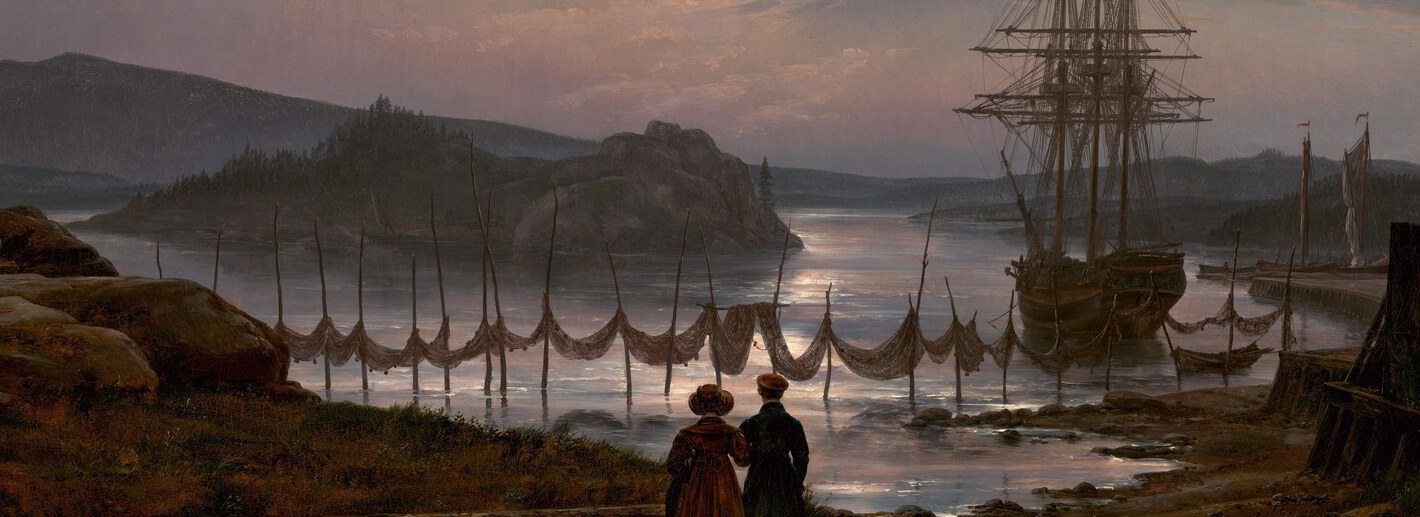
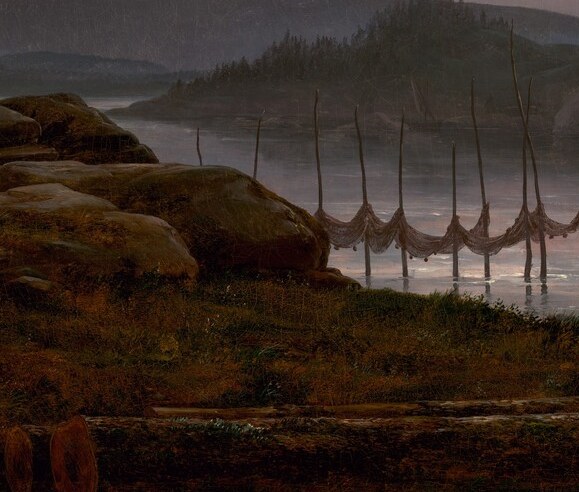
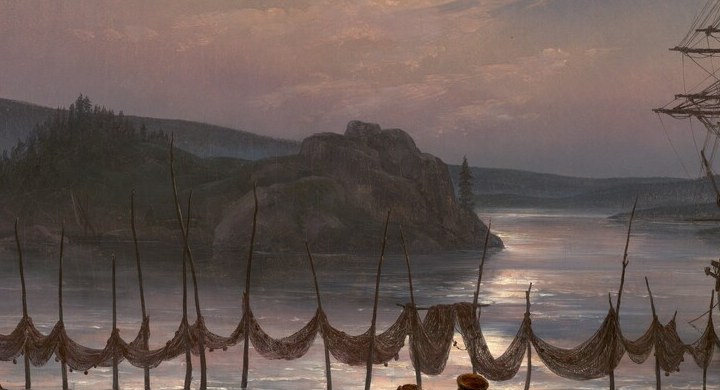
Johan Christian Dahl painted View from Vaekero near Christiania in his Dresden studio in January 1827, working from a field sketch and memory of the previous summer. The scene shows a fjord near present-day Oslo under a veiled moon, with fishing nets drying on poles and a ship at anchor. It hangs in the National Gallery of Art in Washington, D.C.
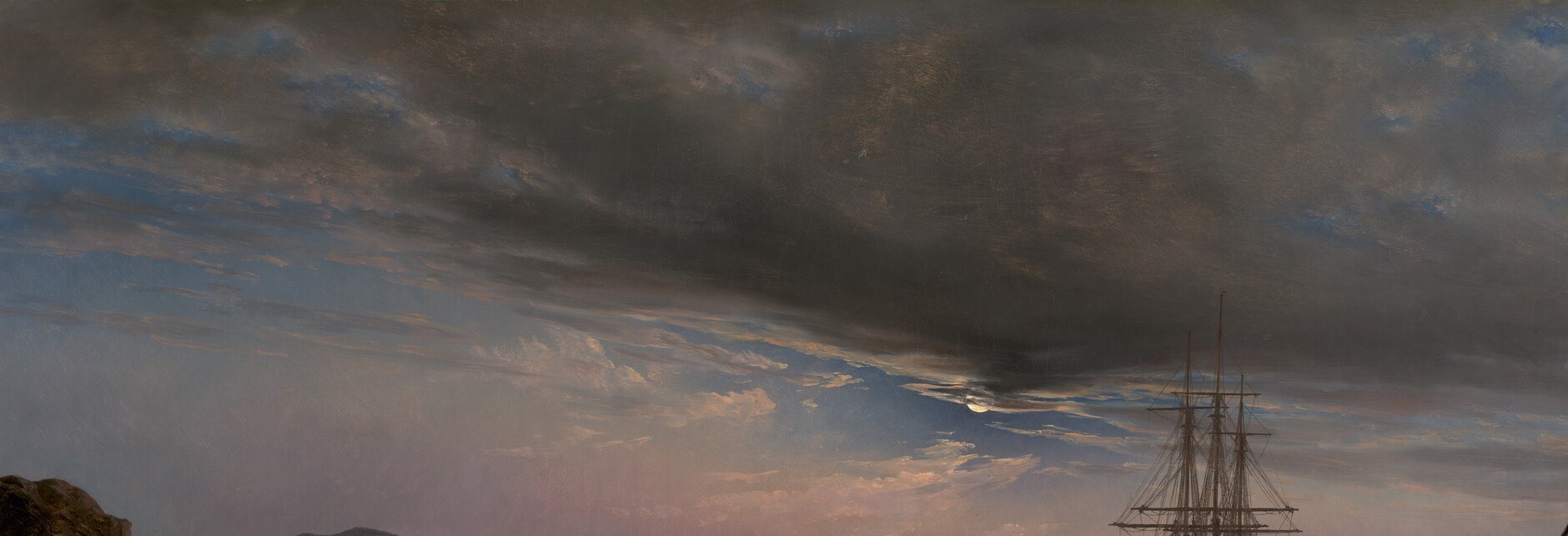
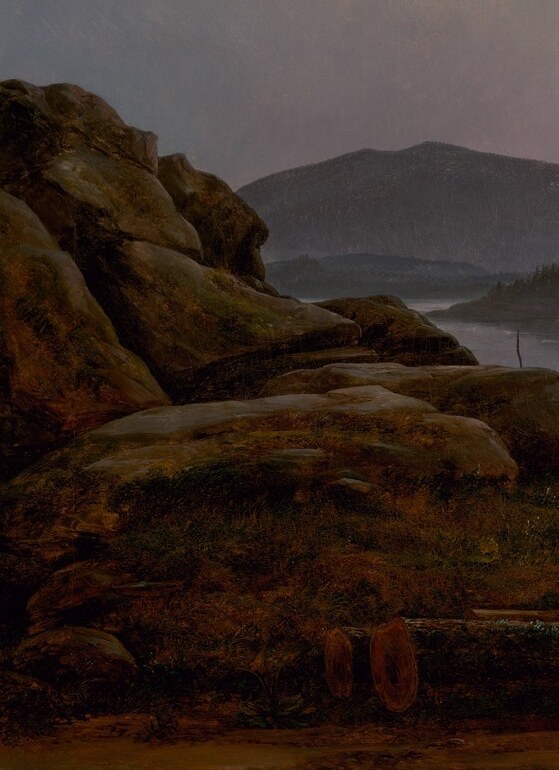
Look first at the water. The fjord surface is a second sky, it replays the cloud drama and the hidden moon's light in broken, shimmering form. That doubling is everywhere in this painting: wilderness above and commerce below, the cosmic and the domestic sharing the same frame. The two small figures on the rocky shore don't interrupt this, they complete it. They're seen from behind, facing the view, which makes the landscape feel like a space you enter rather than one you observe.
Dahl shared a house in Dresden with Caspar David Friedrich, the great German Romantic, and absorbed his visual language. The back-turned figures, Rückenfiguren, are Friedrich's signature device. They turn the world into a private experience of awe. Dahl brought that philosophy to a specific, nameable Norwegian waterway, grounding the sublime in actual nets drying on actual poles he had sketched in June 1826, now in the National Gallery in Oslo.
The painting was commissioned by the Hamburger Kunstverein, exhibited in Hamburg in 1827, and acquired by the Norwegian collector Jacob Aall. It entered the National Gallery of Art's collection in 1999. So what are the figures looking at, the fjord, or something inside themselves?
#arthistory #romanticism #norwegianart
Details
Transcript
Start with what you can't quite see. The moon is hidden. Its light still governs everything. Dahl painted this in a Dresden studio, in January, from memory. But he anchored the mood in real labor. The drying nets and ship are from a sketch he made here in June. Now look at the water. It replays the entire sky in quieter, broken form. The painting is a mirror of itself. That doubling is the key. Dahl shared a house with Caspar David Friedrich. Friedrich taught him this: place small figures with their backs to us, and the landscape becomes an interior.