Wineglass and a Bowl of Fruit by Willem Kalf
View the artwork: Wineglass and a Bowl of Fruit →
This is Willem Kalf's "Wineglass and a Bowl of Fruit," painted in 1663. It hangs today in the Isabella Stewart Gardner Museum in Boston, and it is a survivor.
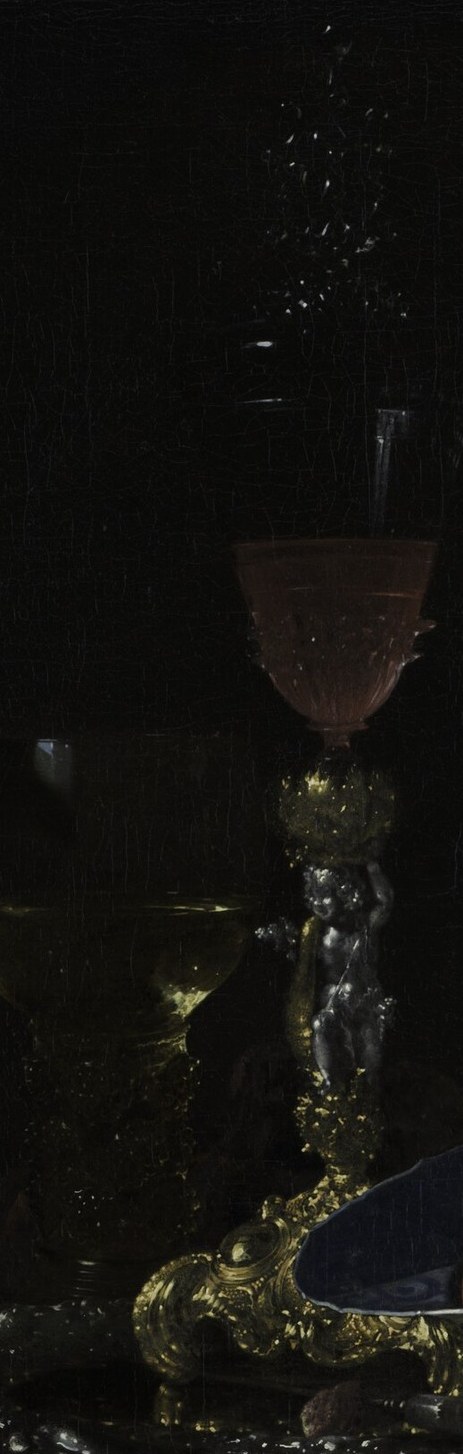
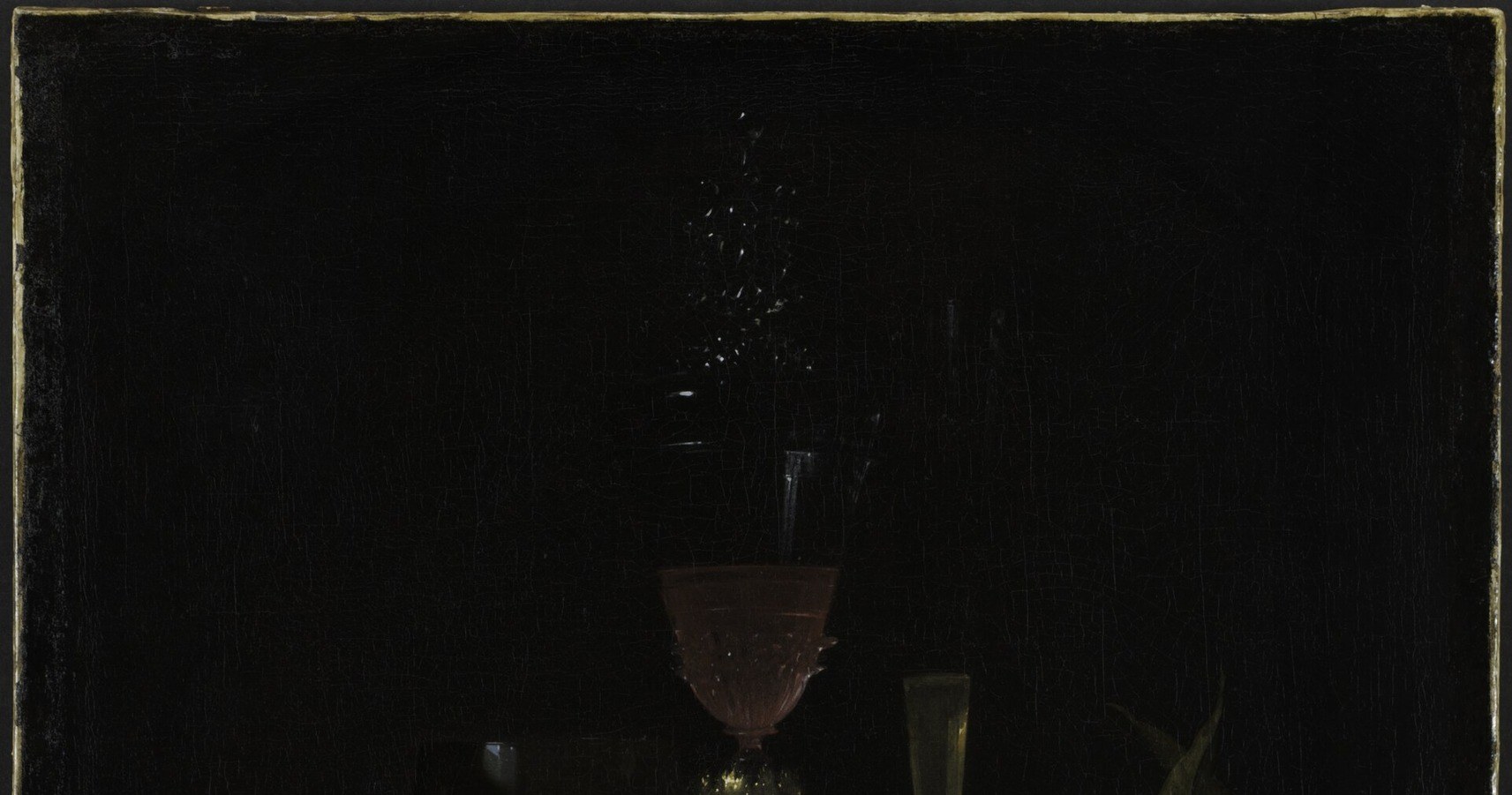
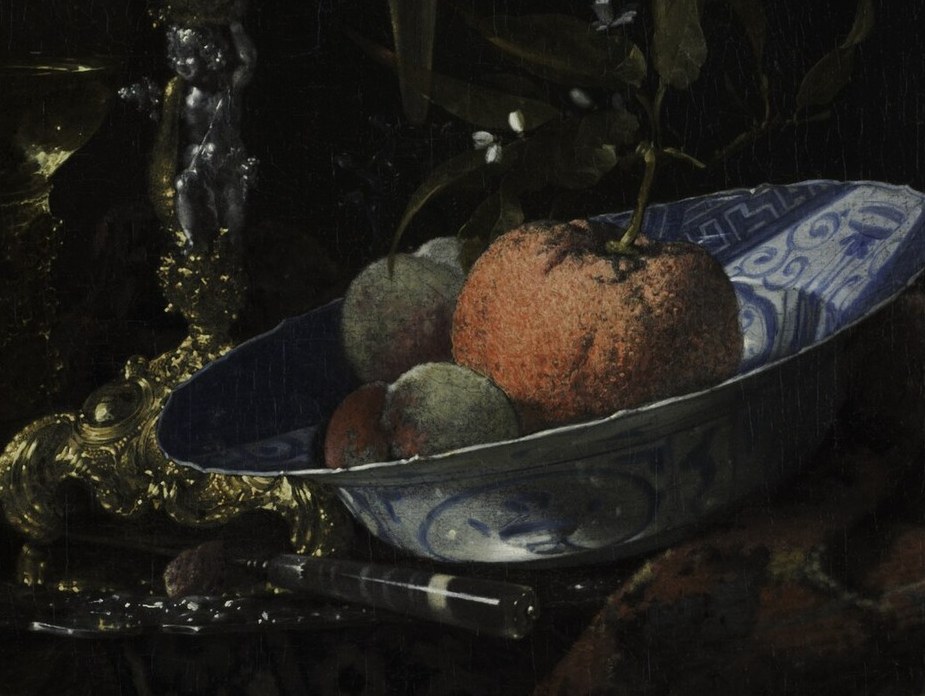
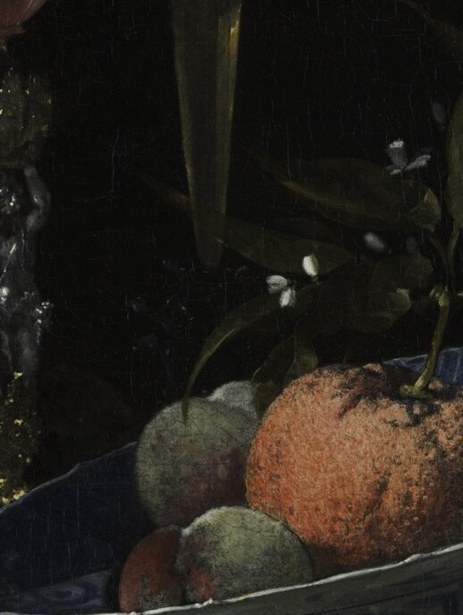
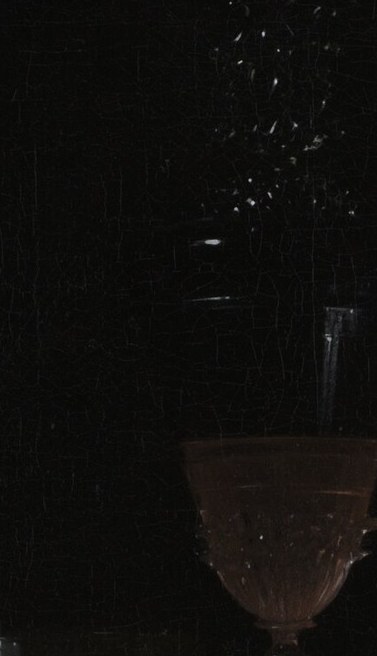
Look at the wine flute. Kalf builds it from a narrow vertical ribbon of white paint that reflects an unseen window. The ruby wine inside is translucent, glowing against the dark void. To the right, a blue-and-white Chinese porcelain bowl holds an orange, pears, and plums. The orange is the brightest object in the room, a deliberate luxury signal, imported citrus was a status symbol in the Dutch Republic. Every surface here, from the glass stem to the rumpled napkin, is a demonstration of what Dutch Golden Age painters called pronkstilleven: still lifes of extravagant, exotic objects meant to showcase both wealth and technical skill.
In the early hours of March 18, 1990, two men disguised as police officers talked their way into the Gardner Museum. They stole thirteen works, including three Rembrandts and a Vermeer. It remains the largest property theft in American history, valued at over half a billion dollars. The empty frames still hang in the museum.
Kalf's painting was in the same building that night. The thieves left it behind. The case is unsolved, and the stolen works have never been recovered. This wineglass, filled and fragile, has been waiting on that table for over 350 years. It outlasted the thieves too.
#arthistory #willemkalf #gardnermuseum
Details
Transcript
For centuries, this painting hung in a quiet Boston museum. Then, in 1990, the museum's guards buzzed two men inside. This Kalf was not the target. The thieves walked right past it. They wanted Rembrandts and a Vermeer. They stole thirteen works. This wineglass, this bowl of fruit, stayed on the wall. Other frames were cut empty. This one remained untouched. The missing Vermeer is still gone. This painting waits.