Doge Alvise Mocenigo and Family before the Madonna and Child by Tintoretto, Jacopo
View the artwork: Doge Alvise Mocenigo and Family before the Madonna and Child →
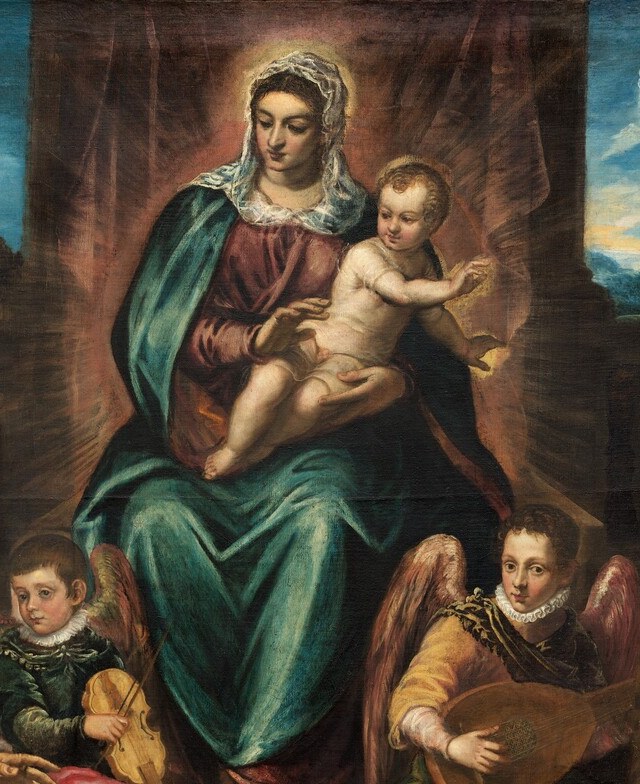
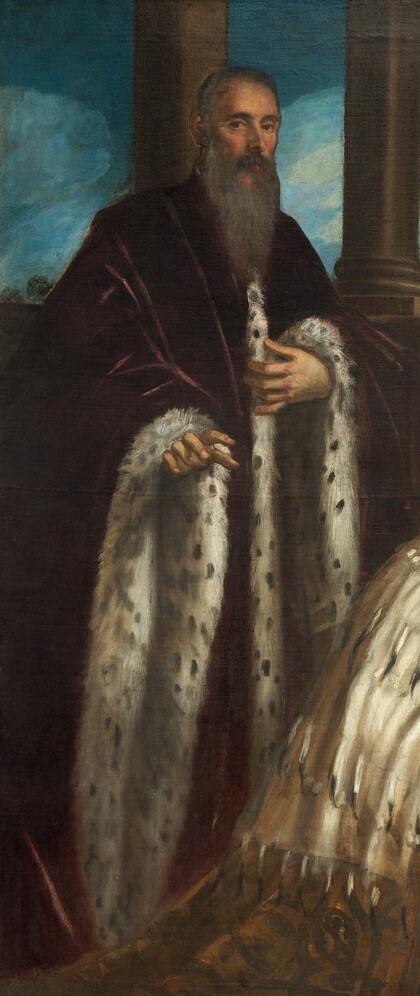
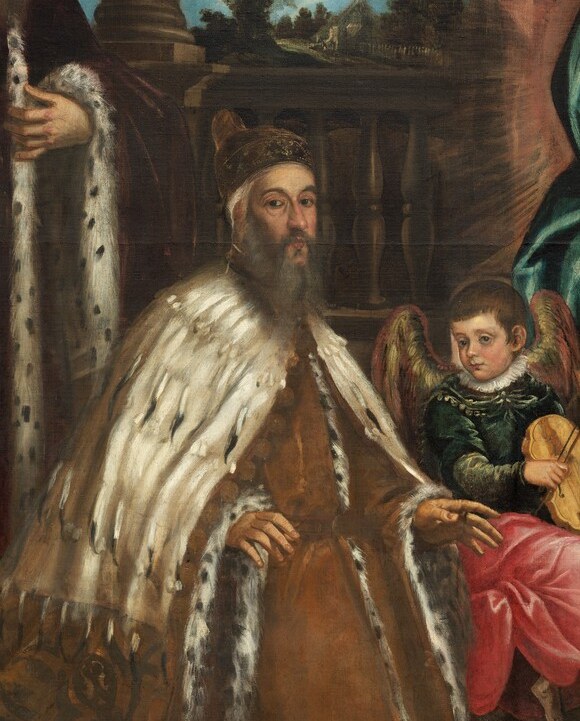
Jacopo Tintoretto's 'Doge Alvise Mocenigo and Family before the Madonna and Child' (c. 1575) is a private petition disguised as a group portrait. The work places the most powerful man in Venice on his knees, his family gathered around him, in a moment of quiet supplication before the Virgin and Christ Child. It lives today at the National Gallery of Art in Washington, D.C.
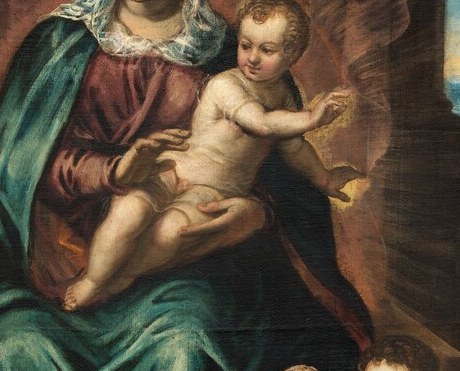
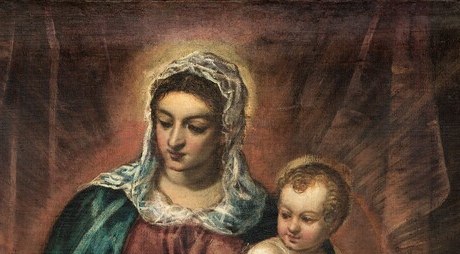
The painting rewards a slow read. The Doge's face tilts upward from the lower left, condensing the entire devotional act into a single look. Tintoretto then books the canvas with a white-robed saint on one side and a dark-robed monk on the other, two intercessors balancing the composition like scales. Between them, the Mocenigo children are positioned closest to the Madonna's feet, a visual argument for dynastic survival.
Tintoretto's nickname was 'Il Furioso' for the speed of his brush, and you can feel that energy in the muscular drapery and Mannerist proportions. Yet he was also a painter of remarkable intellect. The landscape visible behind the throne is a tiny but deliberate choice, it opens the sacred encounter onto the actual light and air of Venice, grounding a heavenly vision in everyday geography.
Before you scroll away, find the leftmost saint again. He holds a marginal staff, small enough to miss entirely. Identifying that attribute would tell us exactly which patron saint the Mocenigo family believed was walking them into the room. The answer is still right there in the paint.
#arthistory #tintoretto #venetianrenaissance
Details
Transcript
They look like a portrait of wealth and power. Underneath: a man asks heaven to protect his family. The children are placed closest to the Madonna's feet. This man is the Doge of Venice, kneeling in full ducal robes. Now look between the Madonna and the throne. Tintoretto opens a window onto the real Venetian sky. This saint at the far left holds a staff. Find it in the margin. It is the key to naming the family's chosen celestial advocate.