Emancipation Proclamation by Lamb, A.A.
View the artwork: Emancipation Proclamation →
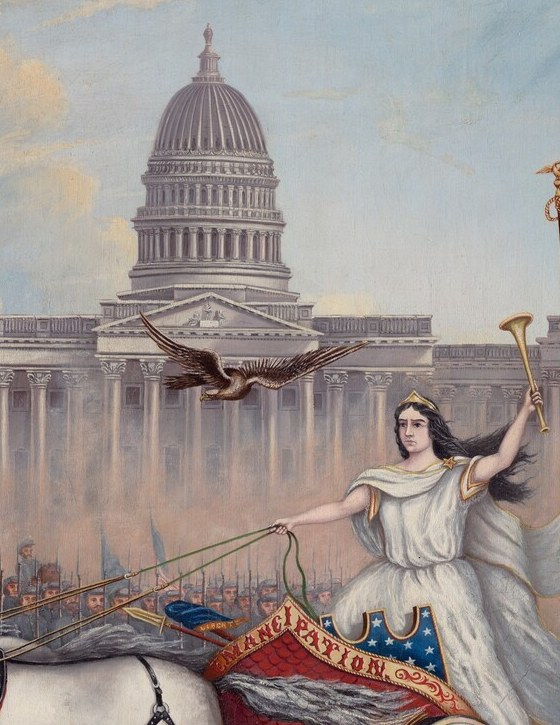
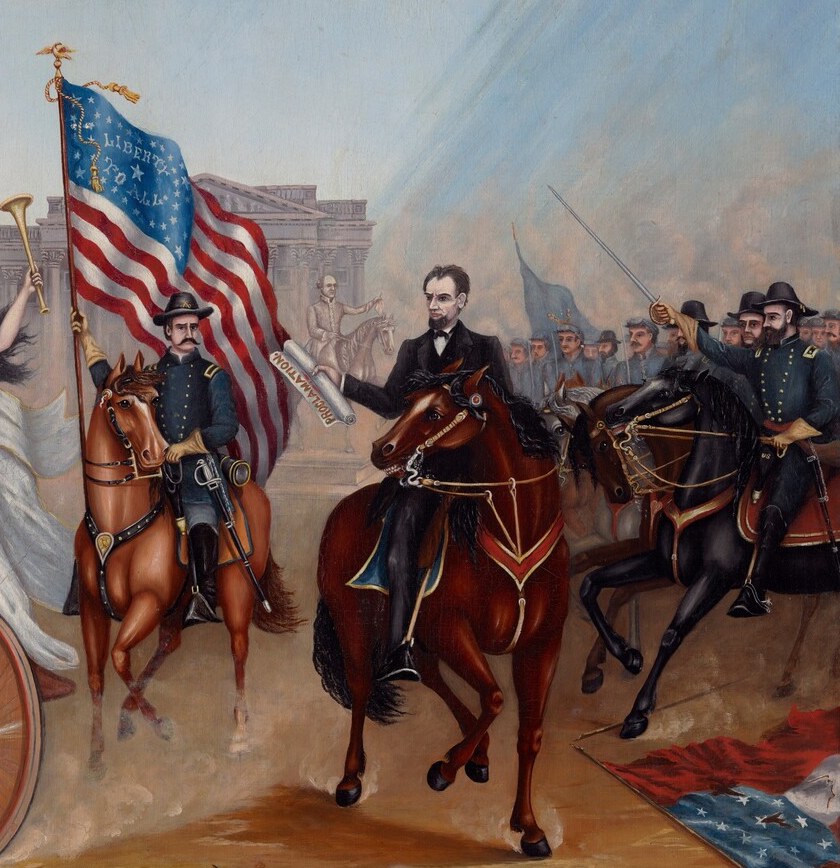
This is Emancipation Proclamation, painted by A.A. Lamb in 1864. It hangs today as one of the most direct artistic responses to the executive order that declared millions of enslaved people free in Confederate states, but it is not a painting about a document. It is a painting about how that act should be remembered.
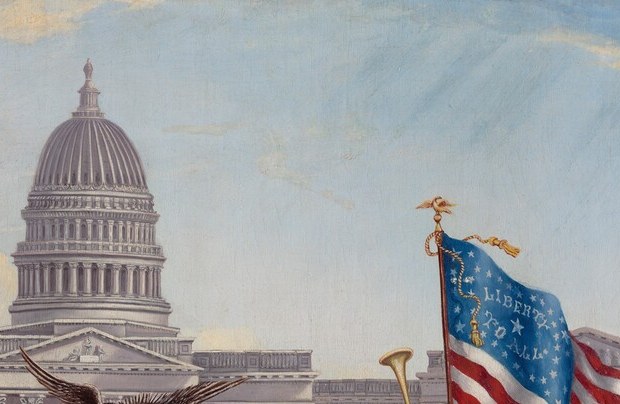
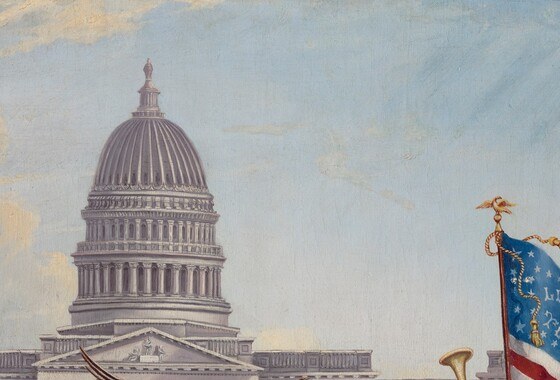
Look first at the allegorical figure of Liberty at the center, standing in a Roman triumphal chariot, holding the American flag high above every human figure in the scene. Her face is not warlike. It is serene. Behind her, the dome of the Capitol rises like a halo, still under construction when Lamb painted this canvas, an unfinished building for an unfinished nation. The artist borrowed the visual language of classical triumph to argue that the Proclamation was not merely a wartime measure or a political maneuver. It was a civilizational turning point.
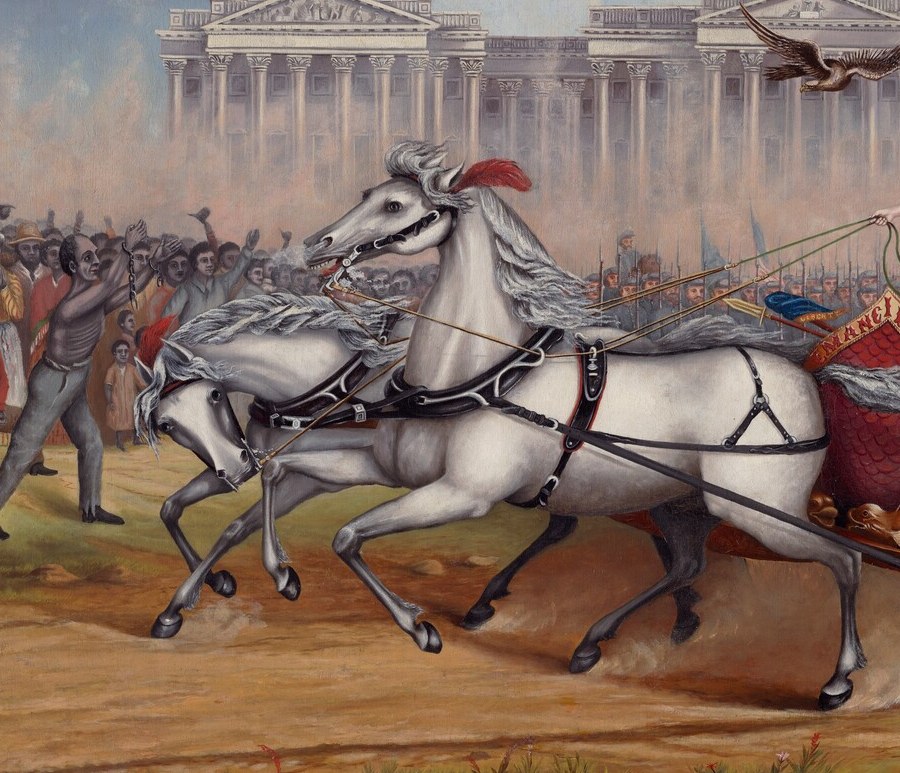
On the right, mounted Union officers ground the scene in reality. The sword and the uniform are not abstract. The Proclamation depended on the advancing army to be enforced, mile by mile, in a war that was still being fought when the paint was wet. Lamb dated the work to 1864 or after, which means this painting is a witness, not a retrospective, but a contemporary attempt to shape the memory of an event while its outcome was still unknown.
The dark horse at the far left and the vast crowd of soldiers and civilians stretching across the background make one more argument: this was not one man's act. It was a popular mandate, carried forward by ordinary people. The sky behind the Capitol reads as dawn, a new era, and the whole composition insists on hope. The painting is not subtle. It was never meant to be. It was meant to be a verdict.
#arthistory #civilwarart #americanart
Details
Transcript
At first glance, it looks like myth. A goddess in a chariot, flanked by white horses. But the building behind her is real. That is the US Capitol dome, still under construction in 1864. The sword and the uniform on the right are real, too. The Proclamation was enforced by the advancing Union army. The artist framed liberation as a classical Roman triumph. A deliberate choice: this was not a tragedy, but a victory.