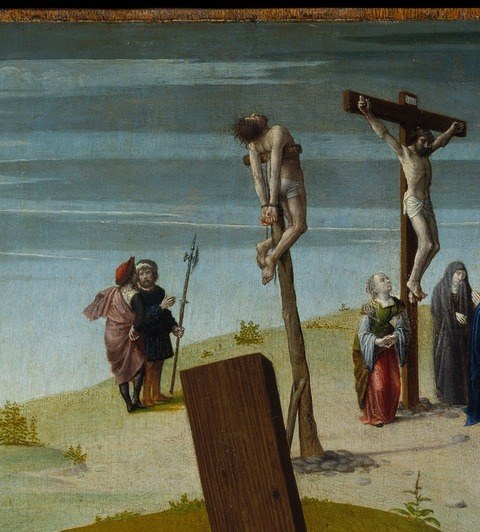
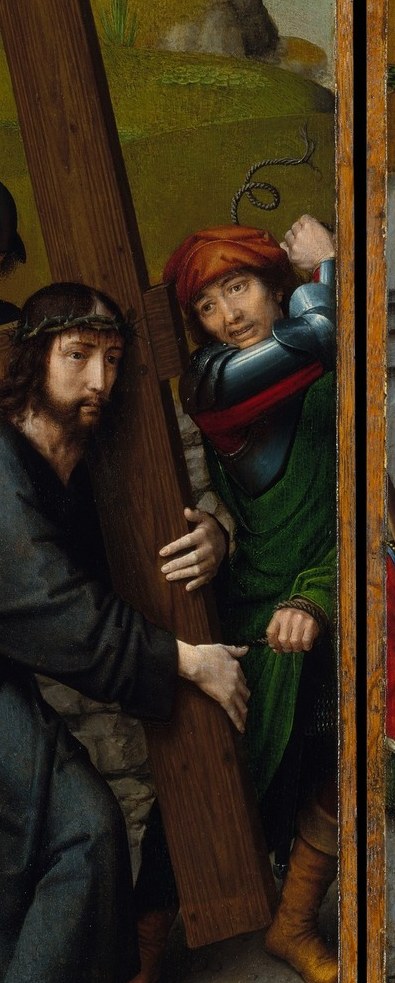
Christ Carrying the Cross, with the Crucifixion; The Resurrection, with the Pilgrims of Emmaus by Gerard David
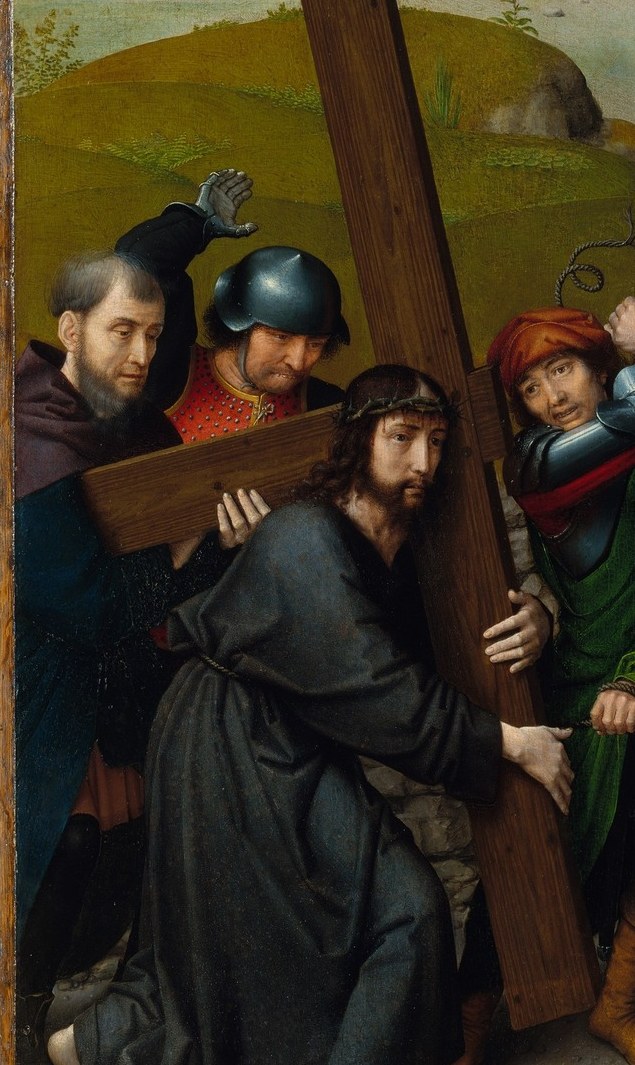
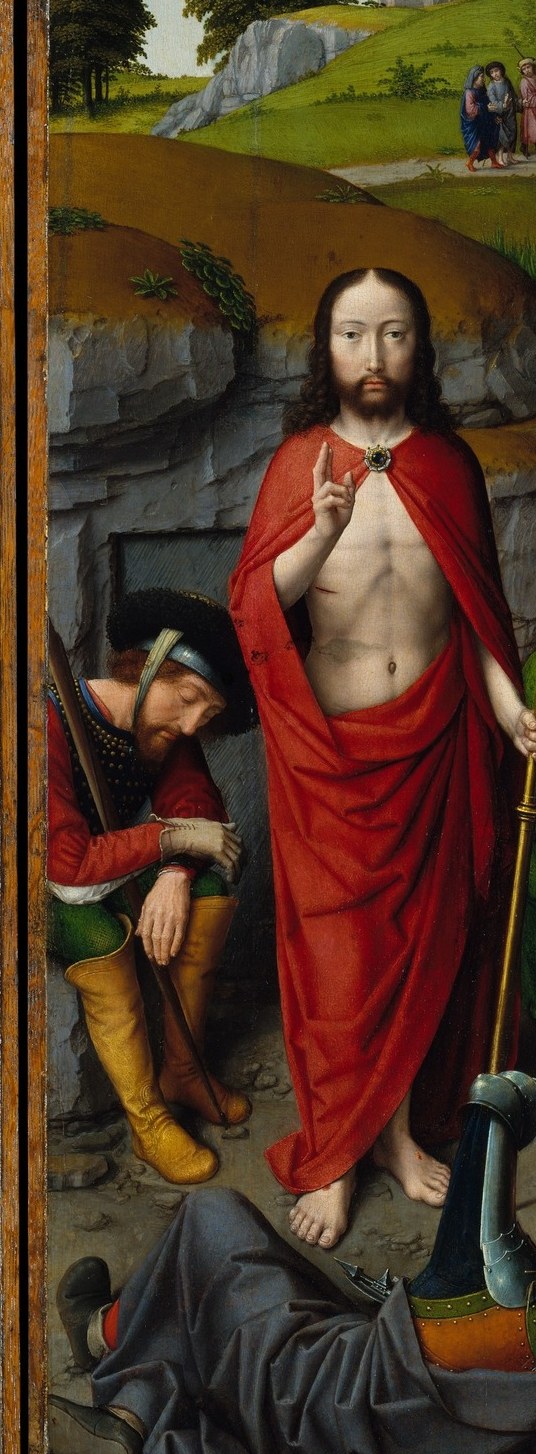
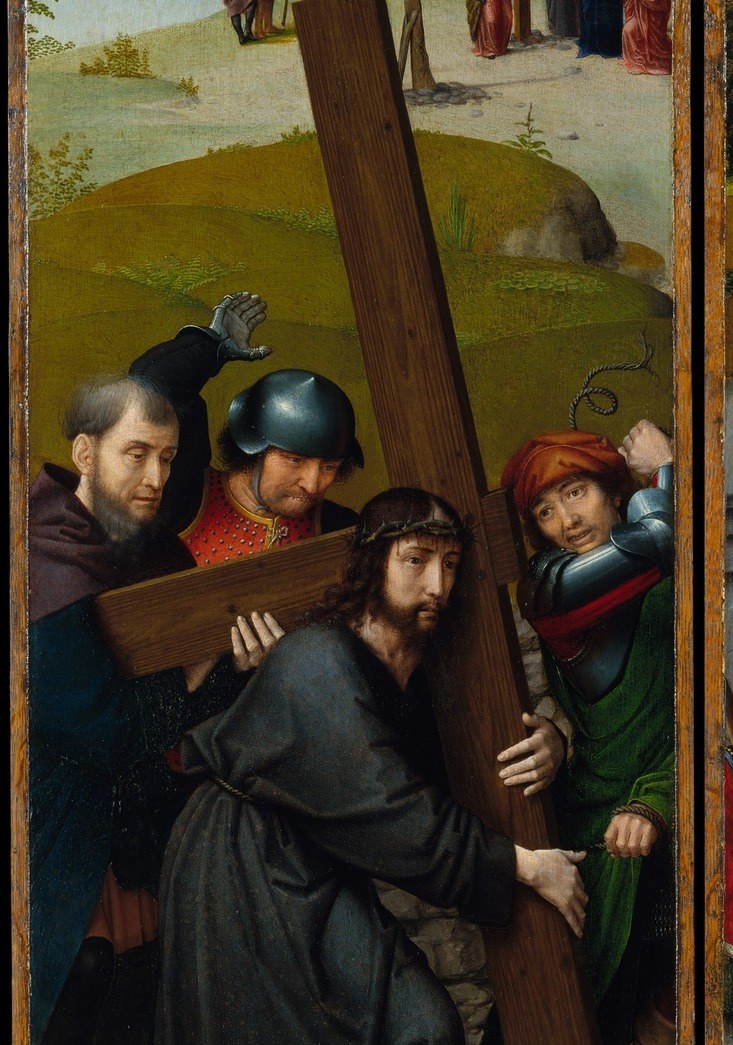
This is Christ Carrying the Cross and The Resurrection by Gerard David, painted around 1510 in Bruges. It survives today not just as a masterwork of Early Netherlandish painting, but as an object that was smuggled through a war in a coal sack.
Look closely at the left panel. The mob around Christ is a study in human reaction: grief, cruelty, and chilling indifference all compressed into one frame. Then find the small white dog at the bottom. David tucked an intimate domestic detail into the most solemn moment of Christian scripture, grounding the sacred in the everyday.
The painting was seized by Nazi looters during the Second World War. Its frame was smashed off as part of the confiscation. A Belgian resistance operation recovered it, and the panels were hidden in an Austrian salt mine at Altaussee, alongside thousands of other stolen works. When a miner discovered them, he carried them out in an ordinary coal sack.
After seven years underground, the panels were returned. The wounds on the risen Christ's hands in the right panel are still visible on the painted body, a theological detail that survived everything.
#arthistory #gerarddavid #salvagedart
Details
Transcript
At first glance, two biblical scenes in one frame. Christ carries the cross, surrounded by a mob of faces. Gerard David painted this around 1510 in Bruges. Five centuries later, war came for it. Nazi looters seized it. The frame was smashed off. A Belgian resistance operation got it back. They hid it deep inside an Austrian salt mine. The miner who found it carried it out in a coal sack.