Madonna and Child with the Infant Saint John the Baptist and Angels by Pseudo-Pier Francesco Fiorentino
View the artwork: Madonna and Child with the Infant Saint John the Baptist and Angels →
This is Madonna and Child with the Infant Saint John the Baptist and Angels, painted around 1500 by an artist whose real name we have lost. He is known today only as Pseudo-Pier Francesco Fiorentino, a placeholder for someone who worked in Florence but left too few records to identify with certainty.
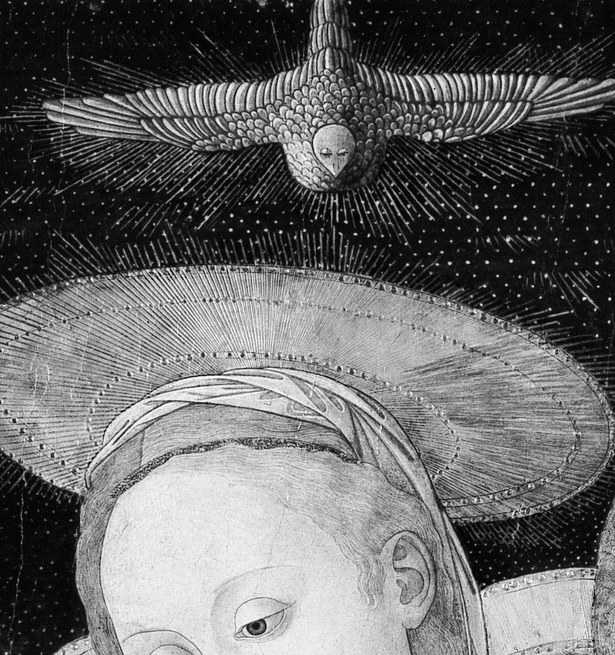
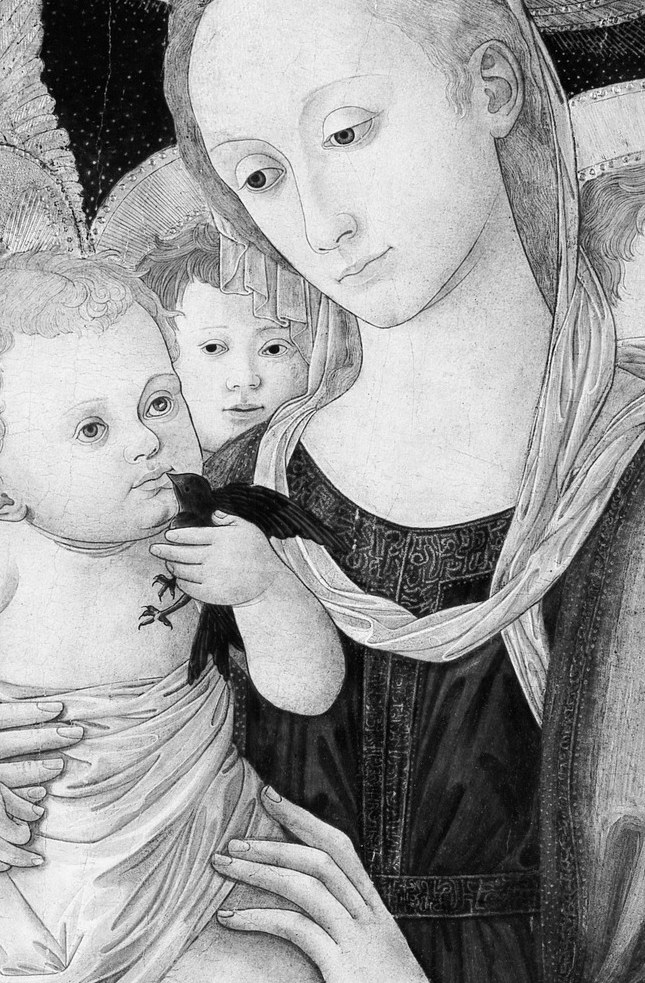
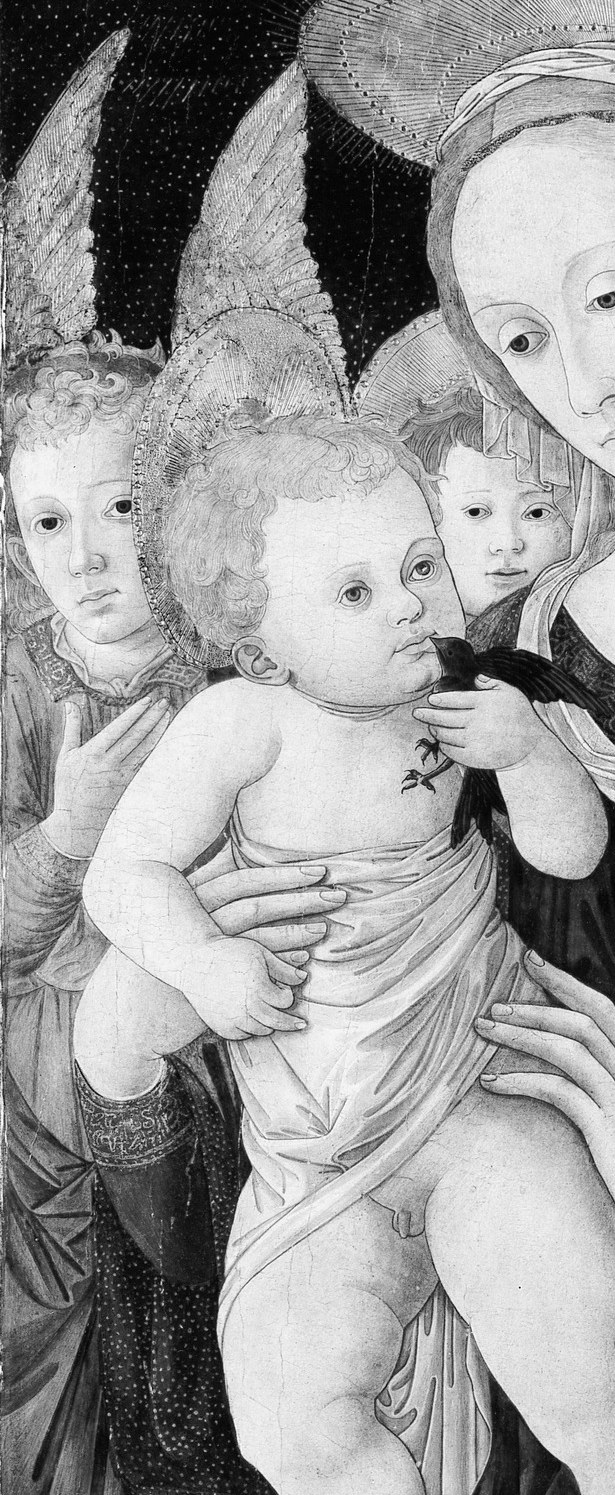
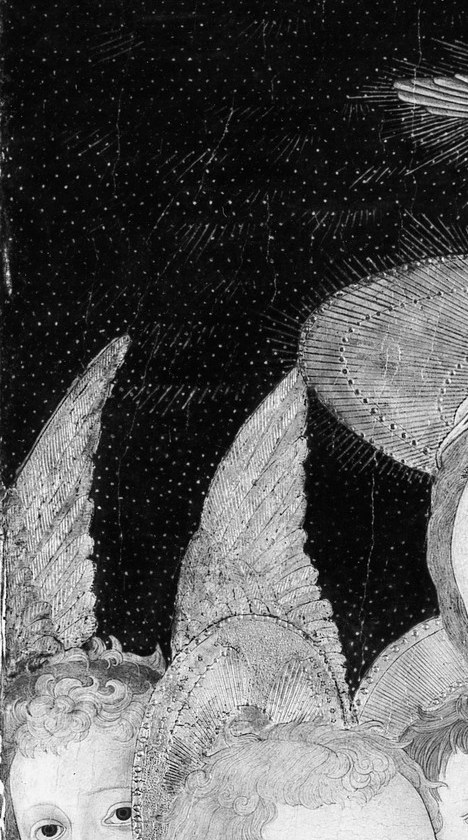
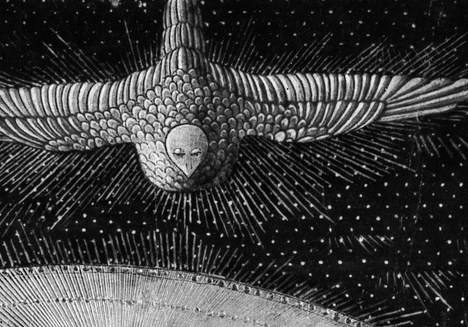
At first the painting reads as a conventional devotional scene: Mary, the Christ Child, the young John the Baptist, and a pair of angels arranged around a descending dove. But the composition is crowded in a way that rewards a second look. Tucked into the lower right margin, a partially visible angel is nearly cropped by the edge of the panel. On the opposite side, a dark wing at the far left margin belongs to a figure we cannot see.
The painter imagined a larger crowd of attendants than the panel could hold, angels pressed so close around the holy family that some were simply cut off by the frame. That choice makes the scene feel less like a posed tableau and more like a glimpse into a moment already in motion.
Look for the translucent white veil over Mary's hair, a delicate passage of painting against her unusually dark robe, and for the swaddling cloth around the Christ Child's waist, a linen wrap that would have reminded a Renaissance viewer of a burial shroud woven into a birth. What else do you notice hiding at the edges of this painting?
#arthistory #renaissance #florentinepainting
Details
Transcript
At first glance: a serene Madonna and Child. They are the center of a crowded sacred scene. A dove descends. John the Baptist kneels. Two angels frame the top. But look at the bottom right corner. A third angel is nearly cropped out of the painting. And at the far left, a dark wing nearly disappears too. The painter imagined more, a host just beyond the frame. His name is lost. He is known only as Pseudo-Pier Francesco Fiorentino.