The Crucifixion by Pedro Orrente
View the artwork: The Crucifixion →
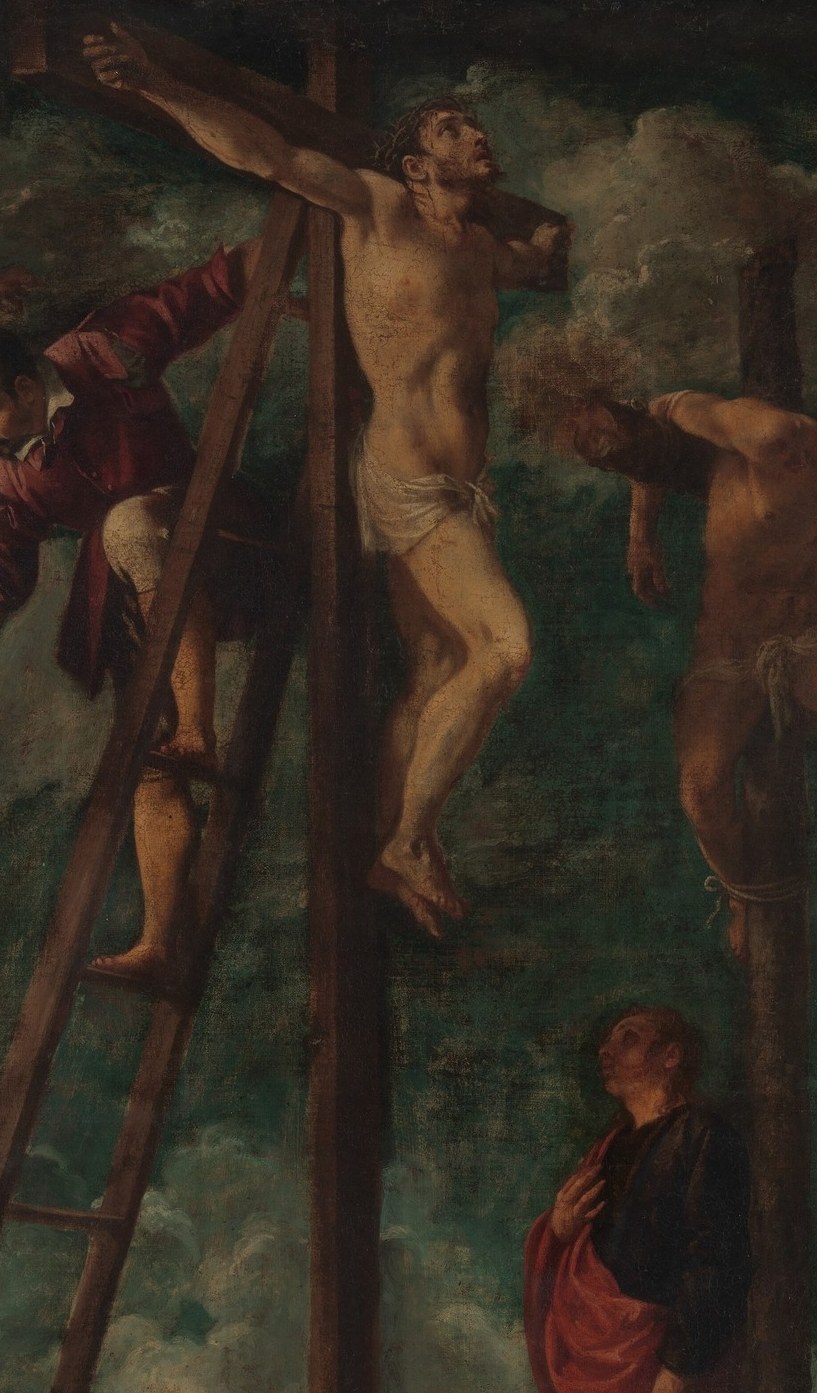
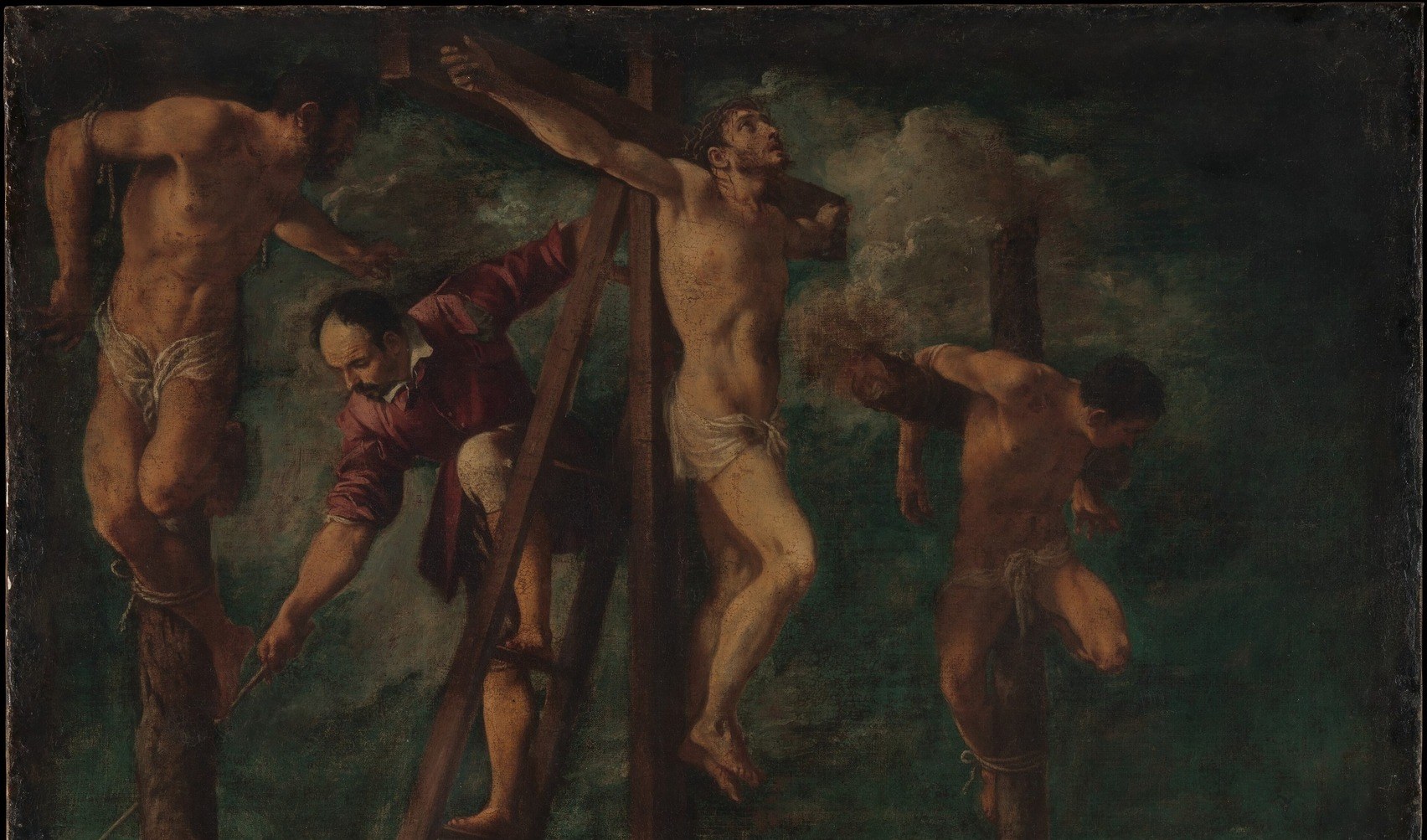
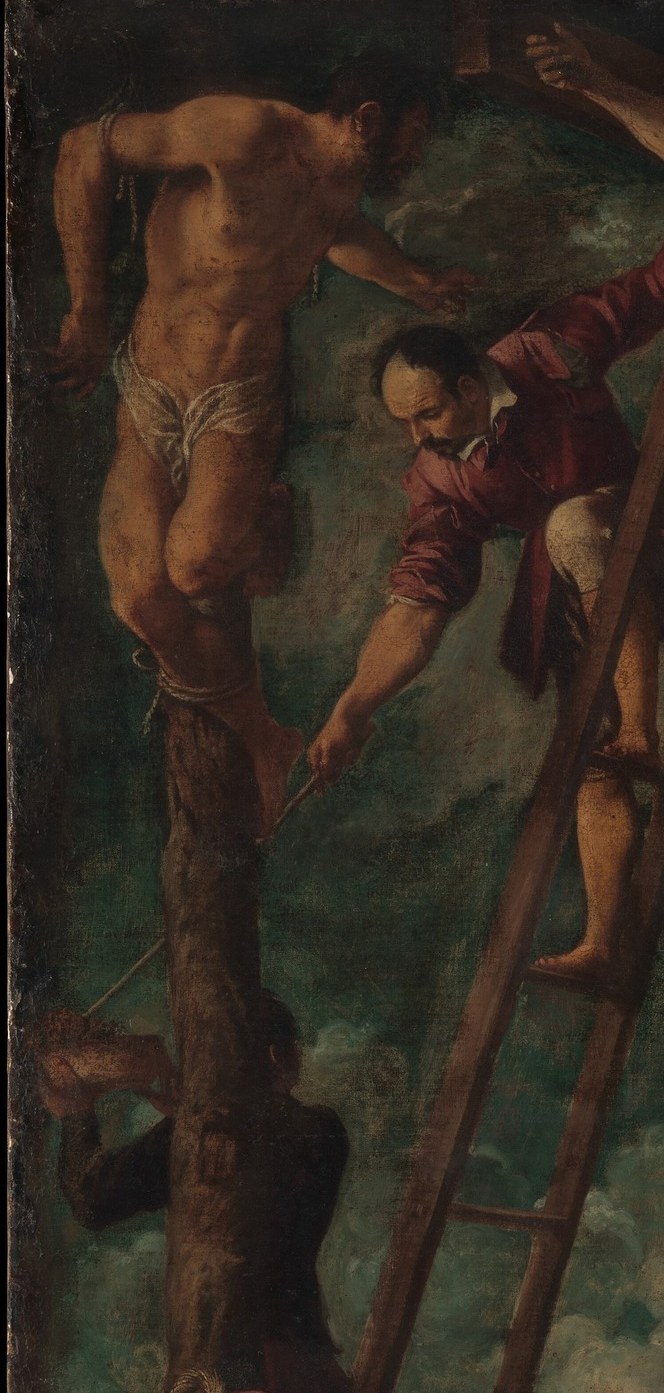
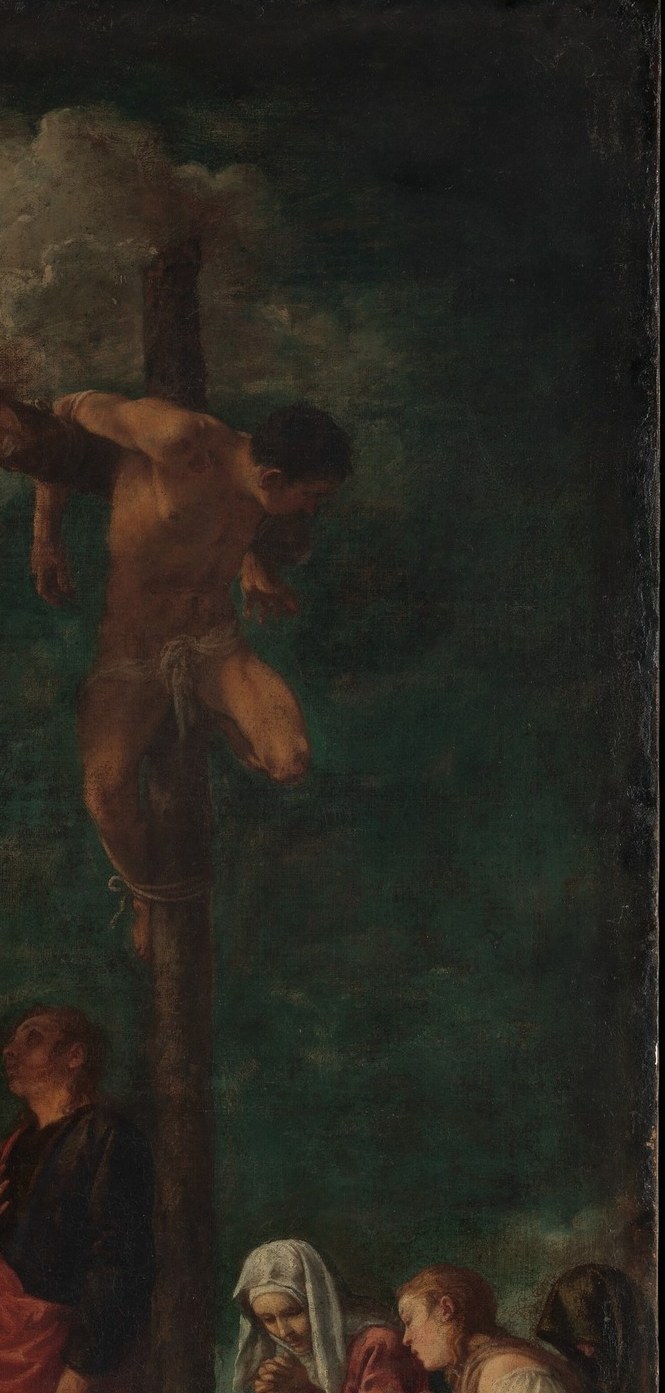
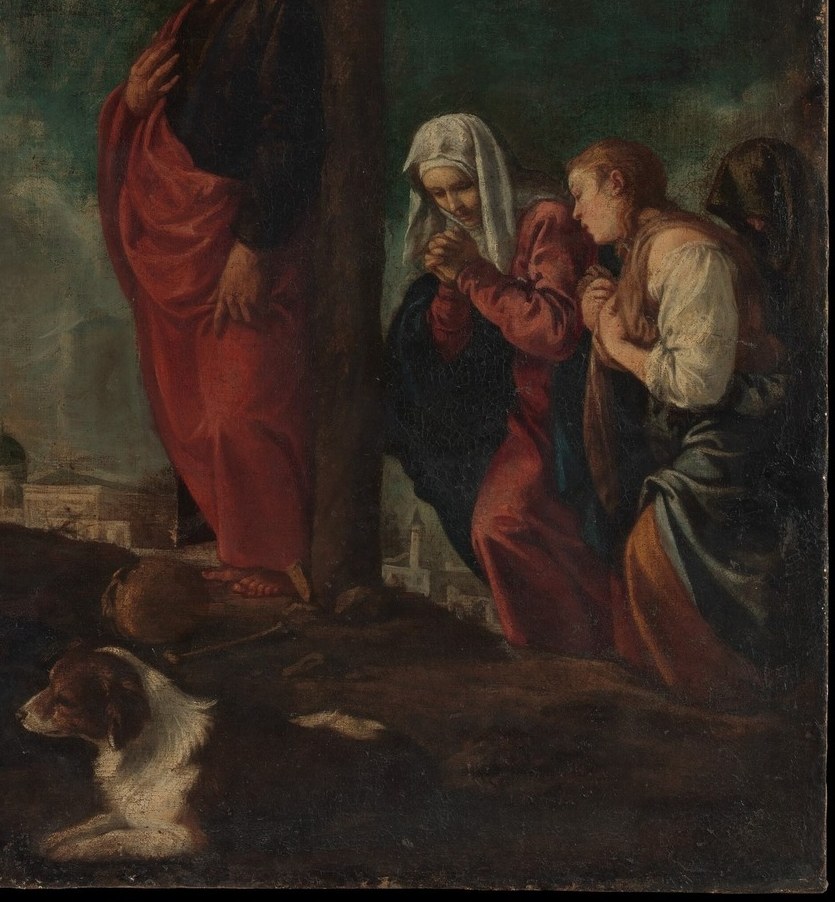
Pedro Orrente painted The Crucifixion around 1625, and the first thing that stops you is the sky. It is not blue, not gray, it is torn between a deep, sick green and a wound-like crimson. Spanish Baroque painters did not usually do this. Orrente could do it because he had studied in Venice, where artists like the late Titian and Tintoretto were pushing oil paint into stranger, more atmospheric territory. This sky is his import, a piece of Venetian color-thinking dropped into a Spanish biblical scene.
Once your eye leaves the sky, Orrente switches systems on you. Christ's torso is lit with hard, directional light, a technique called tenebrism, which Orrente picked up from Caravaggio's circle in Rome. The chest catches raking brightness against a dark background, modeling every rib and muscle. The sky is fluid and bleeding; the body is sculptural and stark. He is running two entirely different kinds of paint logic in one canvas, and the seam between them is what gives the painting its crackling intensity.
Orrente was born in Murcia in 1580 and became one of the first Spanish painters to commit fully to the naturalistic style Caravaggio had ignited. He moved through Venice and Rome early in his career, absorbing both the Venetian color tradition and the Roman light tradition, then brought them back to Spain. He died in Valencia in 1645. This Crucifixion is a compact demonstration of what happens when a painter refuses to pick one school, the result is a painting that unsettles visually as much as its subject does emotionally.
What part of the painting catches your eye first: the unnatural sky or the starkly lit body?
#arthistory #spanishbaroque #pedroorrente
Details
Transcript
Look at the sky first. That bruised green bleeding into red isn't normal for 1625. Orrente trained in Venice and stole the secret of shifting color. Now drop your eyes to the body. The light on Christ's chest is a separate system from the sky. Caravaggio taught him that: one cool source, one warm. No blending.