Moonlight by Blakelock, Ralph Albert
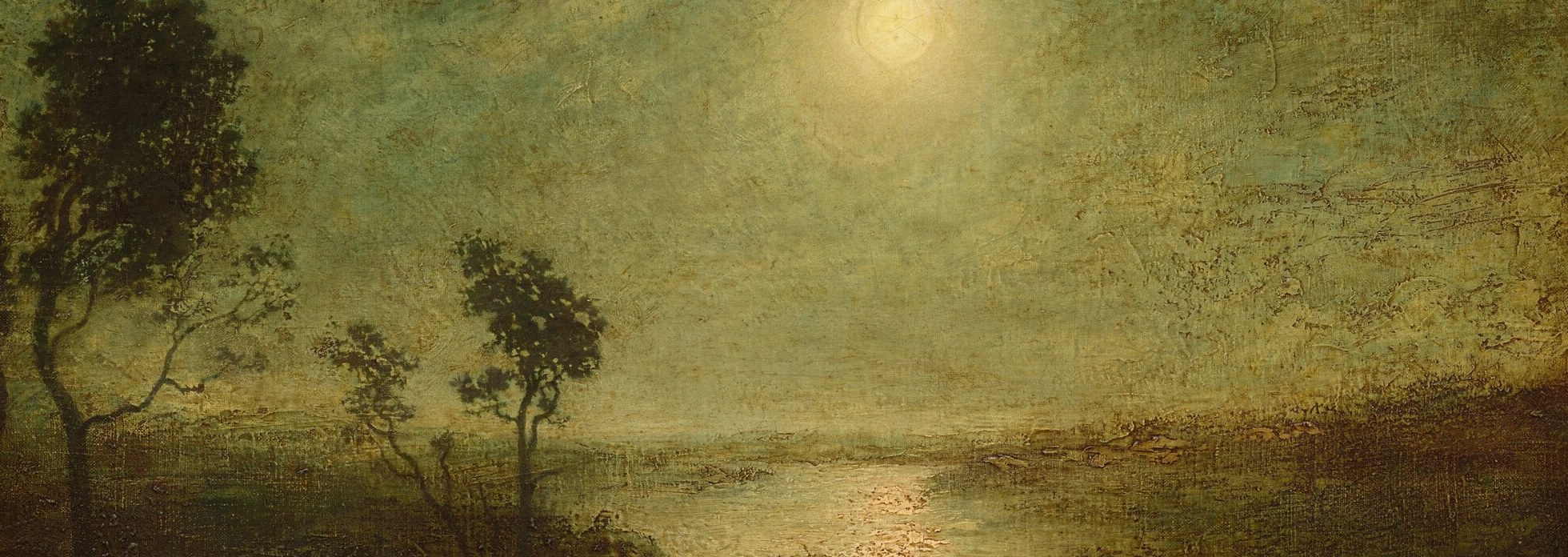
This is Moonlight by Ralph Albert Blakelock, painted around 1886 to 1895 and now in a private collection.
Blakelock was a Tonalist, a painter of mood and atmosphere rather than crisp detail. What he pursued here was a dissolution of edges: the horizon is barely a line, the water becomes sky, and the moon's glow is built from thin layers of translucent oil glaze, one over another. The fine crackle you can see across the moon's halo is a century of aging on those thick, glazed passages.
The painting's history is stranger than its calm surface suggests. In the early 1900s, while the canvas hung in the Manhattan mansion of Blakelock's patron Cathalina Lambert, two burglars broke in, held the household at gunpoint, and cut Moonlight from its frame. The theft made national headlines. The painting was eventually recovered, but the crime became one of the first major art thefts to grip the American public.
Blakelock himself descended into severe mental illness not long after this period and spent much of his later life institutionalized. His reputation, meanwhile, skyrocketed in his absence. Did you know American Tonalist paintings were once held for ransom?
#arthistory #ralphblakelock #tonalism
Details




Transcript
It looks like pure stillness. A perfect night. Ralph Blakelock painted these moonlit scenes obsessively. Notice how the horizon dissolves. No hard edge. He built up layers of glaze for that luminous atmospheric haze. But this canvas is famous for something other than its technique. One night in the early 1900s, two men broke into his patron's mansion. They held the owner at gunpoint and cut this painting from its frame.