The Family of Mr. Westfal in the Conservatory by Eduard Gaertner
View the artwork: The Family of Mr. Westfal in the Conservatory →
Eduard Gaertner's 'The Family of Mr. Westfal in the Conservatory' (1836) is one of only four interior scenes the artist ever painted. Gaertner made his name with sprawling, precise cityscapes of Berlin. That a private family moment exists in his hand at all is remarkable, and it survives because his subject was also his landlord.
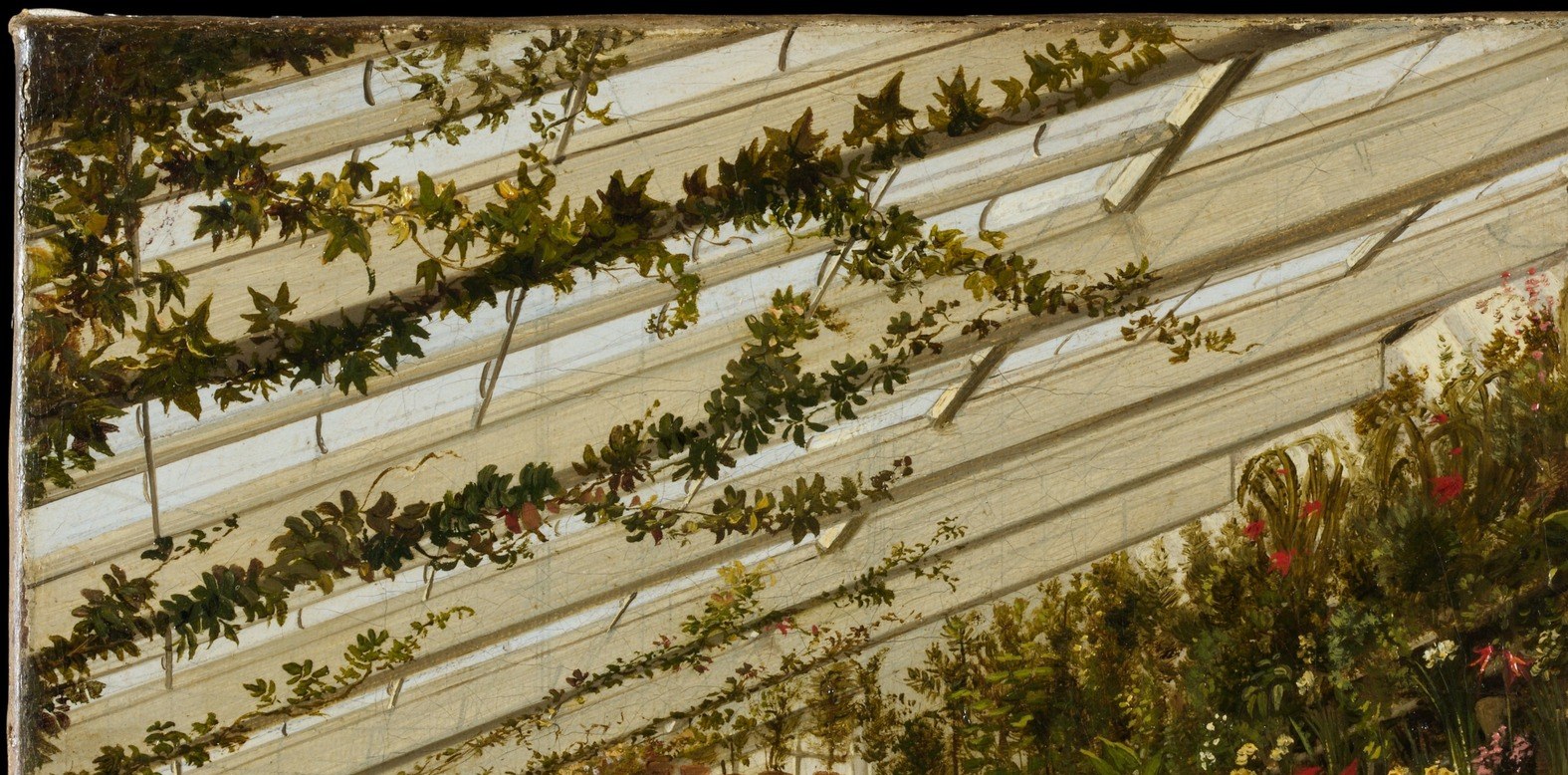
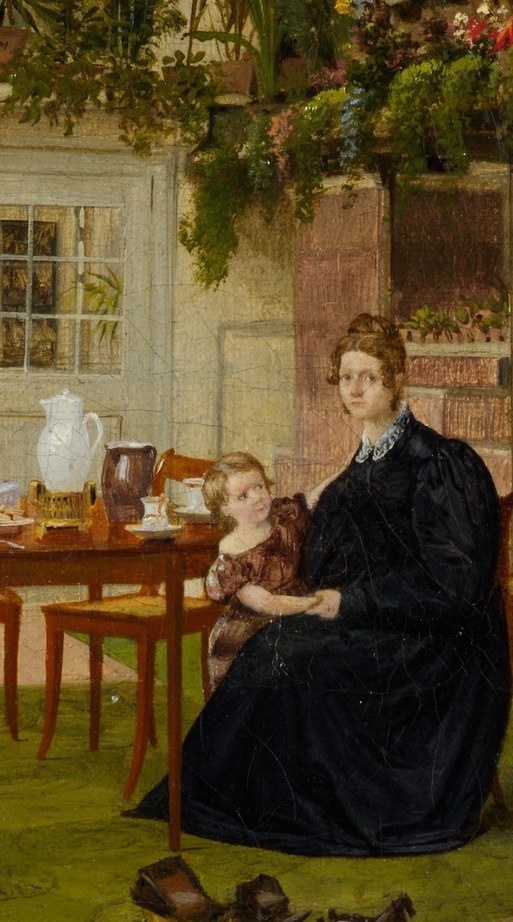
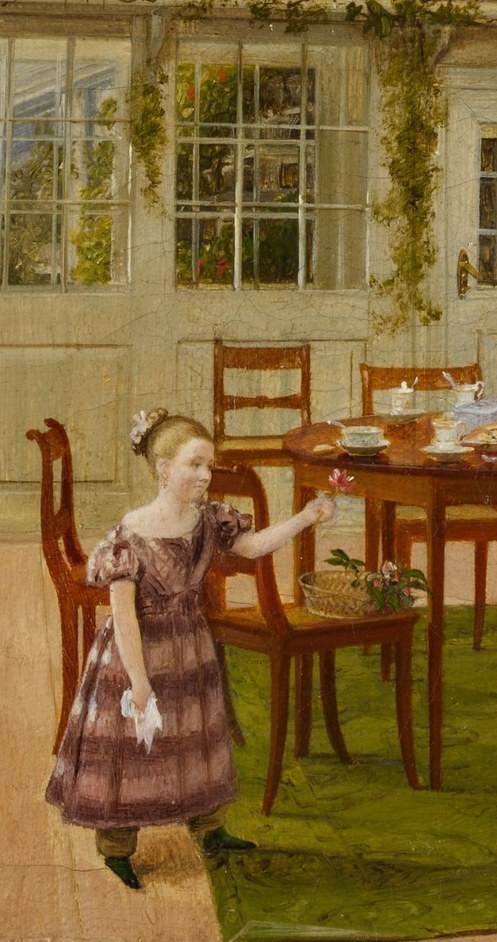
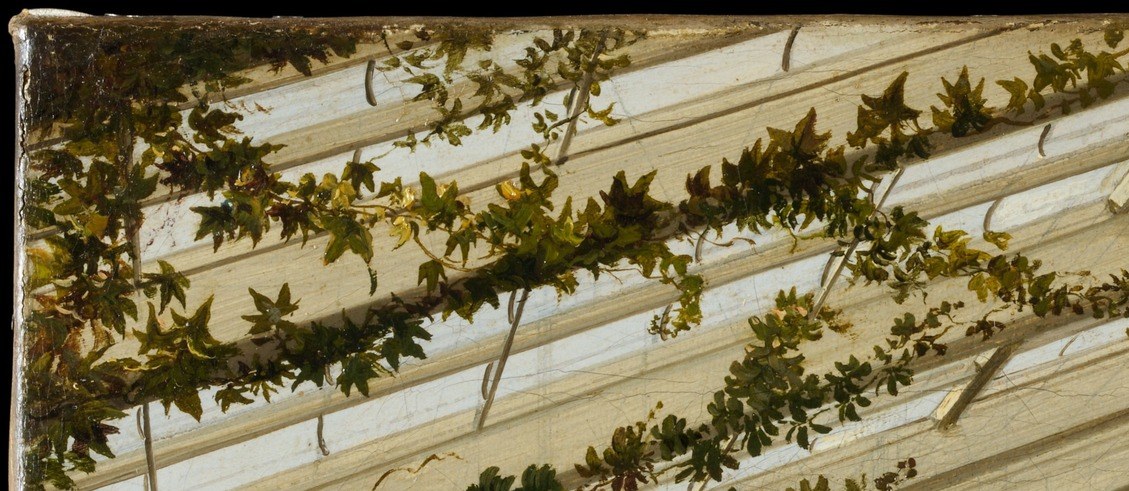
Look at how Gaertner uses light. The glass roof throws a grid of shadows over the greenery, but the white porcelain tea service on the round mahogany table pulls your eye first. Then the children appear: a girl in pink reaching across the table, a toddler on the floor with a wheeled toy. The mother presides in dark dress, composed but not posed. This is a Biedermeier ideal of domestic authority, softened by the chaos of kids at play.
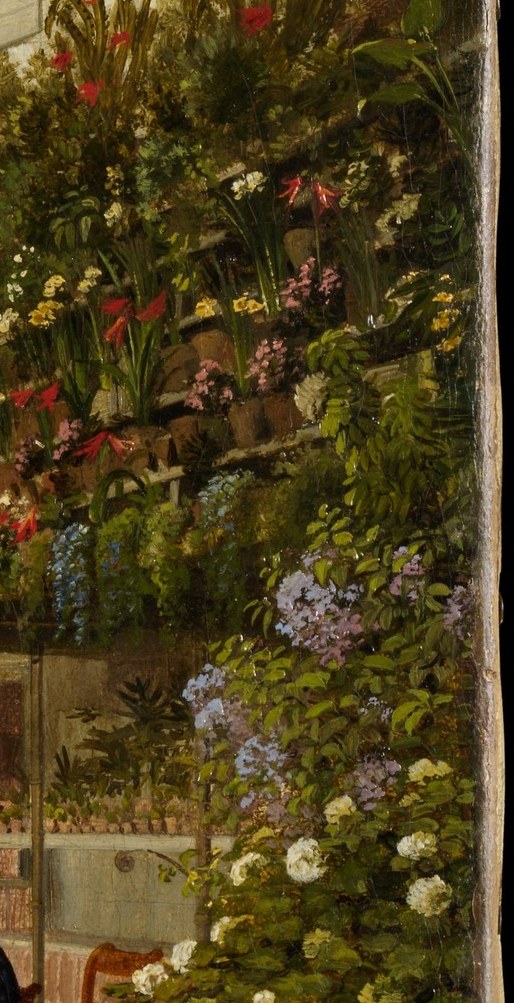
The conservatory belonged to Christian Carl Westphal, a wealthy Berlin wool merchant obsessed with horticulture. Tropical plants were a status symbol in 1830s Europe, and Westphal's collection of exotic specimens, tiered on staging at the right, was his pride. The glass-and-iron structure itself was cutting-edge domestic architecture, a room that erased the boundary between house and garden.
The painting stayed in private hands until the Metropolitan Museum of Art acquired it in 2007. It remains one of the most intimate documents of prosperous merchant-class life in Biedermeier Berlin, a family caught not posing for posterity, but simply living in their own jungle.
#arthistory #eduardgaertner #metmuseum
Details
Transcript
Berlin, 1836. A wool merchant builds himself a glass palace. Christian Carl Westphal filled it with tropical plants from across the globe. This was his family's day-room. Look at the tea service on the table. Fine porcelain, right in the middle of a jungle. Now look down. A child's toy, abandoned on the floor. This is not a stiff portrait. This is their real home.