Lydia Crocheting in the Garden at Marly by Mary Cassatt
View the artwork: Lydia Crocheting in the Garden at Marly →
In the summer of 1880, Mary Cassatt and her sister Lydia rented a house in Marly-le-Roi, a quiet town west of Paris. This painting, now at the Metropolitan Museum of Art, is what came from those afternoons: Lydia in the garden, crocheting, with her back to the house.
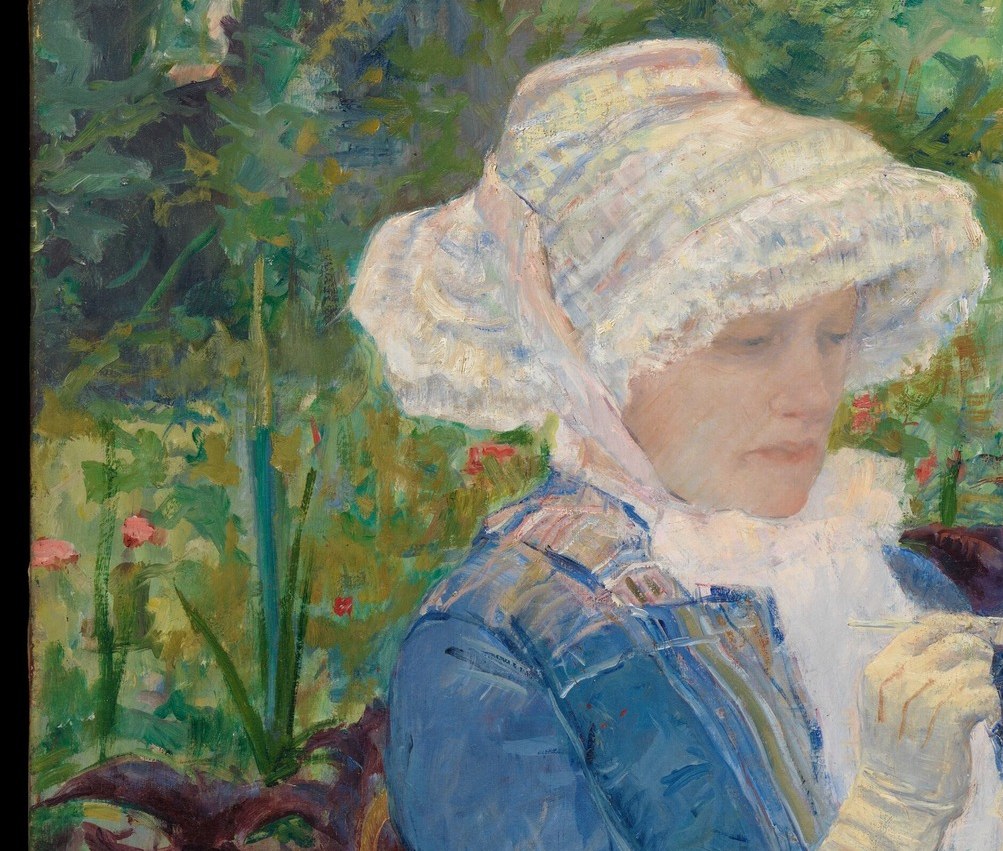
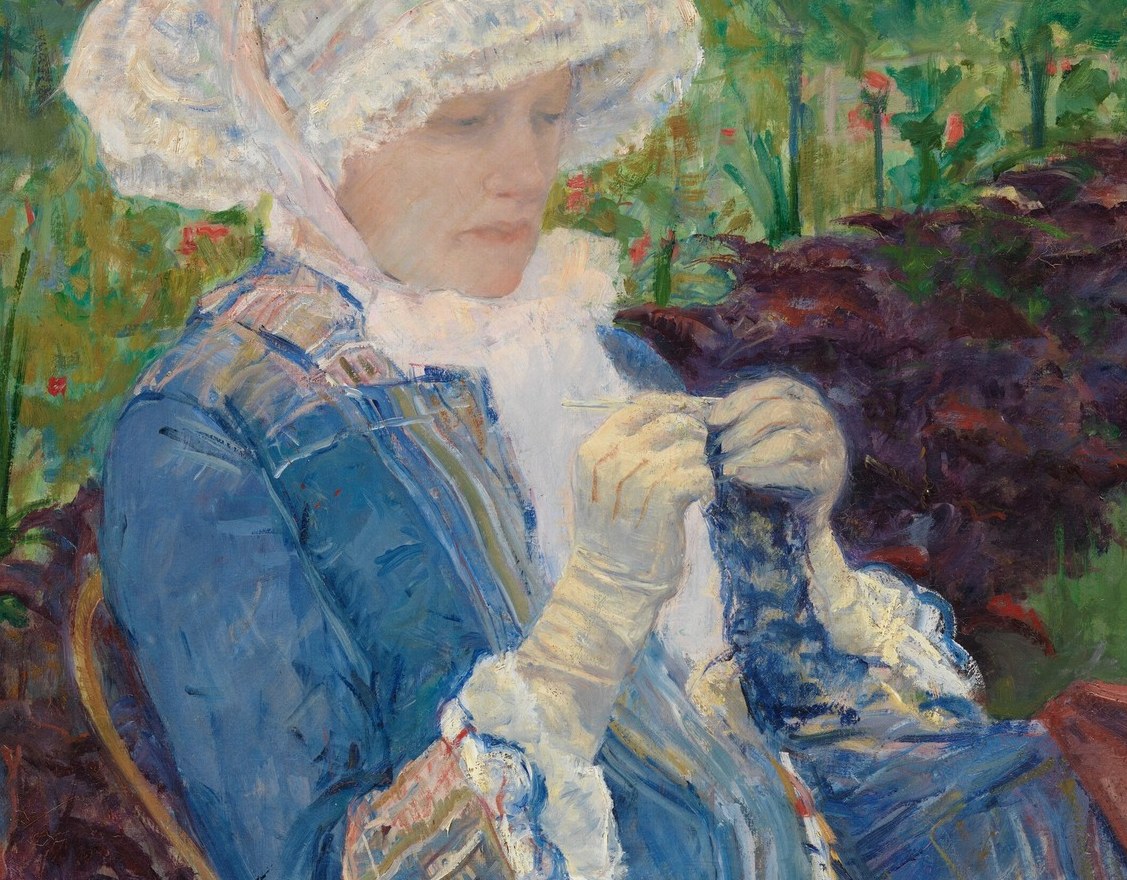
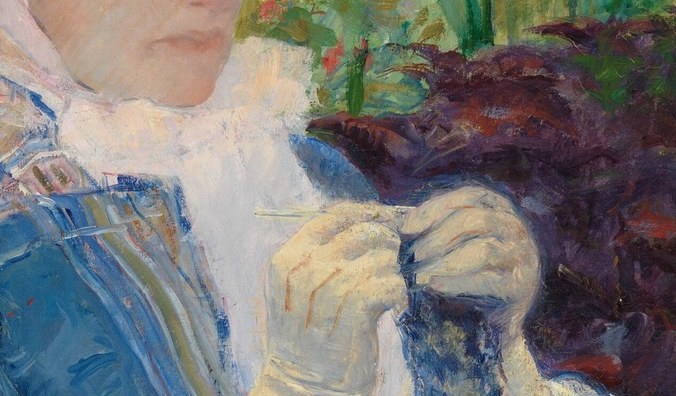
The composition keeps you outside the scene, just barely. Cassatt gives you the big blue dress, the white bonnet, and then your eye drops to the yellow crochet work in Lydia's hands. That warm cream against all the cool blue is the real focal point. Her face is turned away and down; this is not a portrait performing for you. You are watching someone absorbed in a repetitive task, the kind of domestic labor Cassatt repeatedly argued was serious subject matter.
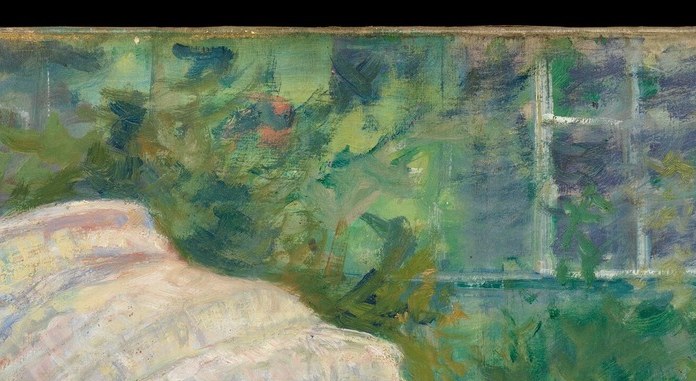
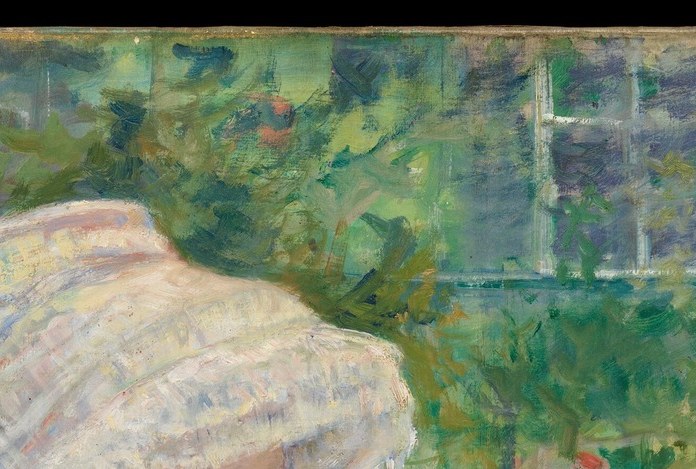
The garden itself is a character. Dense green foliage pushed with fast Impressionist brushwork encloses the space. A white-framed window or garden wall on the right marks the boundary between the domestic interior and the outside world. The reddish earth path at the bottom tells you this is a cultivated plot, not wild countryside. Cassatt renders the light as diffuse and dappled on the bonnet, no sharp shadows. She wants the figure to feel sun-warmed and present, not studio-lit.
Mary Cassatt was one of only three women to exhibit with the French Impressionists, and the only American. She often turned to the lives of women, observed privately and without sentimentality. Here the personal and the professional collapse into one image: one sister works a needle, the other works a brush, and the result is a document of a specific afternoon in a rented garden that has outlasted the house.
#arthistory #marycassatt #impressionism
Details
Transcript
Marly-le-Roi, 1880. A rented summer garden. Two American sisters escaped Paris for this. One paints. The other crochets in the sun. Look at her hands. Lydia is working. Cassatt made domestic labor worthy of a canvas this size. A private, unposed truth. Entirely modern in 1880.