Spring Morning in the Heart of the City by Childe Hassam
View the artwork: Spring Morning in the Heart of the City →
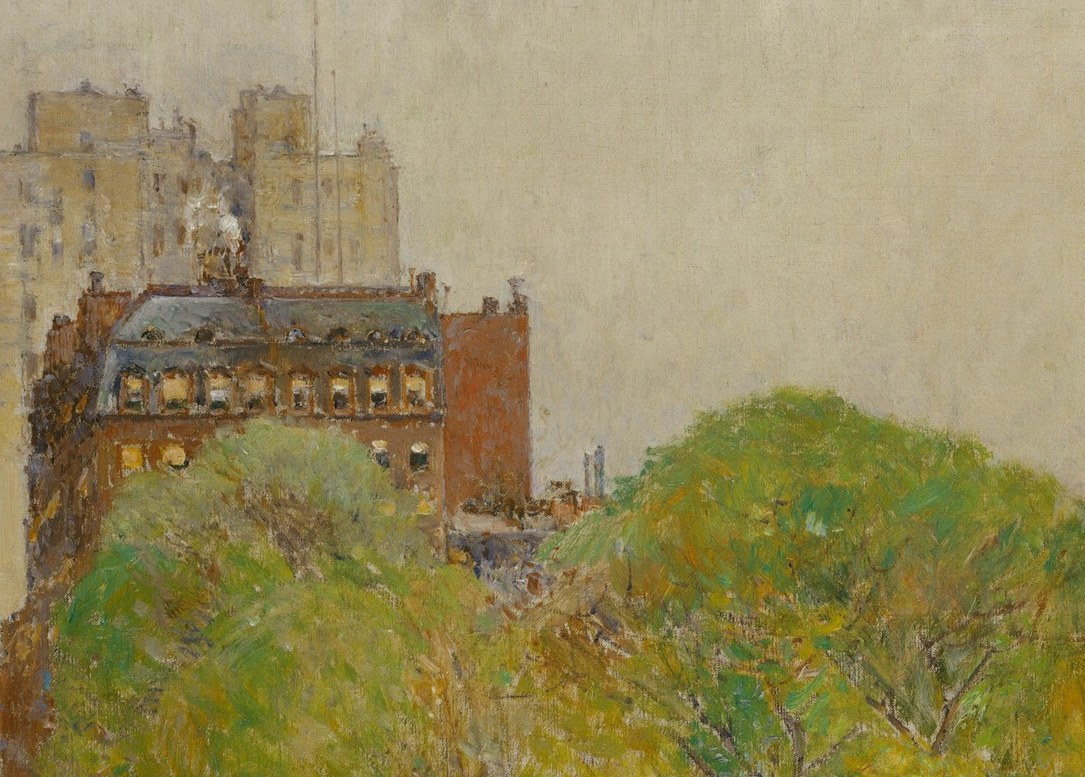
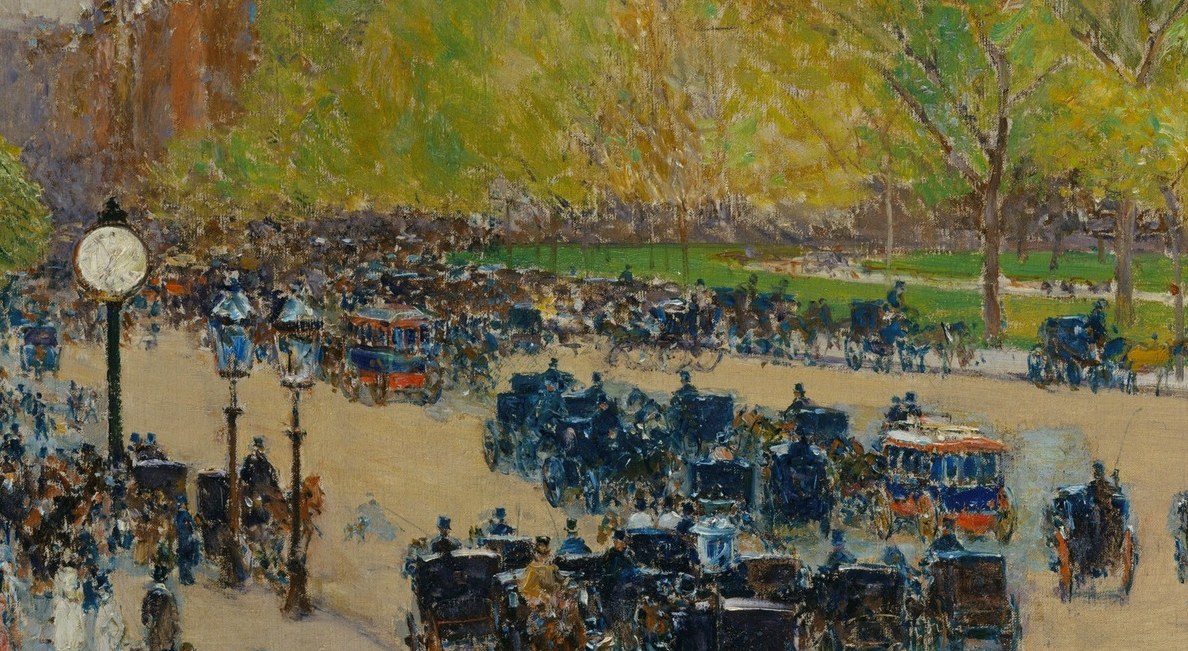
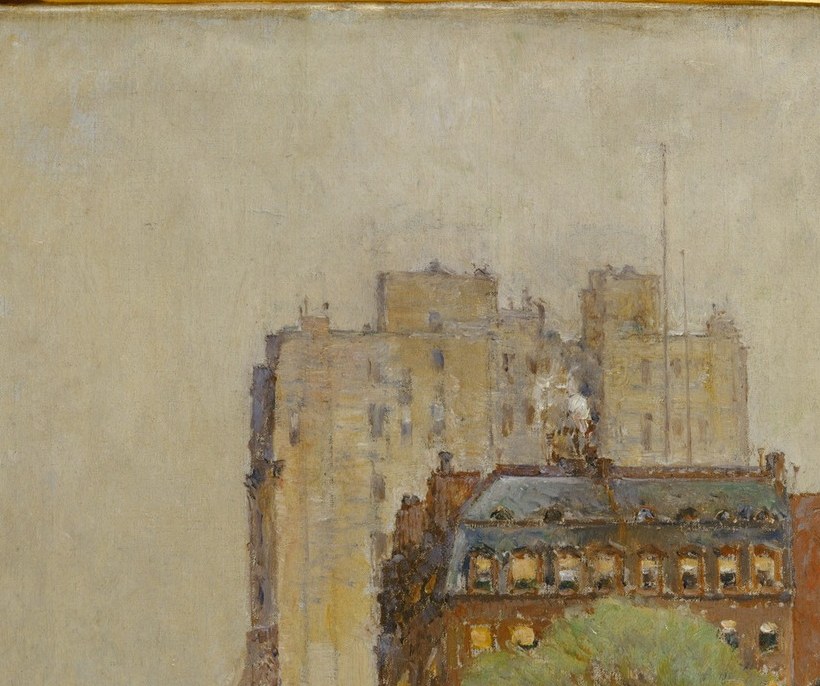
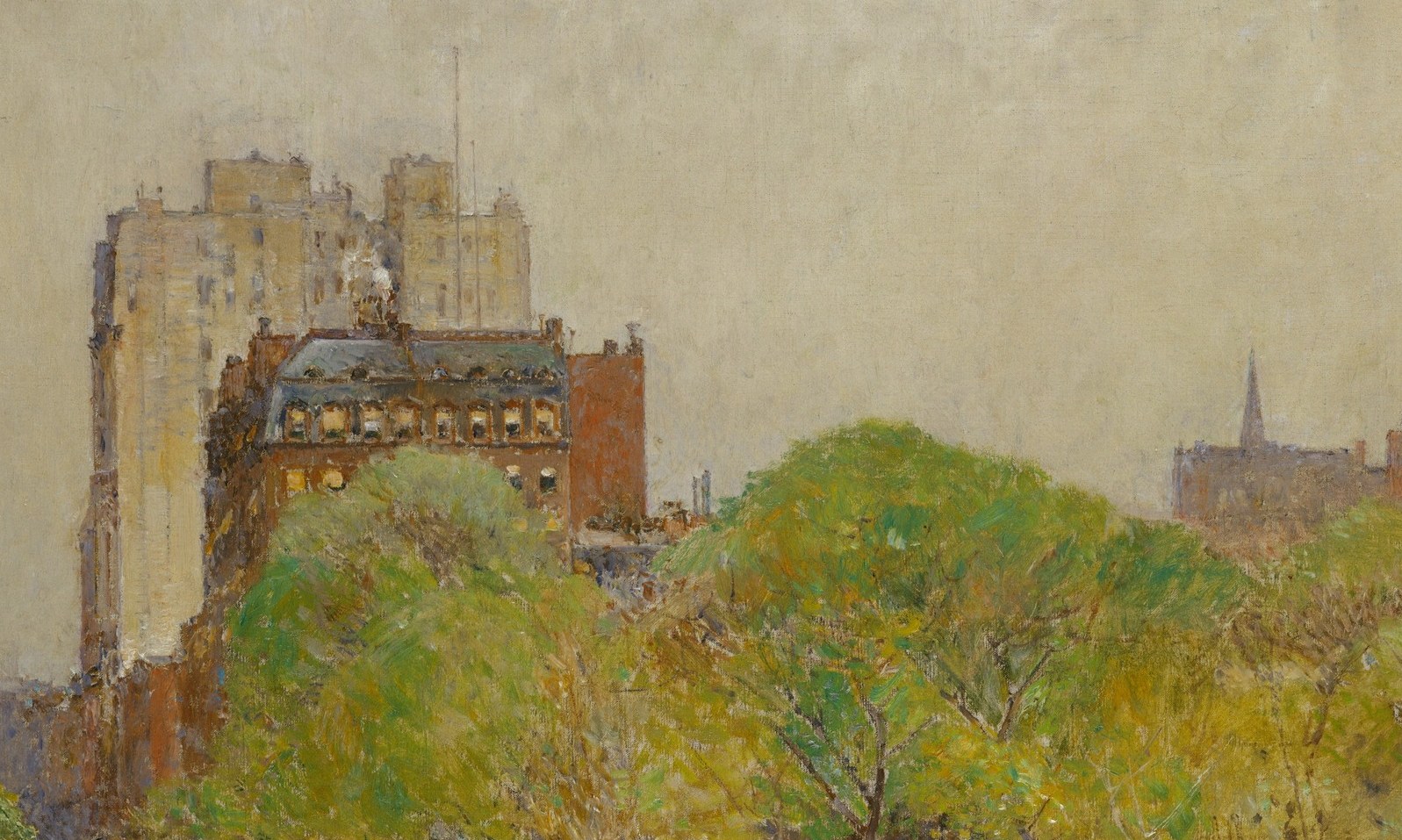
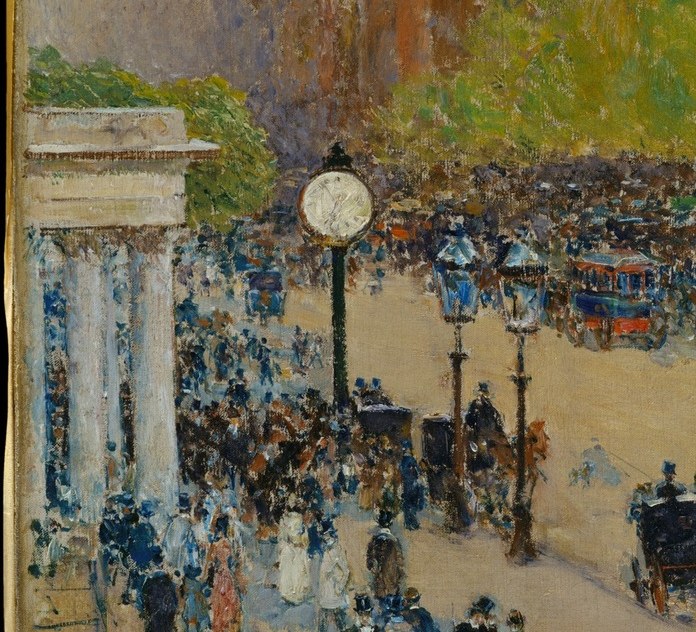
Childe Hassam painted Spring Morning in the Heart of the City in 1890, and it hangs today in Gallery 774 of the Metropolitan Museum of Art. It shows Fifth Avenue just north of 23rd Street on a spring morning, looking west toward Madison Square Park. The Fifth Avenue Hotel is at the left, marked by the classical portico and the big circular clock.
What makes the painting ache is the crowd. Hassam reduced every pedestrian to a dark brushstroke. You can count the figures but you cannot see a single face. The carriages surge forward, the trees are breaking into pale green, and an entire modern city moves as one mass.
Then your eye lands on him. At the curb, near the left-side street lamps, a solitary man in a dark coat has stopped walking. He stands still amid the blur. Hassam gives him just enough form to feel different from the anonymous flow. The painting never says who he is or what he is thinking. It only says he paused.
Hassam painted over three thousand works in his life and helped bring French Impressionism into American art. He knew Paris, but he chose New York. And he knew that the modern city held a particular kind of loneliness: thousands of people passing each other, everyone alone together. A spring morning, the light soft and full of promise, and one man standing still inside it.
#arthistory #americanimpressionism #childehassam
Details
Transcript
Fifth Avenue, 1890. The heart of the new American city. Carriages jam the street. The whole city is in motion. The crowd on the sidewalk is a blur of dark coats. Hassam painted everyone as a brushstroke. No faces. No names. But look at the curb. One figure has stopped walking. Alone, still, watching the spring light over Madison Square. This painter knew New York's loneliness. He stood in it too.