The Adoration of the Magi by Giovanni di Paolo
View the artwork: The Adoration of the Magi →
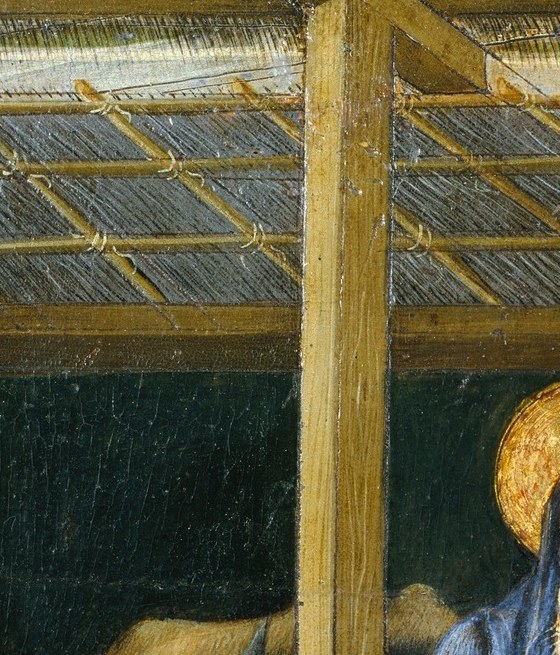
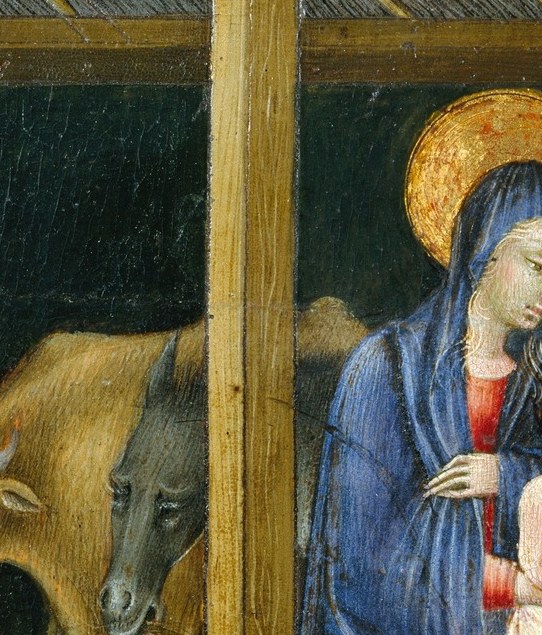
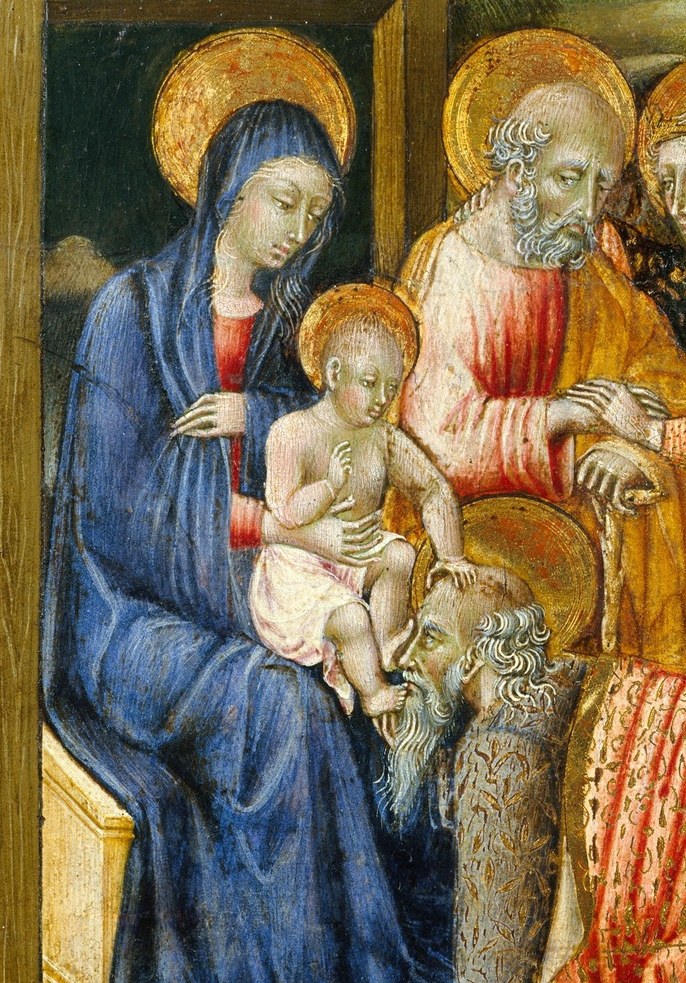
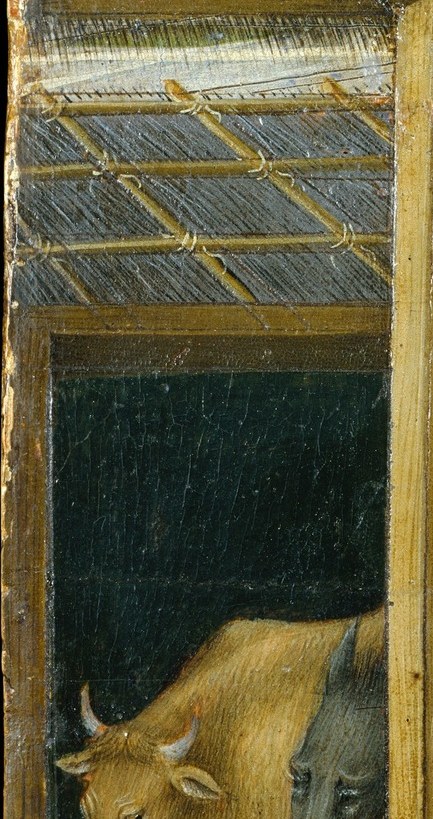
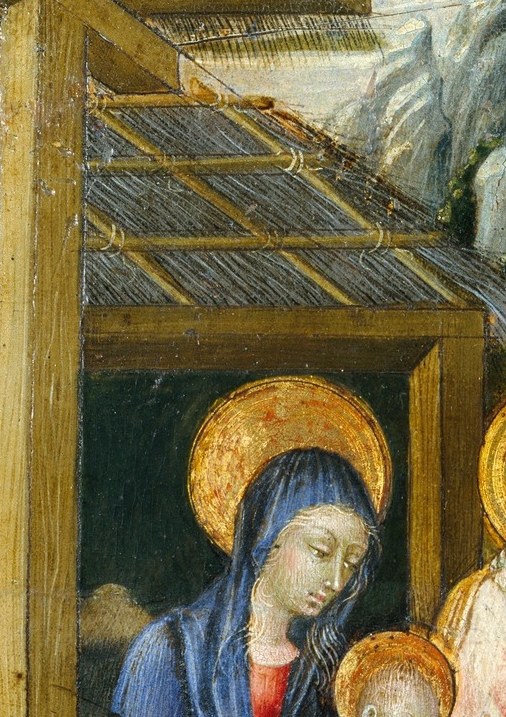
Giovanni di Paolo's The Adoration of the Magi, painted around 1460, is a calm, luminous vision of a familiar biblical scene. The Virgin Mary gazes down at a nude Christ child, the three Magi present their gifts, and the ox and ass look on from the darkness of a wooden stable. It was painted for a Sienese patron at a time when Giovanni di Paolo was the city's most important living painter.
Look closely at the infant Christ. His complete nudity is deliberate, a theological argument made in paint. Fifteenth-century Sienese viewers would have understood it as an insistence on the Incarnation: that God became fully, physically human, not a spirit in disguise. The gold vessel held by the kneeling Magus, the pool of orange silk spreading across the ground, and the tiny shepherd and sheep visible in the distant rocky landscape all reward a slow, careful look.
But here is the turn. Giovanni di Paolo, having spent decades painting serene Madonnas and gilded saints, produced a Last Judgment near the end of his life that is so grotesque it still unsettles viewers today. His Hell is a nightmare of demons, tortured bodies, and surreal punishments, a wild, harsh, almost hallucinatory vision from the same hand that painted this tender Adoration. Art historians have described his late works as so strange they defy easy explanation.
A painter who could hold both the luminous and the grotesque in his mind. What did his patrons think when they saw the two side by side?
#arthistory #sienesepainting #giovannidipaolo
Details
Transcript
1460, Siena. A painter delivers a calm, luminous Adoration. Mary's face is serene, idealized, untroubled. The Christ child is completely nude. A theological choice, it insists on his real, vulnerable human body. This painter is Giovanni di Paolo. By the 1460s, Siena's most important artist. But in his last years, he painted a Last Judgment. His demons and damned souls are so grotesque, so surreal, scholars still debate what happened to him. One life. Two visions. The serene and the unspeakable.