Hauling the Net by Hardenstein, Dirk

This is Dirk Hardenstein's Hauling the Net, painted in 1663. It was Hardenstein's last year. He died before the paint may have fully dried, and this work stands among the very few we have from him.

Most eyes go straight to the luminous Dutch panorama: the spire, the harbour ships, and the two cloaked figures taking it all in. But the painting is named for what happens almost out of sight. Tucked into the shadow of the lower left, a dark vessel holds fishermen hauling a heavy net from the water.

Hardenstein applied the paint thickly to render the ropes of that net, giving them a wet, tactile weight that was unusual for the era. The fishermen's faces are obscured, keeping the focus on the collective strain and the unglamorous reality of the work instead of on individual heroism.

It is a painting that rewards the careful looker. The luminous city is just one half of the story the other half is the heavy, hidden labour that built it.

#arthistory #dutchgoldenage #hiddenpainting

Details
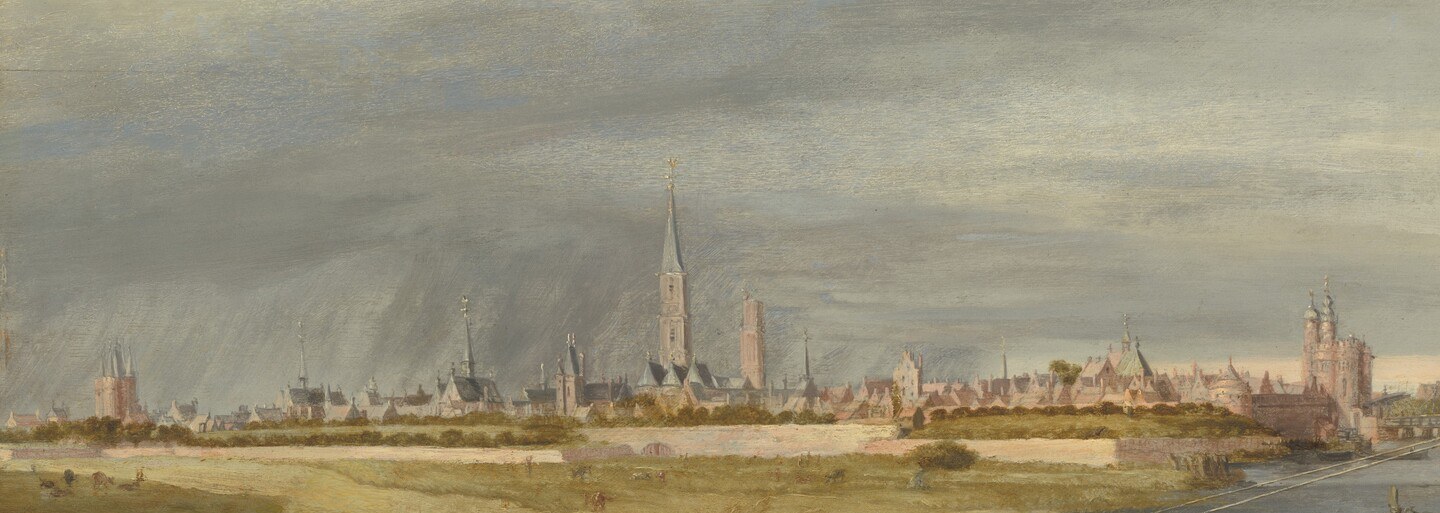
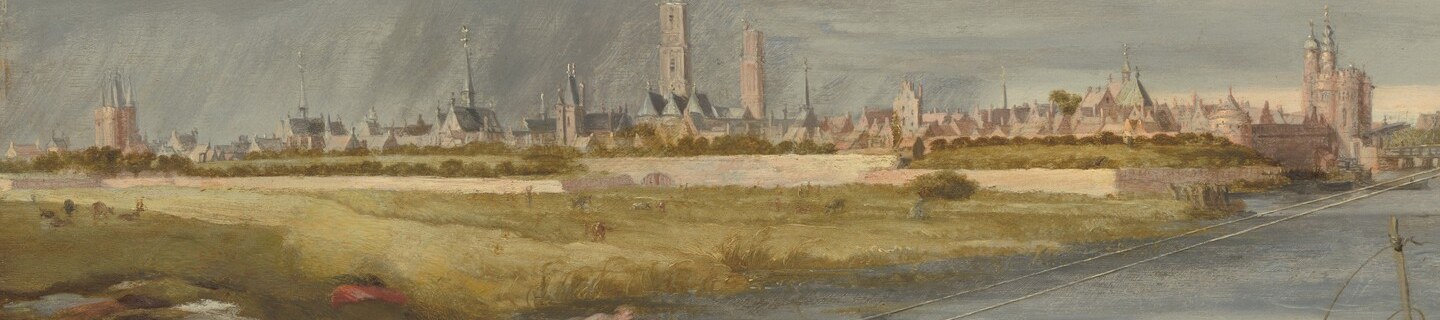
The painting's true subject , a wide harbour city rendered with meticulous topographic ambition, likely documenting a real place at a specific historical moment
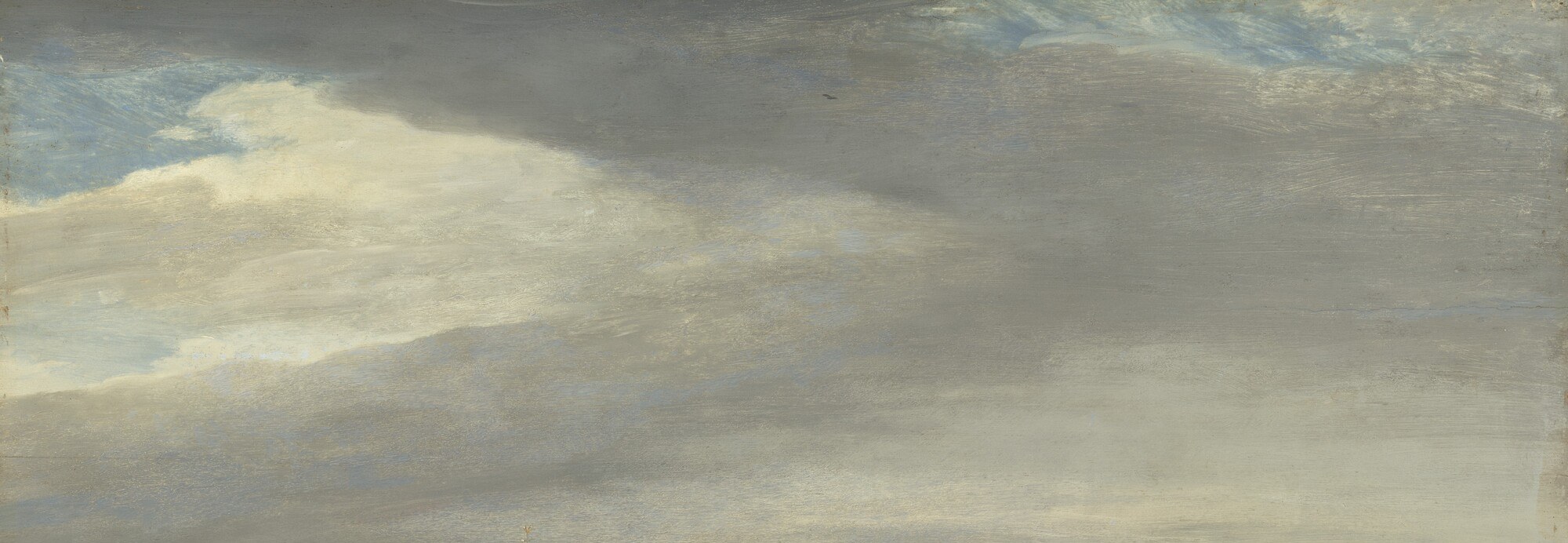
Sky occupies nearly half the canvas in classic Dutch landscape proportion; the cloud light is the primary source of illumination across the whole scene
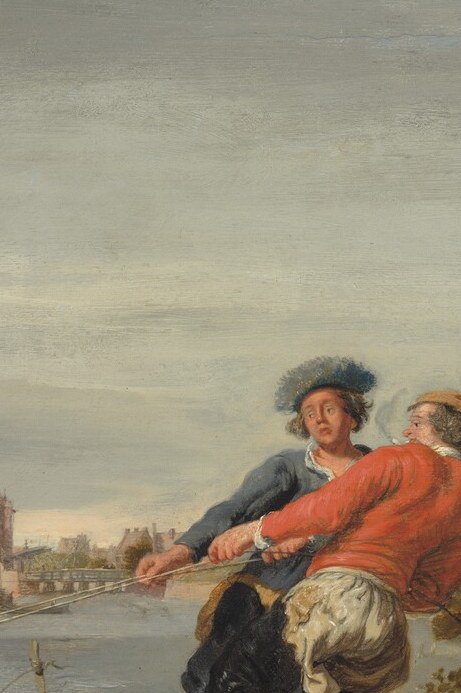
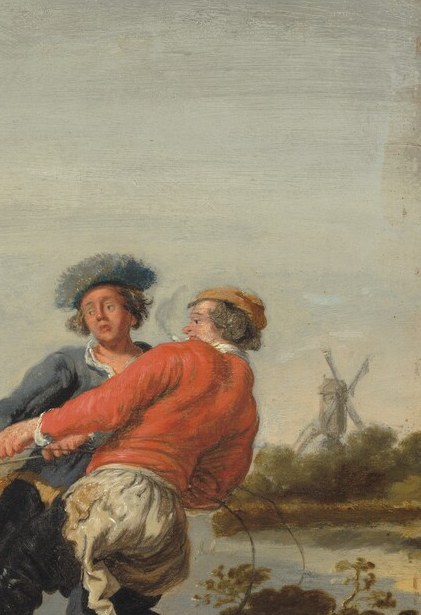
The dominant human presence; posture and hat silhouette convey a watching, reflective stance , the viewer's surrogate looking out over the city
The light on the water is the painting's atmospheric engine; it separates foreground from city and gives the scene its luminous Dutch character
Slightly shorter and behind, suggesting a dialogue or shared contemplation; the pairing creates narrative tension about what they are observing
Transcript

You scan the wide city first. A church spire anchors the map. The two figures watch like us. Now drop to the dark corner. A boat. Hauling a net. This is the only painting we have from an artist who died that year.