The Nativity by Antoniazzo Romano
View the artwork: The Nativity →
Antoniazzo Romano painted this Nativity around 1480, and it is now held in a museum collection. The first thing to know is that he was Rome's leading painter in the late fifteenth century, yet he deliberately worked in an older, gold-ground style that was already unfashionable. He made a specialty of archaic-looking devotional images, and this painting is a masterclass in that method.
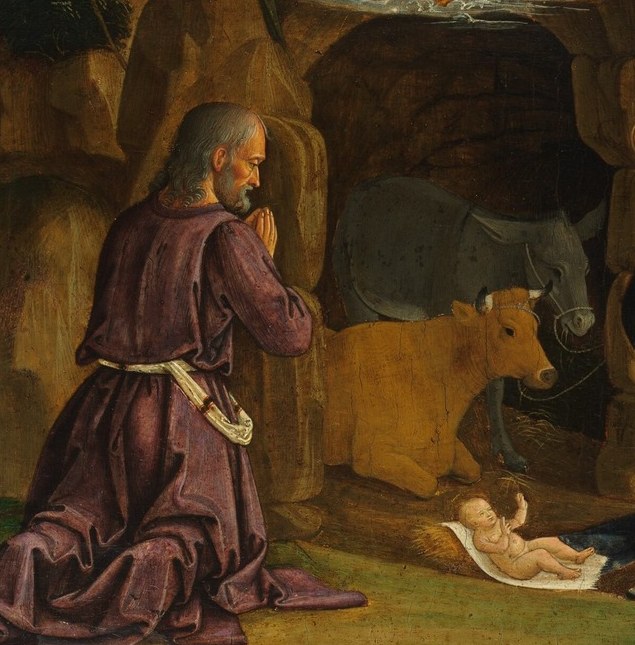
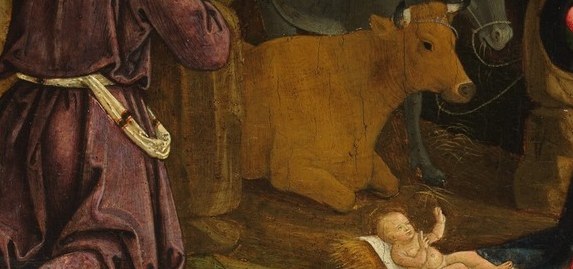
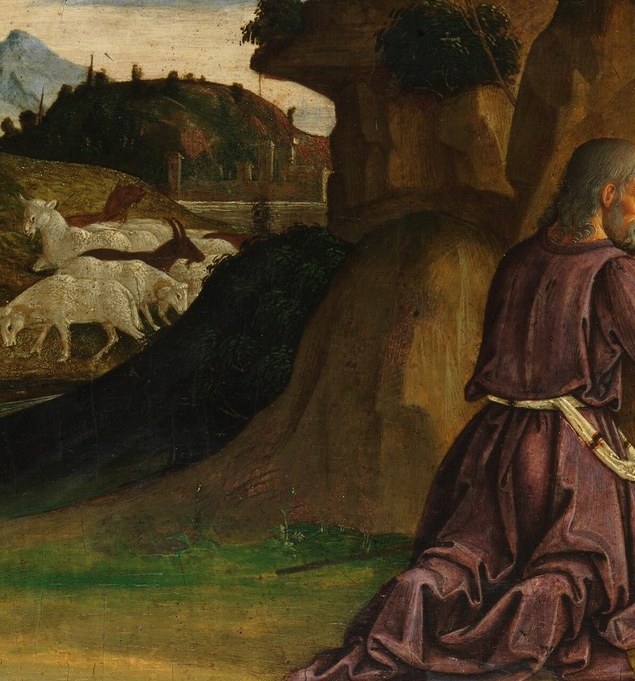
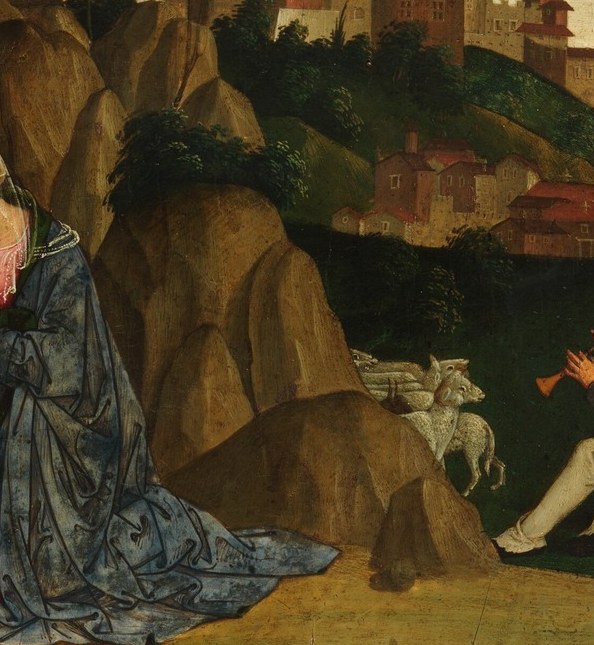
Look first at the infant Christ, who glows from within against the dark ground. Antoniazzo places the light source in the child itself, a rare choice that predates Correggio's famous night Nativity by decades. Then move to the ox and donkey, barely distinguishable from the rocks. Zoom in and you catch the reference to Isaiah's prophecy. The sheep in the right foreground are not just livestock. A lamb present at the moment of birth is the Lamb of God, a visual shorthand every fifteenth-century worshipper recognized immediately.
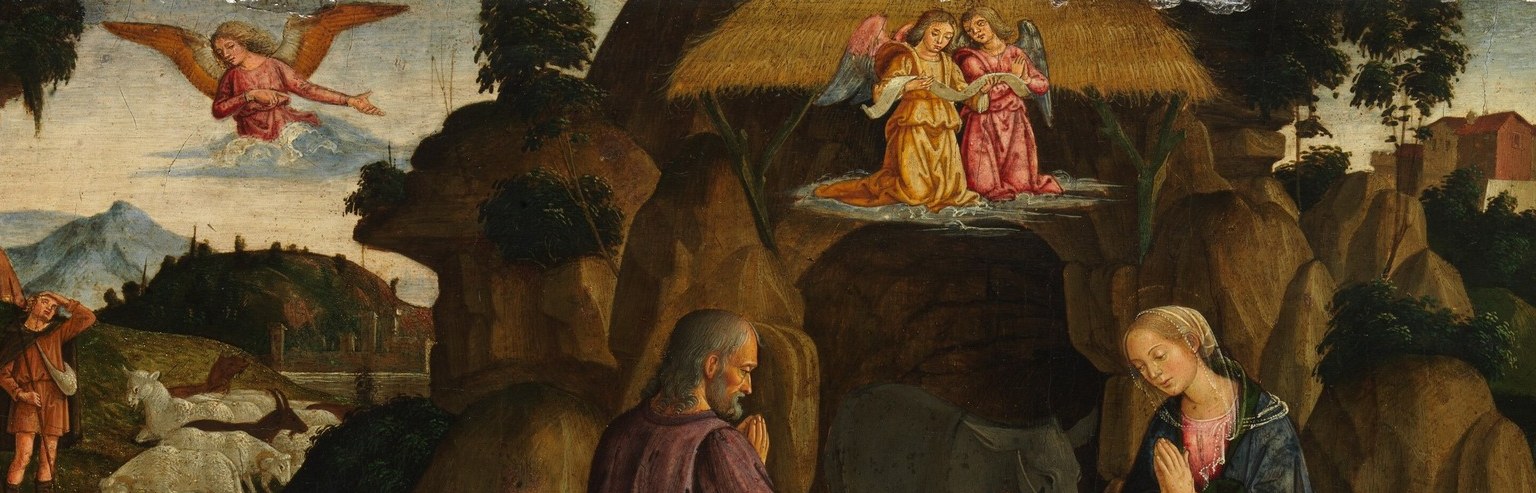
The church tower in the upper-right background is the subtlest code of all. It shows a completed Christian church at the moment of Christ's birth, collapsing time to say that the Church was always intended, always already present in the divine plan. The same compression happens with the angel appearing to the shepherds in the upper right while the adoration takes place below. Two biblical moments in one frame.
Antoniazzo used tempera (pigment mixed with egg yolk) and gold leaf, and Mary's halo would have been a raised, tooled surface with punchwork patterns. The whole painting is a compact theological argument made visible, quiet and certain.
#arthistory #renaissance #nativity
Details
Transcript
A luminous child lies on bare ground in the dark. The painter makes the child the single source of light. Behind the child, dark shapes: an ox and a donkey. Isaiah wrote, "The ox knows its owner." Here, the animals see God. Sheep graze in the foreground, dressed as everyday detail. But a lamb already grazing at the moment of birth means one thing: the Agnus Dei. A church tower stands in the distance, already complete. Fifteenth-century viewers understood: the Church existed the moment Christ was born.