Landscape with the Rest on the Flight into Egypt by Claude Lorrain
View the artwork: Landscape with the Rest on the Flight into Egypt →
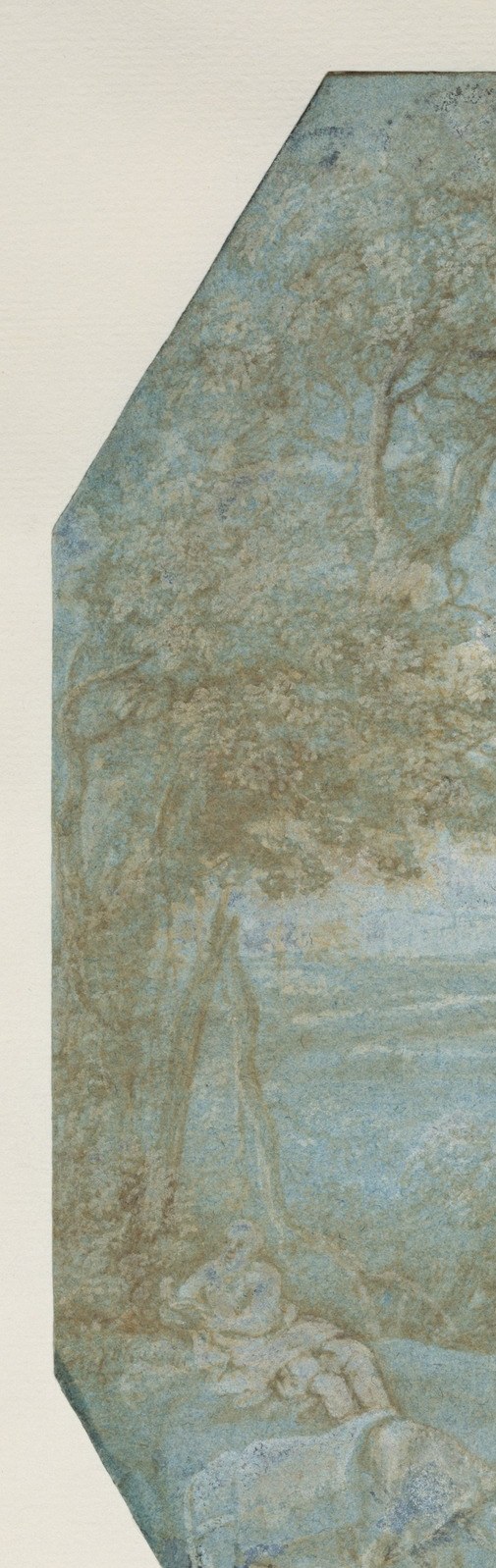
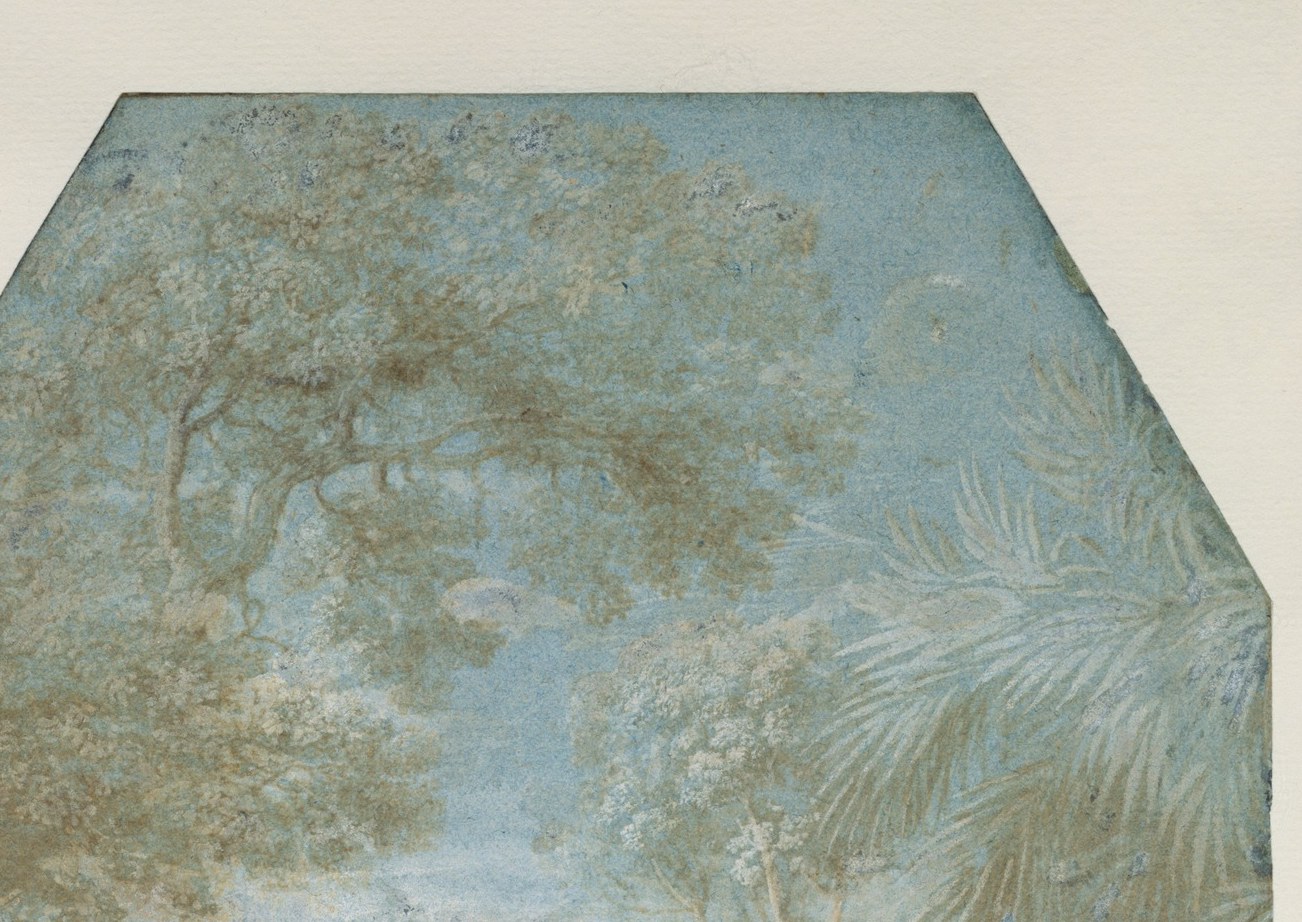
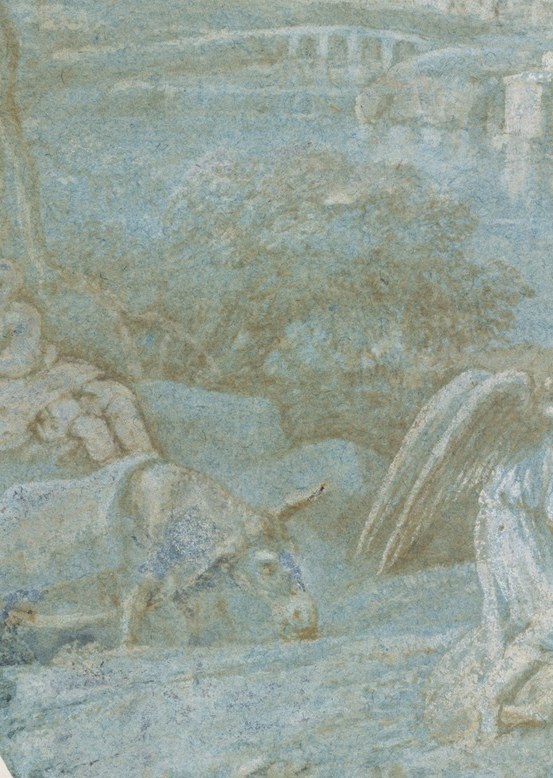
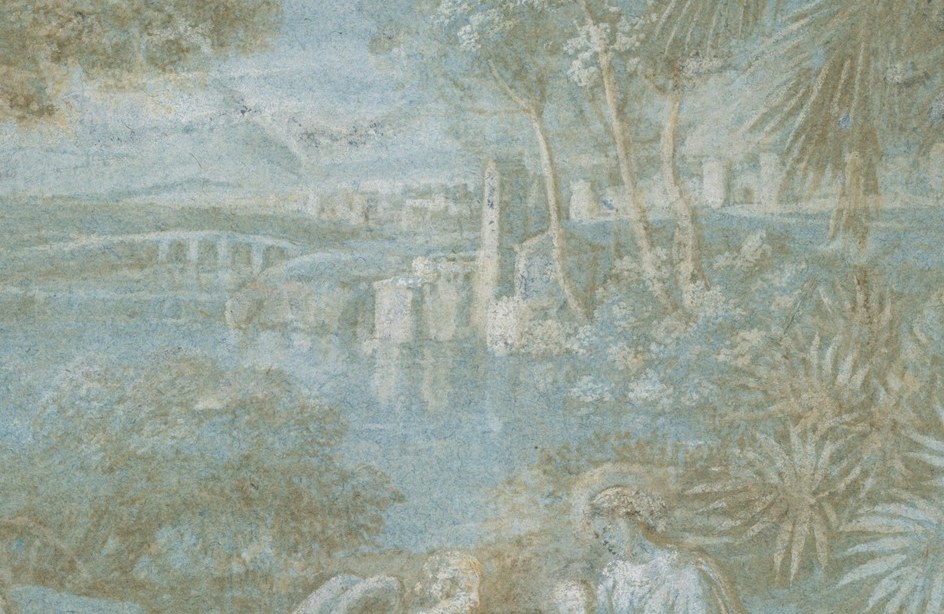
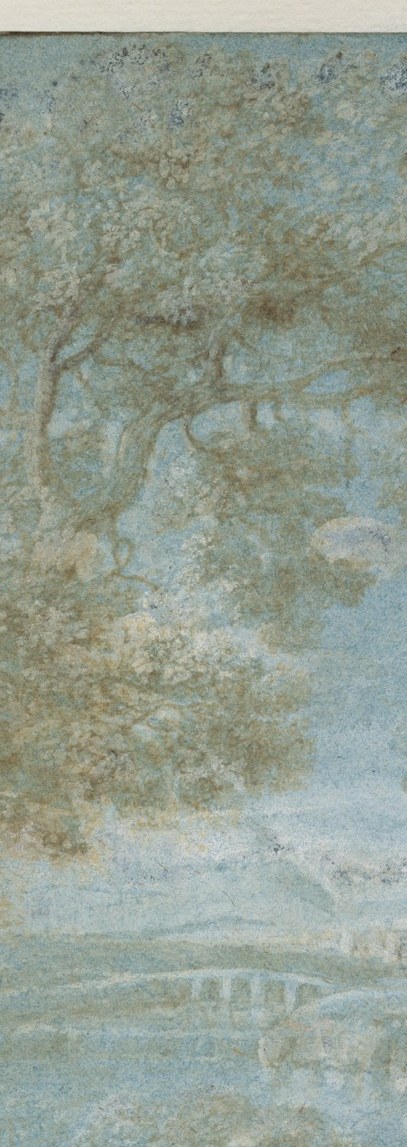
Claude Lorrain’s 'Landscape with the Rest on the Flight into Egypt' (1645) is a masterclass in light that vanished for decades before resurfacing alongside a notorious forgery scandal. The painting depicts Mary, Joseph, and the infant Jesus taking shelter during their biblical escape, watched over by a kneeling angel in a vast, idealized landscape.
Look first at the sky and the distant hills. Lorrain invented a formula for aerial perspective here: warm gold at the horizon, cooling through yellow and pale blue to a purple zenith. The river in the middle distance carries your eye directly into that glowing infinite depth. Every landscape painter after him, including J.M.W. Turner, was copying this trick.
In the 1970s, British forger Tom Keating shook the art market when he confessed to flooding it with fake Old Masters, including at least six imitation Claude Lorrains. He claimed to bury deliberate technical flaws called "time bombs" inside the paint layers, clues waiting to prove the works were modern. The auction world panicked. Genuine Claudes like this one, held privately and almost unknown, became the subject of intense scrutiny when they finally appeared.
This painting had itself disappeared from public view for much of the 20th century. When it re-emerged, the forgery scare made authentication a high-stakes detective story. The evidence that saved it was the same thing you can see on the canvas right now: a 17th-century understanding of diffused sunlight that no 20th-century forger, for all his skill, could truly replicate.
#arthistory #oldmasters #claudelorrain
Details
Transcript
Every painter in England wanted this light. Turner studied it. He called Claude Lorrain the master of the sun. See how the colour cools from gold to blue. That trick of aerial perspective taught Europe how to paint distance. But the demand for his work triggered a darker art. Forger Tom Keating painted at least six fake Claudes. He hid tiny clues inside the forgeries, calling them "time bombs." When this original finally resurfaced, no forged light could match it.