Peasant Woman Cooking by a Fireplace by Vincent van Gogh
View the artwork: Peasant Woman Cooking by a Fireplace →
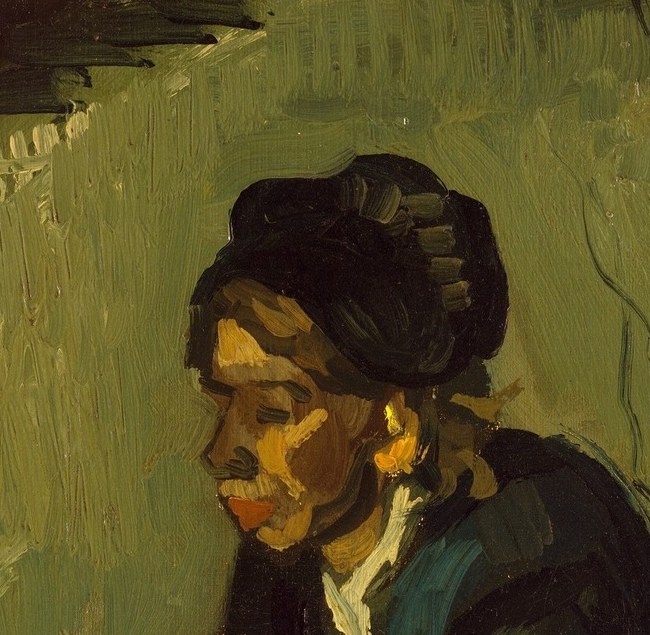
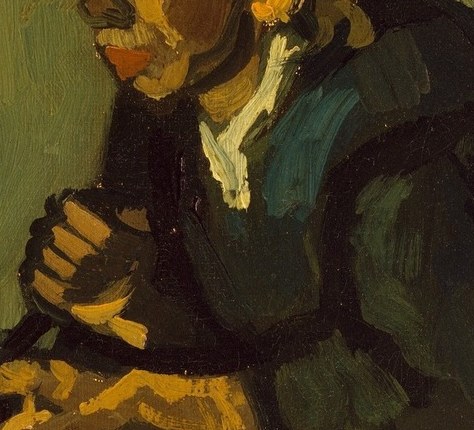
Vincent van Gogh painted Peasant Woman Cooking by a Fireplace in 1885, during his Nuenen period, and it now hangs in the Metropolitan Museum of Art. It was never meant to be a glamorous picture. He was living among weavers and farmworkers in the Dutch countryside, studying them not as picturesque types but as people whose labour he respected. This painting is one of the most concentrated statements of that respect.
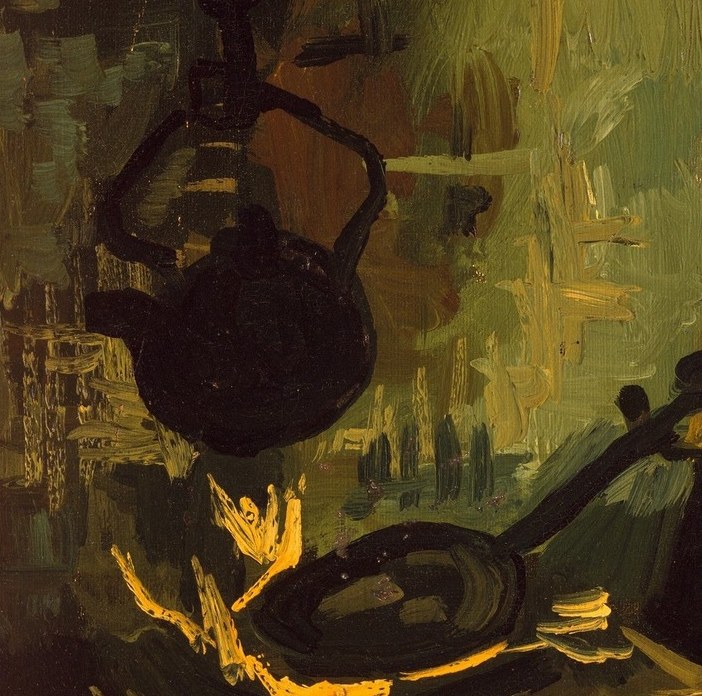
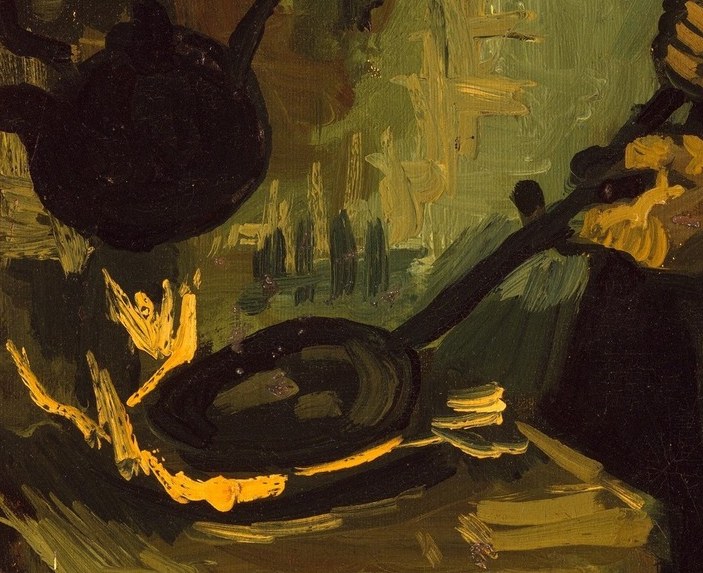
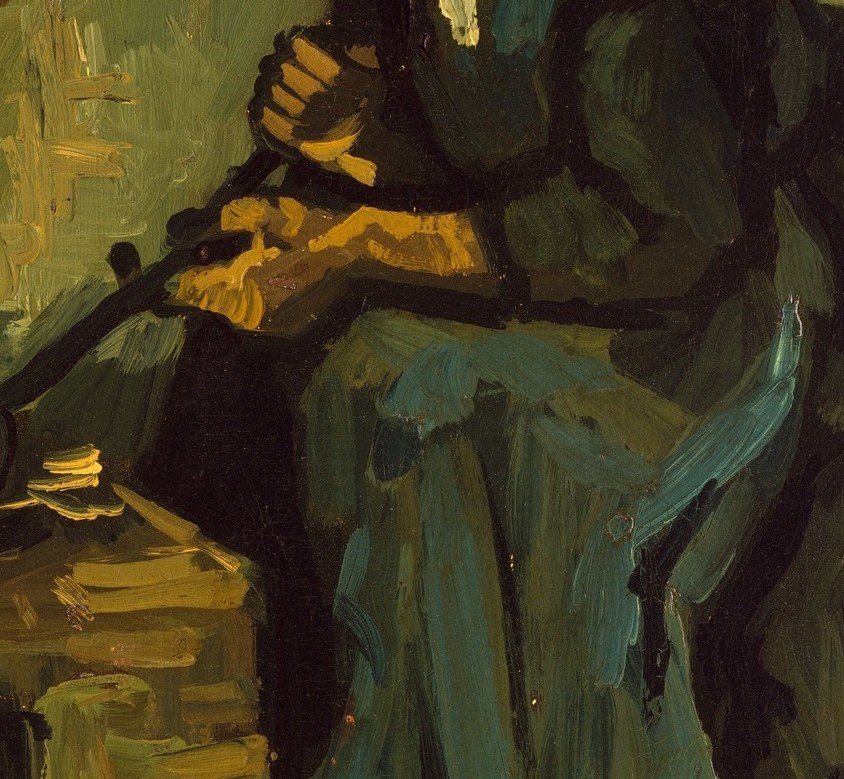
Let your eye fall to the lower left corner. On the floor, just behind an empty pale bowl, sits a small rounded form. It is painted in the same earth-brown as the shadows, but its domed shape and the two dark hollows facing the woman read unmistakably as a human skull. Van Gogh did not put it in the title. He left it there for the attentive viewer.
The skull transforms the image. What first reads as a genre scene of humble cooking becomes a vanitas: the flame burns, the pot is stirred, the empty bowl waits, and death sits quietly on the floor. The woman does not acknowledge it. She works. The painting becomes a meditation on sustenance and mortality held in a single frame, decades before the brighter, more famous Van Gogh we think we know.
Next time you see this image, or stand in front of it, let your eye find the darkness at the lower left. He left you something there.
#arthistory #vangogh #peasantpainting
Details
Transcript
You glide past this painting in a second. A woman cooking. Earth tones. A humble room. Van Gogh painted this in Nuenen, in 1885. He believed dignity lived in working hands. Now look down, at the lower left. Beside the empty bowl, a rounded dark object. It is almost certainly a human skull.