Saint Geneviève by http://www.wikidata.org/.well-known/genid/49efde440f9635515768865ae2c86a2e
View the artwork: Saint Geneviève →
This is “Saint Geneviève,” a carved wooden sculpture made in France around 1450. The Museum of Fine Arts, Boston holds it today.
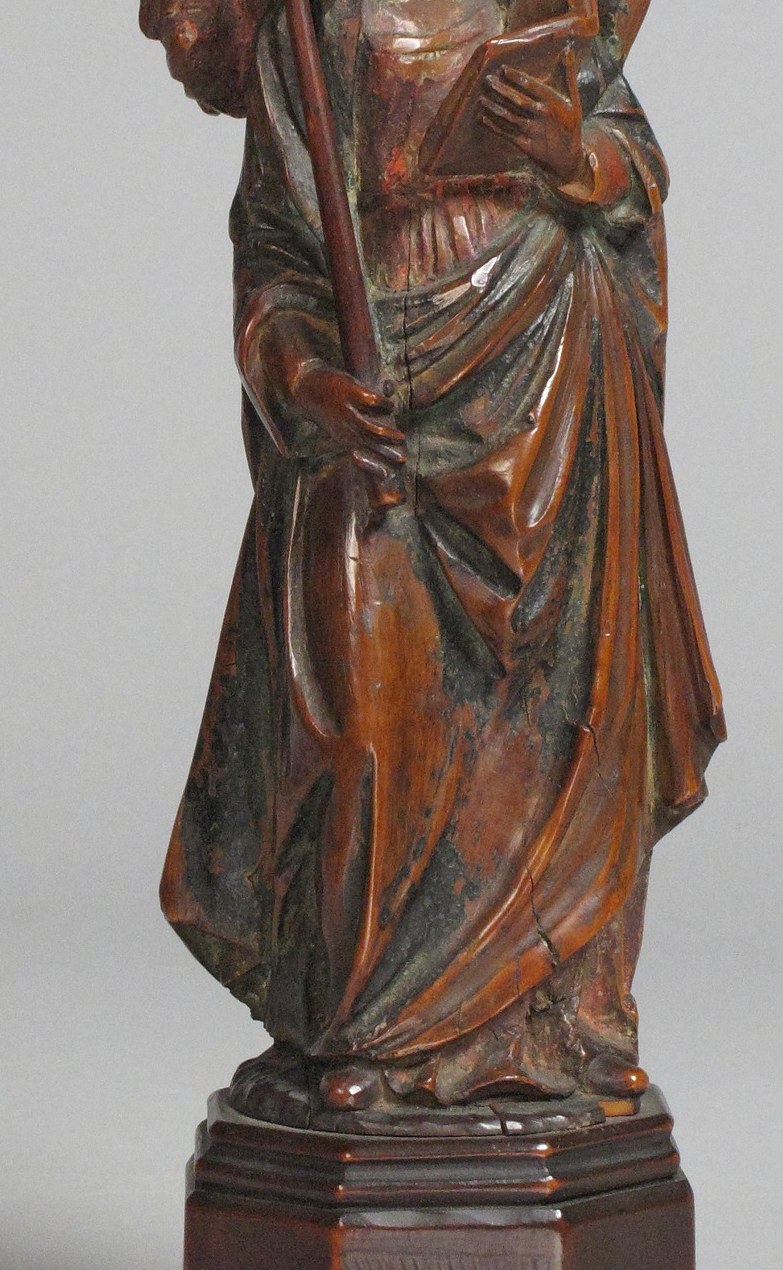
What looks from a distance like heavy red fabric is solid limewood. The carver undercut the folds so deeply that they create real shadow, transforming a rigid block into something that seems to fall and flow. It is a late-medieval showpiece of technical control, painted in polychrome that still survives on the robe and on the contrasting green mantle at her left side.
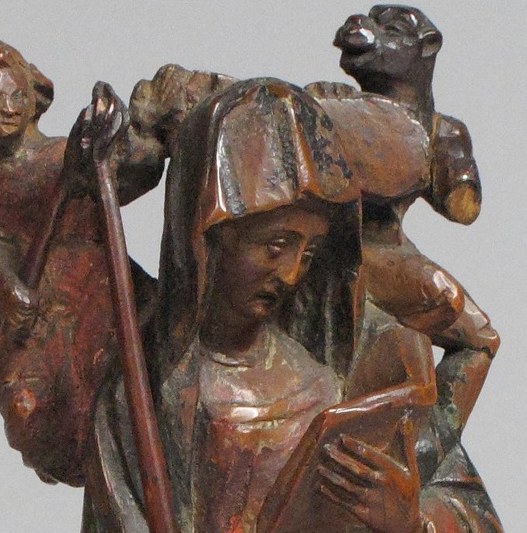
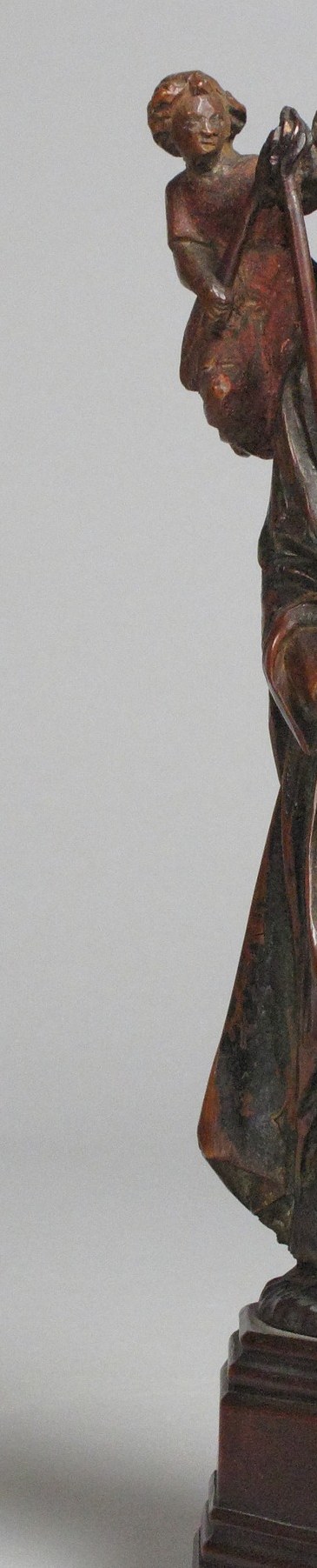
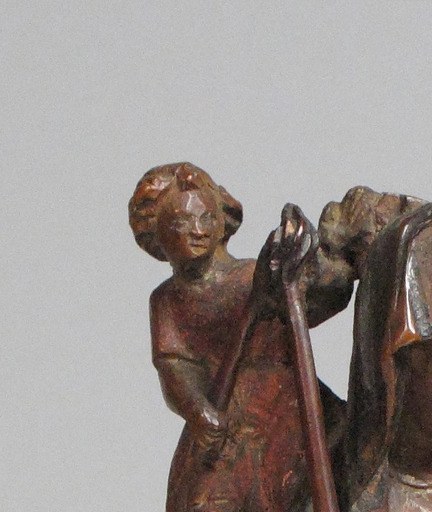
The saint holds a long pilgrim staff and a small book, marking her as both protector and literate intercessor. Her face is carved with a quiet, symmetrical calm meant to convey divine presence. And then there are the two tiny figures riding on her shoulders: one carries a bundle, the other a staff. They are not attached after the fact. They were cut from the same single block, a carpentry puzzle solved 575 years ago.
Saint Geneviève is the patron saint of Paris, credited with saving the city from Attila through prayer. This statue likely stood in a church or chapel where it was carried in processions. The color mattered. The green and red were not decoration. They were part of the theology, the statue was an embodiment, not a sketch.
Next time you see unpainted medieval wood, ask whether we are seeing what the carver intended, or only what time has stripped away.
#arthistory #medievalart #woodcarving
Details

Transcript
Look at the red robe. It is not fabric. This is solid limewood, cut deep. The carver undercut every fold to catch real light. Now look at her hands. The fingers curl around the staff. One wrong chip and the entire block was ruined. And here, two tiny souls ride her shoulders. They were carved from the same single piece of wood. She was always meant to be seen in color.