Adoration of the Magi by Titian
View the artwork: Adoration of the Magi →
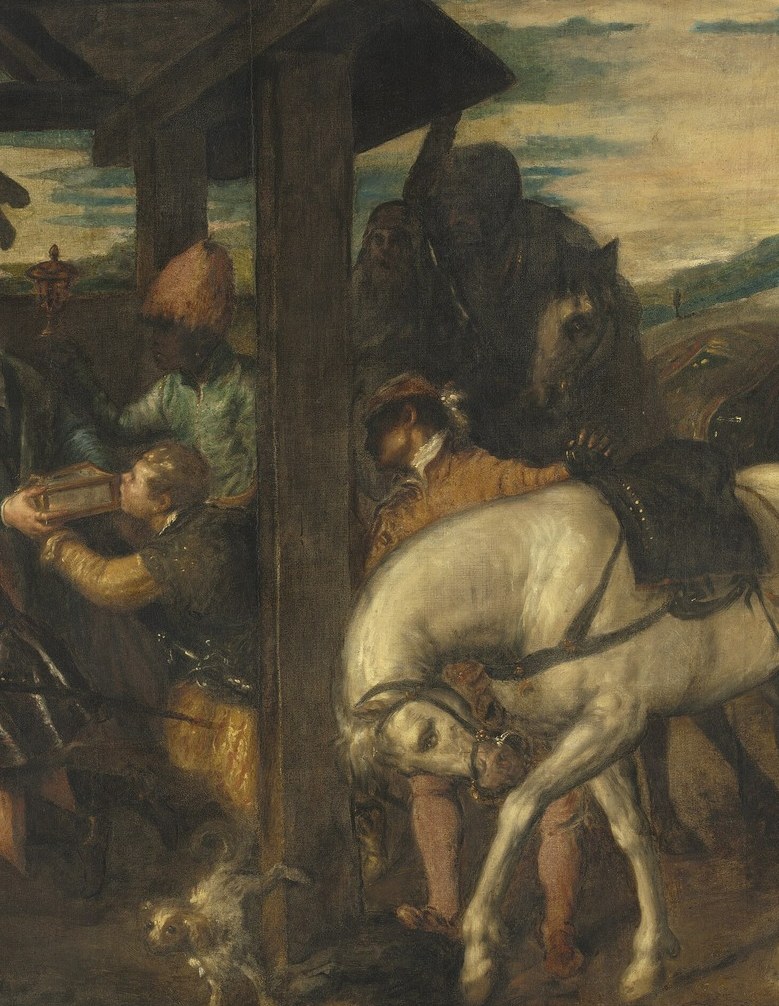
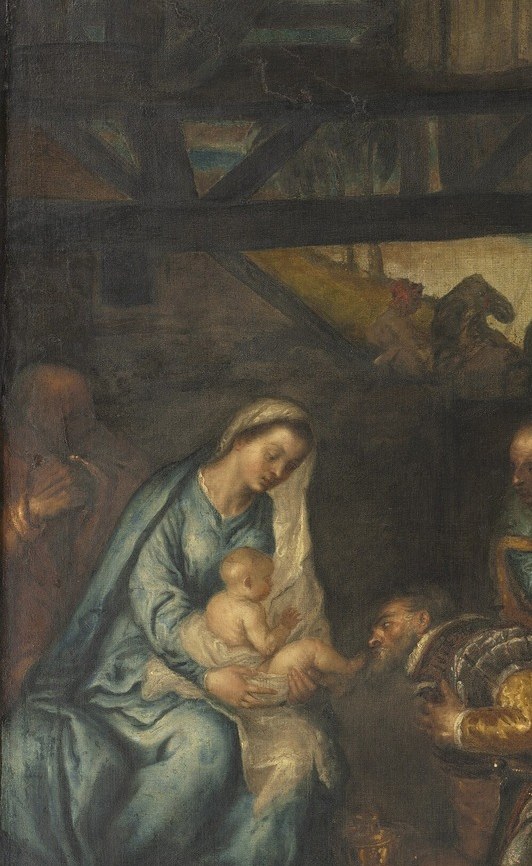
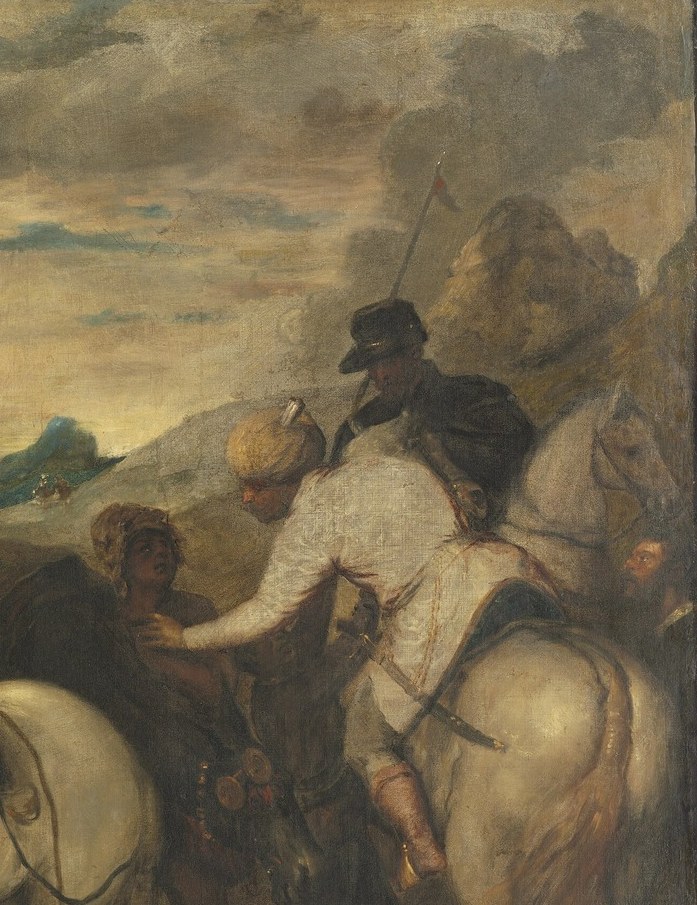
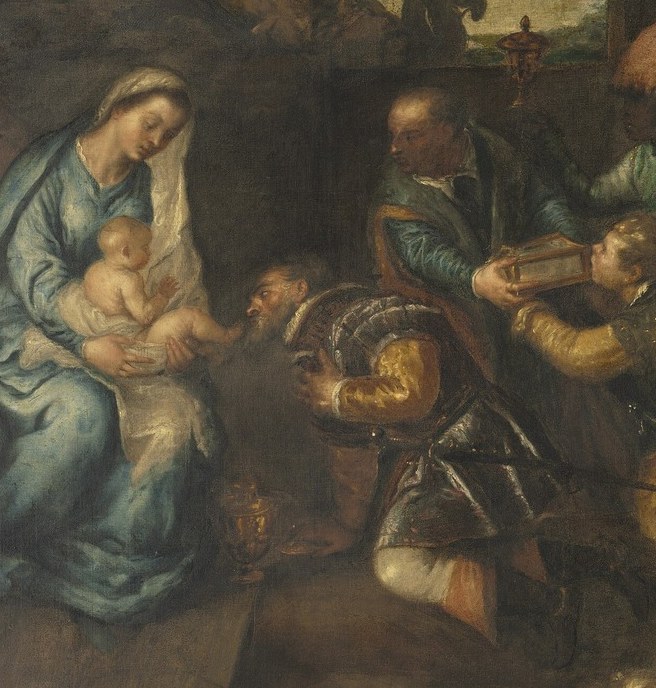
Titian's workshop painted this Adoration of the Magi around 1560, and it now lives at the Cleveland Museum of Art. At first glance it delivers everything you expect from a Venetian Renaissance nativity: three kings in exotic dress, a bowing white horse, the Virgin holding the Christ child, and a deep rocky arch framing the whole scene. It is crowded, reverent, and grand.
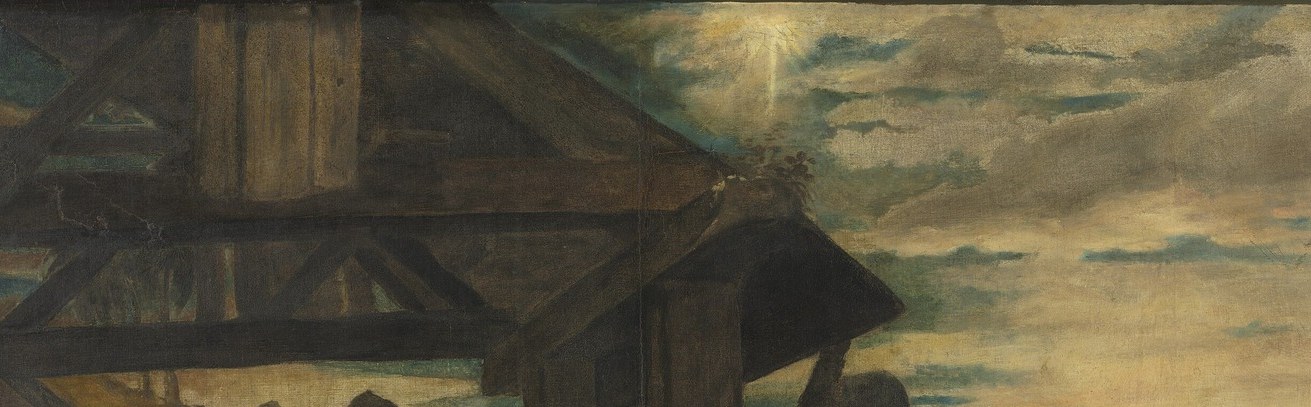
But Titian had a habit of anchoring sacred events in the messy, observable world. Look at the bottom edge of the painting. While grooms wrestle horses and kings kneel in devotion, a small dog does what dogs do: it lifts a leg against a wooden beam. The detail is tiny, easy to scroll past in a phone-sized reproduction, and absolutely deliberate.
The workshop produced multiple versions of this composition, and this one, despite past overcleaning, is considered the finest. A related copy hangs in the Prado in Madrid. Scholarly debate continues over which passages are Titian's own hand and which belong to his assistants, but the white horse, the half-shadowed groom, and the Christ child all retain exceptional vitality.
That irreverent little dog is not a joke. It is a signature move from a painter who understood that a miracle feels more real when something ordinary happens right next to it.
#arthistory #titian #renaissance
Details
Transcript
Around 1560, Titian's workshop took on a huge subject. The three kings arrive to honor the infant Christ. Heads bow. A white horse lowers its neck in reverence. The painting insists that even animals know something sacred is happening. But Titian grounded the Bible in the world he saw every day. Look at the bottom edge, near the beam of wood. A small dog lifts its leg and urinates on the post.